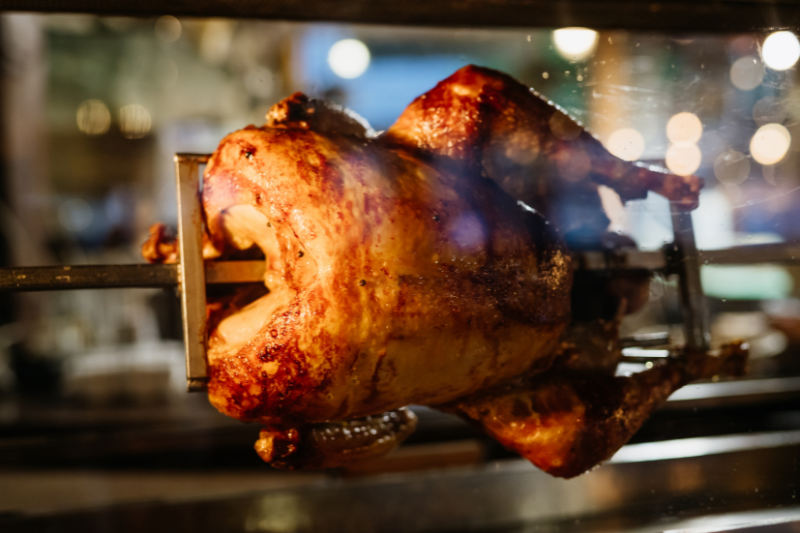
Rotisserie chicken is genuinely good for weight loss — it packs 24–28 grams of protein into just 120–140 calories per serving, keeps you full, and costs as little as $5 for several meals' worth of ready-to-eat protein.
There's one catch worth knowing about, so keep reading for the full breakdown.
What the Nutrition Label Actually Tells You
The skinless breast is the standout cut for weight loss, and the numbers explain why. A 3-ounce serving delivers 24–28 grams of protein for just 120–140 calories, with only 2–3.5 grams of fat.
That works out to roughly 80% of calories coming from protein — one of the highest ratios of any food you'll find at a grocery store.
Here's how the cuts compare:
| Cut (3 oz) | Calories | Protein | Total Fat |
|---|---|---|---|
| Breast, skinless | 120–140 | 24–28g | 2–3.5g |
| Breast, skin-on | 180–190 | 27–29g | 7–8g |
| Thigh, skinless | 155–165 | 19–21g | 7–8g |
| Thigh, skin-on | 200–210 | 20–22g | 11–13g |
| Drumstick, skinless | 145–155 | 20–21g | 5–6g |
Dark meat without skin is still a reasonable option — the calorie gap between a skinless thigh and skinless breast is smaller than most people expect. Wings, on the other hand, have a poor meat-to-fat ratio and aren't worth prioritizing.
One thing that works in rotisserie chicken's favor across every cut: zero carbohydrates. That makes it a clean fit for keto, paleo, low-carb, or really any structured eating plan without any adjustments needed.
How Protein Promotes Weight Loss
Protein supports weight loss through three distinct mechanisms, and rotisserie chicken delivers on all three.
It keeps you fuller, longer. A major Harvard review found that higher-protein meals significantly increased satiety in the majority of studies examined, and reduced how much people ate afterward. The reason is straightforward: protein doesn't spike insulin the way carbohydrates do, it digests more slowly, and your brain registers fullness earlier. That translates to less snacking and fewer calories consumed without much conscious effort.
Your body burns more calories digesting it. Every macronutrient has a thermic effect — calories your body uses just to process what you ate. For protein, that cost is 20–30%. For carbs it's 5–10%, and for fat it's nearly zero. In practical terms, 100 calories of chicken protein nets you only about 70–80 usable calories after digestion. A 2024 meta-analysis of 52 studies confirmed that higher-protein meals produce measurably greater daily energy expenditure than lower-protein ones.
It protects your muscle while you're in a deficit. When you cut calories, your body can break down muscle for fuel if protein intake is too low. That's a problem because muscle drives your resting metabolism — lose enough of it and your body burns fewer calories around the clock. Research specifically points to lean, unprocessed proteins like chicken as effective for preserving body composition during weight loss.
Then there's the practical side. A whole rotisserie chicken costs $5–7 and cuts out an hour or two of cooking. As one registered dietitian puts it, a convenient option that's slightly less than perfect still beats takeout every time — and that consistency is what actually moves the needle over weeks and months.
The Sodium Problem (and How to Work Around It)
Here's the catch that was mentioned upfront. Virtually all store-bought rotisserie chickens are injected with a brine solution before cooking — a standard industry practice to keep the meat moist.
That solution typically contains sodium phosphate, modified food starch, carrageenan, sugar, dextrose, and vague “natural flavors.”
The result is a bird that can contain anywhere from 40 mg to 550 mg of sodium per 3-ounce serving, compared to roughly 60 mg in a home-roasted chicken with no added salt.
That's not a small gap. At the high end, a single serving gets you a quarter of the recommended daily sodium limit before you've added anything else to your plate.
For weight loss specifically, the issue goes beyond general health. High sodium intake causes your body to retain water, which shows up as extra pounds on the scale.
If you're eating a high-sodium rotisserie chicken regularly and the number isn't moving, water retention could be masking real fat loss — which is discouraging enough to make people quit a plan that's actually working.
Reading the label matters more than most people realize. The cleanest rotisserie chickens list only chicken, water, and salt. Once you see sodium phosphate, autolyzed yeast extract, maltodextrin, or carrageenan, you're looking at a heavily processed product. Also, always go with plain or original over any seasoned variety — lemon-herb, barbecue, and similar flavors layer on additional sodium, sugar, and additives that add up quickly.
Best and Worst Brands for Weight Loss
Brand choice makes a bigger difference than most people expect. Here's how the major retailers rank by sodium per 3-ounce serving:
| Brand | Sodium (per 3 oz) |
|---|---|
| Kroger Simple Truth | 40 mg |
| Whole Foods organic plain | 70 mg |
| Wegmans organic | 95 mg |
| Whole Foods nonorganic plain | 120 mg |
| Costco Kirkland Signature | 460 mg |
| Sam's Club Member's Mark | 550 mg |
The top four are meaningfully better than the bottom two — not by a small margin, but by a factor of four to thirteen. Kroger Simple Truth's ingredient list reads: chicken, sea salt, water. That's it. Whole Foods organic plain is nearly as clean. If either of these is accessible to you, they're the obvious starting point.
Costco and Sam's Club are worth flagging specifically because they're high-volume purchases. People tend to buy large quantities there, eat the chicken across multiple meals and multiple days, and the sodium accumulates fast.
A 460–550 mg per serving bird eaten twice a day adds up to nearly the full recommended daily sodium limit from chicken alone, before anything else you eat is factored in.
If your go-to store isn't on this list, the label is your guide. Look for short ingredient lists anchored by chicken, water, and salt. Anything longer than that — particularly sodium phosphate, carrageenan, or autolyzed yeast extract — signals heavier processing and almost always means higher sodium.
Remove the Skin — It's the Biggest Single Change You Can Make
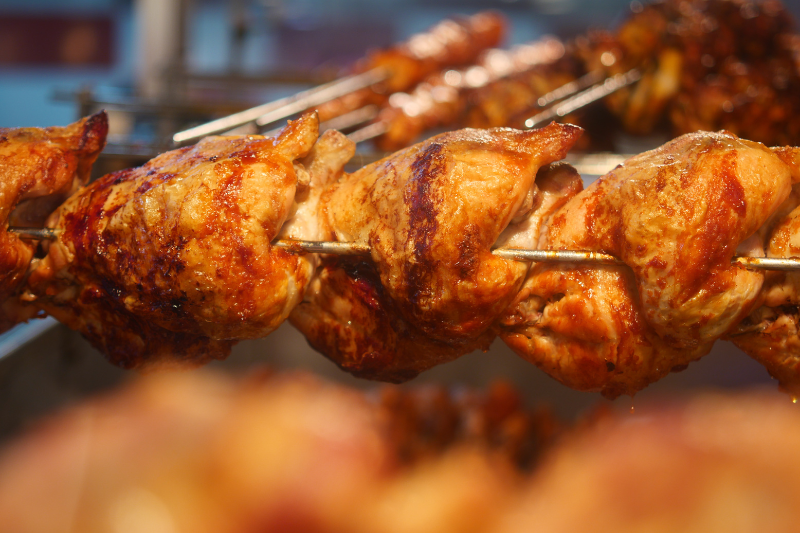
Of everything you can do to make rotisserie chicken work better for weight loss, removing the skin has the most immediate impact. Three ounces of chicken skin alone contains 345 calories and 31.7 grams of fat.
To put that in context, the skinless breast underneath has about 130 calories and 2–3 grams of fat. The skin isn't just an extra layer — on white meat, it accounts for roughly 30% of the total calories in a serving.
Across cuts, the difference is consistent:
| Cut | Skin-On | Skinless | Calories Saved |
|---|---|---|---|
| Breast | ~185 cal | ~130 cal | ~55 cal |
| Thigh | ~210 cal | ~160 cal | ~50 cal |
| Drumstick | ~195 cal | ~150 cal | ~45 cal |
Removing the skin also cuts fat content by up to 75% on breast meat and reduces sodium exposure, since surface seasonings concentrate on the skin rather than penetrating the meat.
The cumulative effect is worth thinking about. If you're eating chicken twice a day, removing the skin saves roughly 80–110 calories daily. Over a month, that's a meaningful contribution toward a pound of fat loss — from one simple habit, no other changes required.
Practically, the easiest approach is to pull the skin off as soon as you get home, while the chicken is still warm. At that point it peels away cleanly as a separate layer rather than sticking to the meat.
Shred everything immediately, portion it out, and refrigerate it — you'll be less tempted to eat the skin if it's already been removed and the meat is ready to go.
A Simple Meal Prep Plan Built Around Rotisserie Chicken
One bird yields roughly 4–5 cups of shredded meat — enough for 4–5 solid meals. At $5–7 per chicken, that works out to about $1–2 per serving, which is hard to beat for ready-to-eat protein.
The best approach is to treat it as a prep session the moment you get home. While the chicken is still warm, remove the skin, shred all the meat, and portion it into airtight containers. Refrigerated, it keeps for 3–4 days. If you want to stretch it further, freeze individual portions for up to 4 months.
Building meals around it is straightforward. Pair the chicken with fiber-rich carbs like brown rice, quinoa, or sweet potatoes, add non-starchy vegetables such as broccoli, spinach, or roasted peppers, and finish with a small amount of healthy fat — avocado, olive oil, or hummus. That combination covers protein, fiber, and satiety in one bowl without much thought. Some practical meal ideas:
- Grain bowls with quinoa, roasted vegetables, and a light vinaigrette
- Chicken salad made with Greek yogurt instead of mayonnaise
- Lettuce wraps with fresh vegetables and a simple sauce
- Soups and stews using shredded chicken as the protein base
Don't throw away the carcass. Simmering it with onion, celery, and carrots for 3–4 hours produces a low-calorie, protein-rich bone broth that works as a soup base throughout the week — essentially free additional meals from a single purchase.
For frequency, 1–2 birds per week works well for most people. The main reason to rotate with other proteins like fish, turkey, or legumes isn't variety for its own sake — it's to avoid sodium overload if you're relying on a higher-sodium brand, and to round out your micronutrient intake over time.
Conclusion
Rotisserie chicken holds up well as a weight loss food — the protein-to-calorie ratio is hard to match, the research on satiety and thermogenesis is solid, and the convenience factor is real.
The variables that matter most are picking a low-sodium brand, pulling the skin off, and sticking primarily to skinless breast.
Get those three things right and you have a genuinely effective, affordable protein source that makes consistent healthy eating a lot easier to maintain.