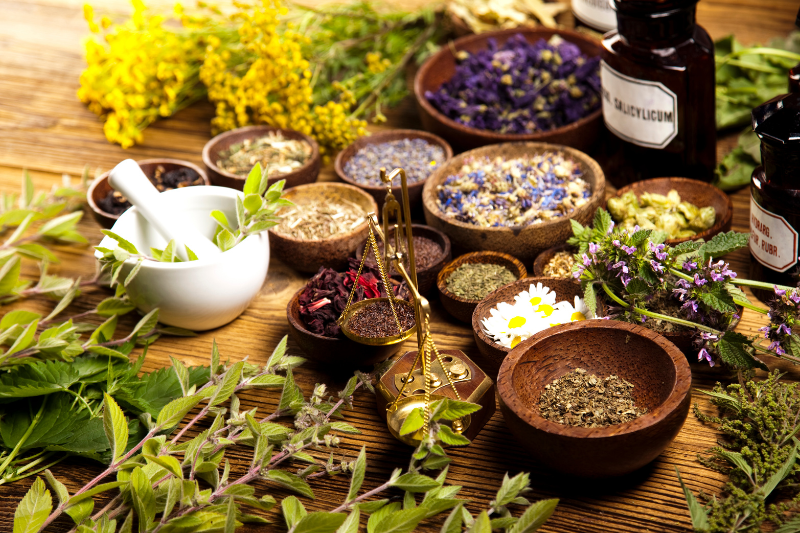
The five herbs with the strongest human trial evidence for weight loss are green tea, cinnamon, ginger, turmeric, and black seed — each backed by multiple meta-analyses showing modest but real reductions in body weight, waist circumference, and key metabolic markers like blood glucose and lipids.
None of them are magic bullets, but used alongside a caloric deficit and regular exercise, they can give your efforts a measurable nudge — keep reading to see exactly how each one works, what doses actually move the needle, and what safety limits you need to know.
What You Should Expect From Weight Loss Herbs
Before diving into the specifics, it helps to have a realistic baseline. Across the best available meta-analyses, these herbs produce weight reductions in the range of 1–2 kg over 8–12 weeks — meaningful, but not dramatic. They work as additions to a caloric deficit and regular exercise, not replacements for either.
A few other things worth knowing upfront:
- Results vary significantly between individuals. Trial heterogeneity is high (I² values often above 70–90%), driven by differences in dosing, extract quality, study populations, and baseline diet — so what works well for one person may do little for another.
- Weight isn't the only marker that improves. Most of these herbs also produce measurable reductions in waist circumference and improvements in blood glucose and lipid levels, which matters beyond the number on the scale.
Green Tea — A Well-Studied Thermogenic
Green tea's weight loss effects come from two compounds working together: EGCG (a catechin) and caffeine. EGCG slows the breakdown of norepinephrine, keeping your metabolism elevated longer, while caffeine amplifies fat oxidation through a separate pathway. Neither compound produces the same result on its own — the combination is what drives the effect.
Across multiple meta-analyses, pooled weight reductions land between 1.3 and 1.78 kg, which is consistent enough to take seriously.
Dosing comes down to two practical options:
- Brewed green tea: 3–5 cups daily to reach an effective catechin intake. Lower risk, easy to sustain.
- Green tea extract (GTE): Targets 400–500 mg of catechins per day with around 80–300 mg of caffeine. More concentrated, but requires more care.
The safety picture splits cleanly along the same line. Brewed tea is widely considered safe. Concentrated extracts are a different story — the EFSA has capped EGCG supplements at 800 mg/day, above which liver enzyme elevations become statistically significant. The U.S. Pharmacopeia has also linked high-dose GTE to acute liver injury in documented cases. That 800 mg ceiling isn't a conservative suggestion — treat it as a hard limit.
Cinnamon and Ginger — Two Herbs With Overlapping Benefits
These two work through different mechanisms but share a common thread — both improve how your body handles blood sugar and fat metabolism, and both have a meaningful safety consideration worth knowing before you start.
Cinnamon
Cinnamon's primary value for weight loss runs through insulin sensitivity. It improves how cells respond to insulin, enhances glucose uptake, and blunts the blood sugar spikes that follow meals — all of which reduce the metabolic conditions that encourage fat storage. Meta-analyses put the weight reduction at roughly 0.92–1.02 kg alongside a 2.4 cm drop in waist circumference, with the best results coming from doses of 1–3 g/day taken for at least 12 weeks.
The variety you choose matters more than most people realize. Cassia cinnamon — the most common type on store shelves — contains coumarin, a compound that becomes hepatotoxic at sustained high intake. For a 60 kg adult, as little as 2 g/day of cassia can approach the tolerable daily limit. Ceylon cinnamon contains only trace amounts and is the safer choice for daily use.
Ginger
Ginger works differently, stimulating thermogenesis and dialing down inflammation in fat tissue rather than targeting insulin pathways directly. A meta-analysis of 36 trials found waist circumference dropped by 0.65 cm and body fat by roughly 1.49% — modest figures, but consistent across a large body of evidence. Effective trial doses ranged from 1–3 g/day of dried powder, with results most reliable after 8 or more weeks.
One safety note that applies regardless of dose: ginger has anticoagulant activity. If you're on blood thinners like warfarin or aspirin, talk to your doctor before adding it, and stop taking it at least two weeks before any scheduled surgery.
Turmeric (Curcumin) — Most Effective in Metabolic Conditions
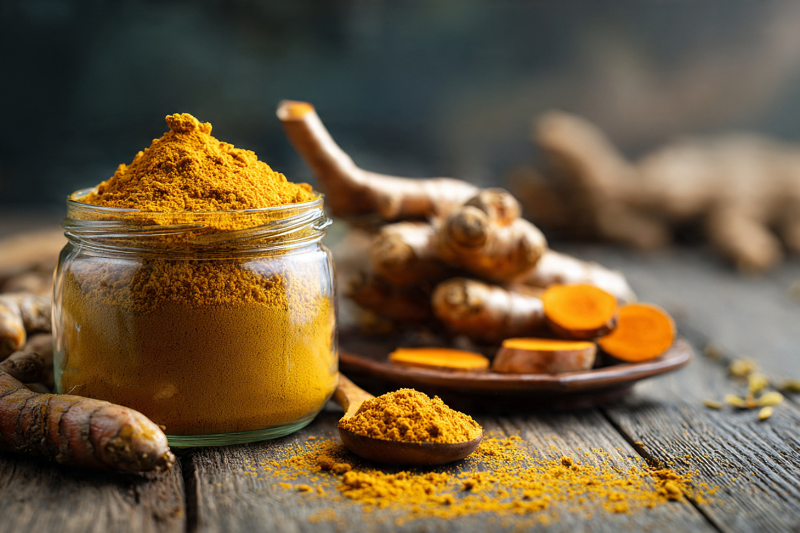
Turmeric's active compound, curcumin, has a well-documented absorption problem — taken on its own, very little of it actually reaches your bloodstream. Combining it with piperine, a compound found in black pepper, increases bioavailability dramatically. Most quality supplements already include piperine for this reason, but it's worth checking the label if you're buying separately.
At doses of 1,000 mg/day or more, taken for at least 8 weeks, research shows average weight reductions of around 1.13 kg and waist circumference reductions of 1–1.5 inches. Those numbers are meaningful, though the effects are most pronounced in people with insulin resistance, prediabetes, or type 2 diabetes — if your metabolic health is otherwise normal, the impact on weight tends to be smaller.
A few contraindications to keep in mind before starting:
- Gallbladder issues: Curcumin stimulates gallbladder contraction, making it a poor choice for anyone with gallstones or bile duct obstruction.
- Iron deficiency: High doses inhibit iron absorption — worth monitoring if you're already borderline deficient.
- Upcoming surgery: Stop at least two weeks beforehand, as curcumin has antiplatelet effects that increase bleeding risk.
Culinary turmeric — the kind you'd add to food — delivers far too little curcumin to produce these effects. A standardized extract is what the research is based on.
Black Seed (Nigella sativa) — The Strongest Pooled Effect
Of the five herbs covered here, black seed has the largest pooled weight loss effect in the published literature. A network meta-analysis spanning 111 randomized controlled trials reported an average body weight reduction of 2.09 kg — notably higher than what the other four herbs produce — with moderate-certainty evidence behind it, which is a relatively strong rating in this field.
What makes black seed mechanistically interesting is that its active compound, thymoquinone, targets fat storage directly by suppressing the pathways that drive fat cell development and lipid accumulation. This is distinct from simply reducing appetite — the weight loss appears to come primarily from inhibited fat production rather than eating less.
The clinical numbers back this up. In one double-blind, placebo-controlled trial, participants taking 3 g/day of black seed oil alongside a low-calorie diet lost roughly 4.8 kg over 8 weeks, compared to 1.4 kg in the placebo group — a substantial gap for a short intervention window.
On dosing, the oil outperforms the powder due to higher thymoquinone concentration. Effective ranges are 1–3 g/day of powder or around 2 g/day of the oil, typically over 8–12 weeks.
The safety profile is generally favorable, but three interactions warrant attention:
- Blood thinners, antidiabetic medications, and antihypertensives may all be potentiated
- Stop at least two weeks before surgery
- Avoid entirely during pregnancy
How to Add These Herbs to Your Routine (Without Overdoing It)
Start with one herb rather than several at once — it lets you actually track what's working. Give it 12 weeks and measure both weight and waist circumference. If neither has shifted, discontinue and reassess rather than doubling down.
Matching the herb to your situation:
- Insulin resistance, prediabetes, or type 2 diabetes: Ceylon cinnamon (1–3 g/day) and turmeric with piperine (1,000 mg/day) address both weight and the underlying metabolic picture.
- Digestive issues or post-meal bloating: Ginger at 1–2 g/day is the practical choice here.
- Mild thermogenic boost: Brewed green tea at 3–5 cups/day is safer and more sustainable than concentrated extracts.
- Strongest available evidence: Black seed oil at around 2 g/day for 8–12 weeks has the largest pooled effect size of the five.
Two non-negotiable safety points apply across all of them: stop everything at least two weeks before any surgery, and if you're on warfarin, insulin, sulfonylureas, or antihypertensives, talk to your doctor before starting — additive effects with these medications are real, not theoretical.
Finally, product quality matters more than most people expect. Adulteration in herbal supplements is well-documented, including with banned pharmaceuticals. Stick to products verified by USP, NSF, or ConsumerLab.
Conclusion
None of these herbs will do the work for you, but the five covered here have more human trial data behind them than anything else in this category.
Used alongside a caloric deficit and regular exercise, they offer real — if modest — support. Just respect the dose limits and safety guidelines, and they're worth considering.