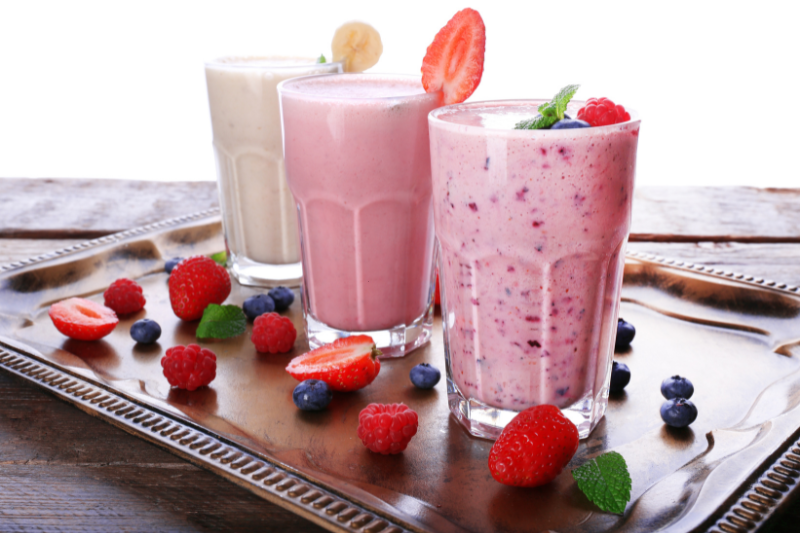
The 5 best weight loss shakes right now are Huel Black Edition, Premier Protein, OWYN Plant-Based, Ka'Chava, and SlimFast Advanced — each standing out for a different reason, whether that's protein density, price, allergen safety, or overall nutrition.
Keep reading for a full breakdown of how they compare, what to look for before you buy, and one safety issue that affects most plant-based options on the market.
Do Weight Loss Shakes Actually Work?
Yes, but not in the way the marketing usually suggests. No shake burns fat or speeds up your metabolism — they work simply because they help you eat fewer calories without feeling deprived. That's it. The mechanism is straightforward: replace a meal with a controlled-calorie shake, eat less overall, lose weight.
And the evidence backs this up. A meta-analysis pulling data from 23 randomized controlled trials across 7,884 adults found that meal replacements produced about 1.44 kg more weight loss at one year compared to conventional diets. That's a modest but real difference, and it holds up consistently across studies.
The reason protein is central to all of this comes down to hormones. A high-protein shake raises GLP-1 and PYY — the hormones that signal fullness — while suppressing ghrelin, which drives hunger.
Protein also has a higher thermic effect than carbs or fat, meaning your body burns more calories just digesting it, and it helps preserve muscle mass while you're in a calorie deficit. These are the same hormonal pathways that prescription weight-loss drugs target, just through food instead of medication.
One thing worth getting clear on before you buy anything: there are two fundamentally different types of products marketed as “weight loss shakes.”
- Complete meal replacements — 300–400 calories, balanced macros, and a full range of vitamins and minerals. Designed to genuinely substitute a meal.
- Lean high-protein shakes — 110–180 calories, 20–32g of protein, minimal else. Better used as a hunger bridge or protein boost between meals.
Picking the wrong type for your goal is one of the most common mistakes people make. A 160-calorie protein shake is not a meal replacement, and a 400-calorie complete nutrition shake isn't ideal if you just want a low-calorie snack.
What to Look for Before You Buy
The nutrition label tells you most of what you need to know — if you know what to look for. Here's what actually matters:
- Protein: 20–30g per serving. This is the strongest lever for both satiety and muscle preservation. For a lean shake specifically, aim for 20–40g of protein in under 200 calories.
- Fiber: at least 3–5g. Fiber slows digestion and extends fullness — without it, a shake can leave you hungry again within the hour.
- Calories: matched to purpose. Around 150–250 calories for a snack or protein boost; 300–400+ for a genuine meal replacement.
- Added sugar: under 5g. Older formulas — Original SlimFast being a common example — can run higher. Watch specifically for high-fructose corn syrup in the ingredients list.
- Micronutrients: broad coverage. A true meal replacement should deliver roughly 20% of the Daily Value across a wide range of vitamins and minerals. If it doesn't, it's a protein shake dressed up in meal-replacement packaging.
On third-party testing: Given a major 2025 investigation that found heavy metals at concerning levels in most products tested, certifications from NSF, Informed Choice, or the Clean Label Project have gone from a nice-to-have to something worth actively looking for. More on that in a later section.
One limitation no label will tell you about is the liquid satiety paradox. Liquids leave the stomach faster than solid food and don't require chewing — both of which reduce how satisfied you feel after drinking them.
This doesn't make shakes ineffective, but it does mean they work better when the rest of your diet is built around whole foods rather than treating a second or third shake as a straightforward swap for another meal.
The 5 Best Weight Loss Shakes Reviewed
Huel Black Edition — Best Complete Meal Replacement
On pure nutrition, Huel Black Edition is hard to beat. Each serving delivers 400 calories, 40g of protein, 6–8g of fiber, and 27 vitamins and minerals — with no artificial sweeteners, using stevia instead.
It's fully vegan, and for anyone who wants a single product that genuinely replaces a meal rather than just approximating one, nothing else on this list comes close on completeness.
The catch is significant. A 2025 Consumer Reports investigation found one serving of Huel Black Edition powder contained 6.3 µg of lead — 1,290% of CR's daily level of concern — along with cadmium levels more than double CR's limit. CR placed it on their avoid list.
Huel disputes the threshold CR uses, pointing to their own independent lab results and arguing CR's benchmark is far stricter than international standards. That's a reasonable counterpoint, but it's a risk you'll want to weigh carefully, particularly if you plan on using it daily.
Premier Protein — Best High-Protein, Low-Calorie Value
Premier Protein is the most practical option on this list for most people. At 160 calories and 30g of protein with just 1g of sugar, the protein-to-calorie ratio is genuinely difficult to match at its price point. It also covers 24 vitamins and minerals, though at these calorie levels it's better framed as a high-protein hunger bridge than a complete meal.
Being dairy-based works in its favor from a safety standpoint — it tested at just 0.38 µg of lead per serving in follow-up CR testing, among the lowest of any product reviewed. The main drawbacks are the use of artificial sweeteners (sucralose and acesulfame potassium), minimal fiber, and the absence of prominent third-party purity certification.
OWYN Plant-Based — Best for Vegans and Allergy Needs
OWYN is the most carefully formulated plant-based option here. The base line provides 140 calories and 20g of protein from a blend of pea, pumpkin seed, and flax, and it's free from all top-9 allergens — no dairy, soy, gluten, or nuts. If you have dietary restrictions that rule out most other shakes, this is the most viable option. The Pro Elite version steps things up to 32g of protein and 0g of sugar at around 180–200 calories, which makes it competitive with dairy-based options on protein density.
From a heavy-metal standpoint, the Pro Elite tested at 88% of CR's lead level of concern — rated acceptable for daily use, which puts it among the safer plant-based choices available.
Ka'Chava — Best Superfood Snack Replacement
Ka'Chava markets itself as an all-in-one meal replacement, but at 240 calories it functions more realistically as a premium snack or light breakfast — not a substitute for a full meal.
What it does offer is unusually broad: 25g of protein, 6g of fiber, and over 85 ingredients spanning greens, probiotics, adaptogens, and omega-3s.
If you're already eating enough across your other meals and want one convenient option that consolidates a lot of nutritional bases, it has genuine appeal.
Two things to flag. First, many of its ingredients sit inside proprietary blends, meaning the exact doses aren't disclosed — so specific benefit claims are hard to verify independently.
Second, an independent lab test found detectable levels of lead, cadmium, and arsenic in the Matcha flavor. Ka'Chava wasn't included in the CR investigation, so there's no standardized comparison available, but it's worth knowing.
SlimFast Advanced — Best Budget-Friendly Structured Plan
SlimFast Advanced is the most accessible entry point on this list. At roughly $0.99 per serving in bulk, it undercuts every other option significantly, and it's available in most grocery and drugstore chains.
The Advanced line — not the Original — delivers 180 calories, 20g of protein, 5g of fiber, and just 1g of sugar, which is a solid nutritional profile at that price.
It also comes with a built-in structure: the SlimFast 1-2-3 Plan replaces two meals a day with shakes and centers the third around a 500-calorie balanced meal, removing a lot of the decision-making that derails most diets.
One distinction worth making: the Original SlimFast formula is lower in protein and higher in sugar — a meaningfully different product. If you go this route, make sure you're buying the Advanced line.
How They Compare Side by Side
Here's how all five products stack up on the numbers that matter most:
| Product | Calories | Protein | Fiber | Sugar | Price/Serving | Lead Status |
|---|---|---|---|---|---|---|
| Huel Black Edition | 400 | 40g | 6–8g | 4g | $2.50–$3.31 | Avoid (CR) |
| Premier Protein | 160 | 30g | <1g | 1g | $2.12–$2.27 | 77% of CR limit |
| OWYN Pro Elite | 180–200 | 32g | 6g | 0g | $3.08–$3.92 | 88% of CR limit |
| Ka'Chava | 240 | 25g | 6g | 4g | $4.66–$4.99 | Detectable* |
| SlimFast Advanced | 180 | 20g | 5g | 1g | ~$0.99 | Not tested |
*Independent test only; not included in CR investigation.
The price gap is wider than most people realize. SlimFast comes in at roughly a dollar a serving in bulk, while Ka'Chava runs nearly five times that.
Whether Ka'Chava's broader ingredient profile justifies the premium depends entirely on whether you actually need what it offers — for straight weight loss, it doesn't move the needle more than a cheaper high-protein option would.
On the dairy-versus-plant-based question, the safety gap is worth taking seriously. Plant-based products averaged nine times the lead levels of dairy-based ones in CR testing. Premier Protein, as the only dairy-based pick here, came in at 77% of CR's daily limit — far below every plant-based product tested.
Matched to specific needs, here's where each one fits best:
- Busy mornings, genuine meal replacement: Huel Black Edition — with the lead caveat clearly in mind
- Best protein per calorie, lowest risk: Premier Protein
- Vegan or multiple food allergies: OWYN Pro Elite
- Post-bariatric or GLP-1 medication users needing quick, easy protein at low volume: Premier Protein
- Premium superfood snack, not a full meal: Ka'Chava
- Tight budget, want a structured plan: SlimFast Advanced
The Heavy Metal Problem You Need to Know About
This is the part most buying guides skip over, and it's probably the most practically important section in this article.
In October 2025, Consumer Reports tested 23 protein powders and shakes and found that more than two-thirds contained more lead in a single serving than their experts consider safe to consume in an entire day. CR's level of concern is 0.5 µg of lead per day — derived from California's Prop 65 Maximum Allowable Dose Level, which is among the most conservative thresholds available.
Huel Black Edition produced the most alarming result of the five products covered here: 6.3 µg of lead per serving — 1,290% of CR's daily limit — along with 9.2 µg of cadmium, more than double CR's cadmium threshold. CR placed it on their avoid list outright. Among the five, only Premier Protein (77% of CR's limit) and OWYN Pro Elite (88%) were tested and rated acceptable for daily use.
The broader pattern is hard to ignore: plant-based products averaged nine times the lead levels of dairy-based ones. This isn't specific to one brand — it reflects how plant proteins are grown and processed, with pea and rice proteins in particular absorbing heavy metals from soil.
The industry pushes back on CR's threshold — and not without reason. Huel disputes CR's findings, citing their own independent lab results showing lower levels, and argues CR's 0.5 µg benchmark is far stricter than internationally accepted standards. The NSF certifies supplements at up to 10 µg of lead per day — twenty times CR's trigger — and the FDA's interim reference level for adults is 8.8 µg/day. The average U.S. adult already ingests up to 5.3 µg of lead daily from food alone.
So who's right? CR is using the most conservative threshold available; the industry is pointing to less restrictive but still legitimate benchmarks. Neither position is dishonest — they're measuring against different standards. What's not in dispute is that no federal action level exists for lead in protein powders, and the FDA does not pre-test these products before they reach store shelves.
Practical takeaways:
- If heavy metal exposure concerns you, dairy-based shakes carry meaningfully lower risk than plant-based ones
- Among plant-based options, OWYN Pro Elite is the only one here with a tested-and-acceptable daily-use rating
- Look for NSF, Informed Choice, or Clean Label Project certification — it doesn't guarantee zero metals, but it signals the product has been independently reviewed
- If a product carries a Prop 65 warning label, that's a clear signal to avoid it for regular use
How to Use Weight Loss Shakes Effectively
Buying the right shake is step one. Actually getting results from it comes down to how you fit it into your routine.
Start with one shake a day, not two. Research and dietitian guidance both point to the same conclusion: one meal-replacement shake daily can be just as effective as two, and it's considerably easier to stick with long-term. Using shakes as a near-total diet replacement tends to backfire — adherence drops, and products under roughly 250 calories aren't genuine meal replacements anyway, regardless of how they're marketed.
Match the product to what you're actually trying to do:
- Complete meal replacement (Huel, SlimFast Advanced): best for replacing your least-balanced meal of the day — typically breakfast or lunch — within a structured calorie deficit
- Lean protein shake (Premier Protein, OWYN): better used as a hunger bridge between meals or a fast post-workout protein source, not a standalone meal
To offset the liquid satiety problem mentioned earlier, add a small amount of chia seeds, ground flax, or blended berries to your shake. These add fiber, slow digestion, and make the shake more filling without significantly changing the calorie count.
Tracking progress the right way matters. Scale weight alone is a poor indicator — water retention, muscle gain, and normal fluctuation can mask real fat loss. Track body composition where possible. If your loss stalls below roughly 0.5–1% of your body weight per week, the answer is tightening total daily calories, not reaching for a second shake.
A staged approach tends to work better than overhauling everything at once. Replace your least-balanced meal with one shake daily for four weeks, then reassess. This gives you a clear picture of what's working before you change anything else.
A few groups should talk to a doctor before relying on shakes regularly: pregnant or breastfeeding individuals, people with kidney disease or diabetes, and children. This is especially relevant for plant-based products given the heavy metal findings — daily exposure adds up, and vulnerable populations face higher risk from cumulative intake.
One thing worth keeping in perspective: shakes are a convenience tool. They work because they make calorie control easier, not because they have any special fat-burning property.
Whole foods remain superior on every measure that matters for long-term health — nutrient density, fiber, phytonutrients, and satiety.
The most effective version of this approach uses shakes to simplify one part of your diet while keeping everything else as whole-food based as possible.
Conclusion
Weight loss shakes can be a genuinely useful tool when you pick the right one for your goal, pay attention to the nutrition label, and use them to support a calorie deficit rather than replace your entire diet.
Of the five options here, Premier Protein and OWYN Pro Elite stand out as the safest all-around picks when you factor in both nutrition and the 2025 heavy metal findings.
Whatever you choose, one shake a day paired with whole foods and realistic expectations will take you further than any product on its own ever could.