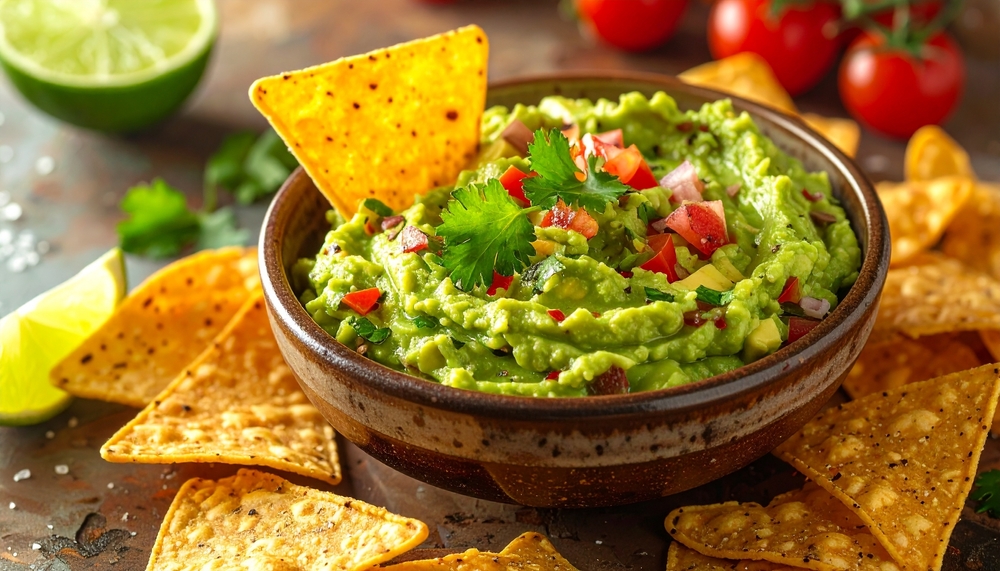
Guacamole can absolutely support weight loss, but only when you eat it in controlled portions—around a quarter-cup per day—and use it to replace higher-calorie foods rather than just adding it on top of everything else.
The catch is that while its healthy fats keep you fuller for hours and help your body burn fat more efficiently, it's also calorie-dense enough to derail your progress if you mindlessly eat it by the bowlful with chips.
Keep reading to understand exactly how much to eat, when to eat it, and why homemade makes a real difference in your results.
The Nutritional Reality: What You're Actually Eating
A standard serving of guacamole—just 2 tablespoons—contains roughly 50 calories, 4 to 5 grams of fat, 2 grams of fiber, and less than 1 gram of net carbs.
About 82% of those calories come from fat, but here's what matters: it's predominantly monounsaturated fat, specifically oleic acid, the same heart-healthy compound that makes olive oil so valuable.
When you bump up to a quarter-cup serving, you're getting 3.6 grams of fiber (that's 13% of your daily needs), 286 milligrams of potassium, and meaningful amounts of vitamins B5, B6, C, E, K, and folate.
To put guacamole's calorie count in perspective, compare it to what else you might dip your vegetables or chips into:
- Salsa: 10 calories per 2-tablespoon serving
- Guacamole: 50 calories
- Hummus: 50 calories (similar total but less monounsaturated fat)
- Ranch dressing: 130 to 145 calories
Guacamole sits in the middle of the pack for calories, but it's the only common dip that delivers significant monounsaturated fatty acids.
That distinction actually matters for weight management, because MUFAs behave differently in your body than the saturated fats in ranch or the minimal fat in salsa.
The glycemic index of guacamole registers below 15, making it one of the most blood-sugar-stable foods you can eat.
Combine that ultra-low glycemic response with its fiber and fat content, and you get a food that actively works against the blood sugar spikes and crashes that make you reach for snacks an hour after eating.
When your blood sugar stays steady, your hunger signals stay manageable—and that's where guacamole starts earning its place in a weight-loss plan.
What Clinical Trials Actually Found About Weight Loss
The largest and most rigorous study to date—the HAT Trial from 2022—followed 1,008 participants for six months and found that eating one large avocado every day produced no significant reduction in visceral fat, body weight, or BMI compared to people who ate their normal diet.
That sounds discouraging until you look at what else happened: the avocado group consumed an estimated 117 extra calories per day but didn't gain any weight.
The avocados displaced other foods, particularly refined carbohydrates, and improved overall diet quality by 8 points on the Healthy Eating Index.
A 2019 trial from UCLA tells a similar story.
Researchers put 51 overweight adults on calorie-restricted diets, with one group eating an avocado daily.
After 12 weeks, the avocado group lost 2.3 kilograms while the control group lost 2.6 kilograms—statistically identical results.
But the avocado eaters showed decreased inflammatory markers, including hepatic growth factor, with trends toward lower C-reactive protein and IL-1β.
They weren't losing more weight, but their metabolic health was improving.
The pattern held when researchers pooled the evidence.
A 2022 meta-analysis combined data from 8 randomized controlled trials involving 657 participants and confirmed what individual studies suggested: avocado consumption neither promotes weight gain nor accelerates weight loss beyond what you'd expect from caloric control alone.
The honest interpretation is that guacamole is weight-neutral when calories are matched.
Its real value lies in making a calorie-controlled diet more satisfying and nutritionally complete—which matters enormously for sticking to a plan long-term.
Epidemiological data hints at broader patterns.
Analysis of national health survey data from 2001 to 2012 showed that avocado consumers weighed 7.5 pounds less on average, with BMI scores more than 1 point lower and waist circumferences 1.2 inches smaller compared to non-consumers.
The Adventist Health Study-2, tracking over 55,000 adults for 4 to 11 years, found that normal-weight people who ate avocados gained less weight over time.
These associations almost certainly reflect healthier overall eating habits rather than some magical property of avocados themselves, but they do suggest that guacamole fits comfortably within a weight-management lifestyle rather than undermining it.
Why Guacamole Keeps You Fuller Longer (The Satiety Advantage)
Here's where guacamole earns its weight-loss credentials.
A crossover study from Loma Linda University tracked 26 overweight adults and found that adding half an avocado to lunch increased reported satisfaction by 23% and decreased the desire to eat by 28% over the following five hours.
The effect was even stronger over three hours: 26% more satisfaction and 40% less desire to eat.
When researchers dug into the mechanism, they identified two gut hormones—PYY3-36 and GIP—as the primary drivers of that fullness signal.
A follow-up study at the Illinois Institute of Technology sharpened the picture.
Thirty-one overweight adults ate energy-matched breakfasts containing either no avocado, half an avocado, or a whole avocado.
The whole-avocado meal produced significantly greater hunger suppression, elevated levels of PYY and GLP-1, and notably lower insulin responses compared to the control breakfast.
What stood out was how powerfully PYY predicted changes in hunger and fullness: it accounted for 20 to 30% of those changes after the avocado meals, versus just 3 to 5% after the low-fat control.
This means avocado-driven satiety operates primarily through gut hormones rather than insulin—a metabolically favorable pathway that avoids the blood sugar rollercoaster that makes you hungry again an hour later.
The practical math is straightforward.
If a quarter-cup of guacamole at lunch reduces your afternoon snacking by even 100 to 150 calories through enhanced fullness, it more than compensates for its own 90 to 100 calorie cost.
The satiety effect lasts approximately 3 to 5 hours before tapering, which makes guacamole particularly effective as part of a midday meal or as a mid-afternoon snack paired with vegetables.
The biochemistry explains why monounsaturated fats work differently.
Oleic acid—guacamole's dominant fatty acid—triggers production of a compound called oleoylethanolamide (OEA) in your intestines.
OEA activates PPARα receptors, which stimulates fat oxidation, promotes lipolysis (the breakdown of stored fat), and suppresses appetite.
This provides a concrete mechanism for why MUFA-rich foods may help with weight management differently than foods heavy in saturated or even polyunsaturated fats.
Clinical trials back this up. In one randomized crossover study, overweight men on a MUFA-rich diet lost 2.1 kilograms more body weight and 2.6 kilograms more fat mass over four weeks compared to a saturated-fat-rich diet with identical total calories and fat content.
A 2024 randomized controlled trial in women with obesity demonstrated that a normocaloric MUFA-rich diet reduced body weight, BMI, body fat percentage, and waist circumference over 60 days.
Research on fat distribution shows that MUFA-rich diets prevent the abdominal fat redistribution that carbohydrate-rich diets promote in insulin-resistant individuals, while saturated fat diets cause fat to accumulate preferentially in visceral (belly) fat stores.
Two metabolic advantages amplify these effects.
First, postprandial fat oxidation—the rate at which your body burns fat after eating—runs significantly higher after MUFA-rich meals than after saturated-fat meals.
Second, the thermic effect of food (calories burned during digestion) is also greater with MUFAs.
For guacamole specifically, this means its caloric impact is somewhat less than the nutrition label suggests, though it certainly doesn't make it a “negative calorie” food.
There's one more benefit worth noting: the fats in guacamole dramatically enhance absorption of fat-soluble nutrients from vegetables you eat alongside it.
Lycopene absorption increases 4.4-fold, beta-carotene by 2.6 to 15.3-fold, and vitamin A conversion by up to 12.6-fold when eaten with avocado.
Pairing guacamole with colorful vegetables creates genuine nutritional synergy that goes beyond simple addition.
The Portion Problem: Where Most People Sabotage Themselves
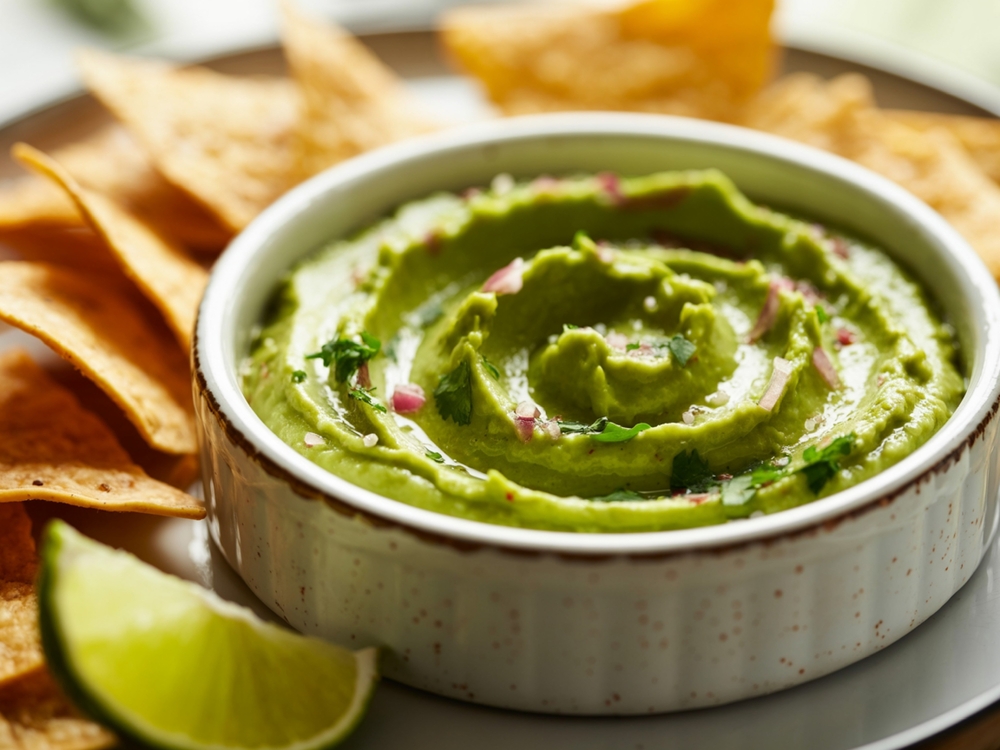
Guacamole's calorie density sits around 160 calories per 100 grams, which makes portion awareness non-negotiable.
The difference between a weight-loss-friendly serving and a diet-derailing one is alarmingly easy to cross.
A quarter-cup—roughly 3 to 4 tablespoons—delivers 90 to 100 calories, representing about 5 to 7% of a 1,500-calorie weight-loss budget.
One full cup, which many people can polish off in a single sitting with chips, reaches 320 to 400 calories. That's potentially 27% of your daily calorie target from one food.
How portions escalate:
- Quarter-cup with vegetables: ~120 calories total
- Quarter-cup with 1oz tortilla chips (10-15 chips): ~240 calories
- One cup with chips at home: 460-540 calories
- Restaurant serving (like El Pollo Loco's chips and guac): 740 calories
The pairing problem amplifies the risk considerably.
Just one ounce of fried tortilla chips adds 140 calories on its own, bringing even a modest guacamole-and-chips combination to roughly 240 calories.
Restaurant servings escalate dramatically—a single appetizer can deliver more calories than an entire meal should contain when you're trying to lose weight.
As registered dietitian Toby Amidor puts it: “It's tough to stick to just 15 chips and stop scooping that guac.”
The “health halo” effect compounds the portion problem in a way that's particularly insidious with guacamole.
People rationalize larger portions because they perceive it as virtuous, often consuming two to three times a standard serving without realizing the caloric impact.
Harvard nutritionist Teresa Fung warns: “Avocado is very definitely a healthy food, but remember, it is not a low-calorie food. Just adding avocado on top of your usual eating is a recipe for unwanted weight gain.”
Pre-portioning into small ramekins or containers rather than eating directly from a bowl is the single most effective behavioral strategy to counter this.
When the bowl is in front of you, portion control becomes an exercise in willpower—and willpower is notoriously unreliable when you're hungry.
The optimal approach for weight loss is to treat guacamole as a condiment or flavor enhancer (2 to 4 tablespoons), not as a snack food consumed by volume.
That mindset shift—from “snack” to “enhancement”—makes all the difference in whether guacamole helps or hinders your progress.
Why Homemade Beats Store-Bought for Weight Loss
The gap between homemade and store-bought guacamole is significant enough to affect weight-loss outcomes.
Homemade guacamole contains 15 to 37 milligrams of sodium per quarter-cup, while store-bought brands pack in 220 to 450 milligrams—sometimes more than 10 times as much.
That sodium difference isn't just a health concern; it directly impacts what you see on the scale through water retention and bloating, effectively masking true fat loss and making your progress invisible even when it's happening.
Commercial products also introduce ingredients that undermine the nutritional advantages you're buying guacamole for in the first place.
Many contain soybean oil, sour cream, added sugars, artificial flavors, and stabilizers.
Some budget brands contain as little as 2% actual avocado, relying instead on fillers and oils to create the appearance and texture of real guacamole without delivering the monounsaturated fats and fiber that make it valuable for weight management.
If you're buying store-bought, here's how brands stack up:
Best choices:
- Trader Joe's Organic Chunky Homestyle and Herdez Traditional use simple ingredient lists closest to homemade and employ high-pressure processing rather than chemical preservatives
Worst choices:
- Dean's Guacamole “Dip” contains sour cream and delivers 3 grams of saturated fat per serving
- Yucatan Classic packs 410 milligrams of sodium into just 57 grams
- Generic store brands can reach 450 milligrams of sodium per 100 grams
Middle ground:
- Sabra Classic hits 50 calories per 2-tablespoon serving but contains 140 milligrams of sodium—roughly 4 to 9 times higher than homemade
Excess sodium doesn't just cause temporary bloating.
Research shows it's associated with increased appetite, which creates a subtle but persistent pressure to eat more throughout the day.
For anyone serious about weight loss, homemade guacamole is unambiguously the better choice.
Making it is straightforward: fresh avocado, lime juice, cilantro, tomato, onion, garlic, and minimal salt.
You can boost flavor without adding calories by using extra lime juice and jalapeño.
If you want to stretch the volume and add protein while reducing calories per serving, incorporate a tablespoon of nonfat Greek yogurt or pureed peas.
These modifications won't turn guacamole into a diet food, but they shift the calorie density in your favor without sacrificing the satiety benefits that make it useful in the first place.
How to Actually Use Guacamole for Weight Loss
The single most important principle is substitution rather than addition.
Replace mayonnaise, butter, sour cream, ranch dressing, or cream cheese with guacamole instead of layering it on top of your existing intake.
The calorie math makes this strategy powerful: swapping 2 tablespoons of mayonnaise (188 calories, 3 grams saturated fat) for the same amount of guacamole (50 calories, 0.6 grams saturated fat) saves roughly 138 calories per use while adding fiber and micronutrients that mayo simply doesn't provide.
Do that once daily and you've created a 966-calorie weekly deficit without feeling deprived.
Timing matters more than you might expect. The 3 to 5 hour satiety window makes guacamole particularly effective at lunch or as a mid-afternoon snack.
Eat a quarter-cup at 1 PM and the fullness signal carries you comfortably to dinner, which is exactly when most people struggle with weight loss—that late-afternoon danger zone when willpower runs low and the vending machine starts looking reasonable.
The satiety effect doesn't just reduce hunger; it reduces evening overeating, which tends to be the most problematic meal for people trying to lose weight.
Smart pairing transforms the calorie equation entirely:
With raw vegetables: A quarter-cup of guacamole with one cup of sliced bell peppers, carrots, and cucumber totals approximately 120 to 130 calories with substantial fiber and micronutrients.
With tortilla chips: Even a modest serving reaches 235+ calories, and most people eat far more than “modest.”
The nutrient-absorption synergy between guacamole's fats and vegetable carotenoids makes the vegetable pairing nutritionally superior on every dimension, not just calories.
You're not choosing vegetables over chips as a sacrifice—you're choosing a combination that actually works better in your body.
For recipe optimization, several modifications improve the weight-loss utility without sacrificing satisfaction.
Bulking your homemade guacamole with nonfat Greek yogurt or pureed edamame adds protein while reducing overall calorie density, meaning you can eat more volume for fewer calories.
Maximize lime juice and fresh herbs like cilantro for flavor intensity—the more flavor you pack in, the less you need to eat to feel satisfied.
Adding cayenne pepper contributes a subtle kick while potentially boosting thermogenesis modestly through capsaicin.
Control sodium by seasoning with garlic and citrus rather than salt, which keeps water retention in check and prevents the bloating that makes you feel like you're not making progress.
The evidence-based recommendation is straightforward: roughly a quarter-cup per day at approximately 100 calories.
Guacamole won't melt fat off your body, but it makes calorie-controlled eating genuinely sustainable through measurable satiety effects, favorable insulin response, and enhanced nutrient absorption from the vegetables you eat alongside it.
Use it strategically as a replacement for higher-calorie condiments, time it to bridge your most vulnerable hunger periods, and pair it with raw vegetables instead of chips.
Those three practices, consistently applied, turn guacamole from a potential diet saboteur into a legitimate weight-loss tool.
Conclusion
Guacamole is a genuinely useful tool for weight loss—not because it burns fat, but because it makes calorie-controlled eating more sustainable through measurable satiety effects and metabolic advantages over saturated fats.
The clinical evidence shows it won't cause weight gain even when consumed daily, and its MUFA-driven fullness signals can reduce snacking enough to offset its caloric cost.
The critical distinction is simple: a quarter-cup with vegetables supports your goals, while a bowl with chips derails them—portion control and smart pairing are what separate success from sabotage.