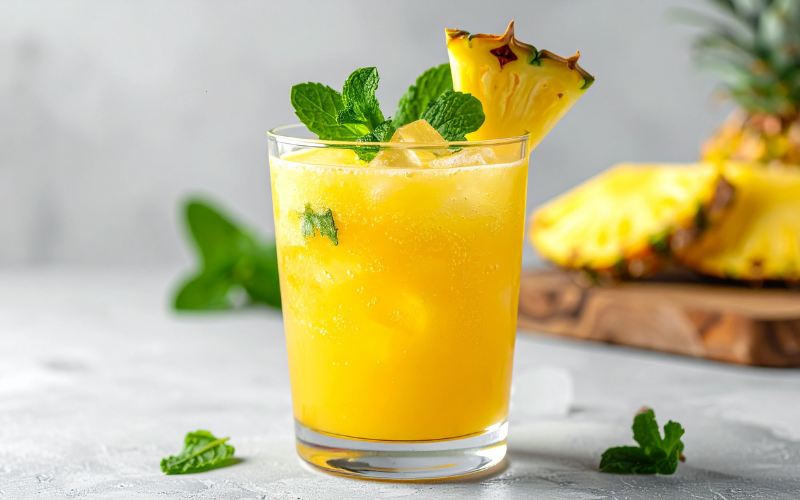
If you've seen claims that drinking pineapple and cucumber juice at a specific time—like first thing in the morning—can speed up weight loss, the short answer is that timing itself doesn't make much difference.
What actually helps is drinking a low-calorie version before meals to curb your appetite, not any special property of pineapple or cucumber.
Keep reading for a closer look at what the evidence really shows.
The Popular Timing Claims — Morning, Empty Stomach, or Before Meals?
Search around for pineapple and cucumber juice advice, and you'll notice the same recommendation showing up everywhere: drink it first thing in the morning, before your stomach has anything else in it.
Some sites tack on variations, like having it before meals or right after a workout, but the morning empty-stomach version dominates.
The reasoning behind each timing suggestion tends to follow a familiar pattern:
- Morning, empty stomach — supposedly kickstarts your metabolism for the day, helps with hydration after hours without water, and “detoxes” your system before you eat anything else
- Before meals — the idea here is that filling your stomach with juice first means you'll naturally eat less at the meal that follows
- Post-workout — framed mainly as a rehydration strategy, replacing fluids lost during exercise
On paper, this all sounds reasonable enough. The problem is where it's coming from. These recommendations trace back almost entirely to recipe blogs and wellness sites, not medical research or clinical studies. That distinction matters more than it might seem, because popularity and repetition aren't the same as evidence.
A good example of how shaky this territory gets: several of these same sources claim that water alone has the power to burn fat.
That's simply not true, physiologically. Water plays a role in hydration and can support a lot of bodily functions, but it doesn't burn fat on its own.
When a source gets a basic claim like that wrong, it's worth questioning everything else they're telling you about timing and metabolism—especially when the more specific claims about pineapple and cucumber juice haven't been tested with the same rigor real weight-loss research demands.
What the Science Actually Says About Meal Timing and Weight Loss
Once you move past wellness blogs and into actual research, the picture looks pretty different. A review published in the Proceedings of the Nutrition Society looked specifically at whether the timing of eating affects weight loss, and the conclusion was blunt: there's scant evidence that timed eating interventions work any better than simply restricting overall calorie intake. In other words, when you eat isn't the lever that matters most.
Part of the confusion comes from a popular idea that eating earlier in the day gives your metabolism some kind of advantage—that your body burns calories more efficiently in the morning. The same review addressed this directly, finding that the apparent boost is largely a measurement artifact.
Researchers weren't accounting for natural circadian variation in resting metabolic rate, which made morning eating look more metabolically favorable than it actually is. Once that variation gets factored in properly, the advantage mostly disappears.
What this means practically is that your total energy balance—calories in versus calories out over days and weeks—overshadows any timing strategy by a wide margin.
You can drink juice at sunrise or midnight; it won't change how your body processes those calories in any meaningful way.
That said, one timing-related strategy does have real backing, and it's worth understanding clearly:
Pre-meal liquid preloading. A study out of the University of Birmingham, led by researcher Parretti and published in the journal Obesity, tested this directly. Participants drank 500 mL of water about 30 minutes before each main meal, three times a day, for 12 weeks. The results were notable:
- Those who preloaded before all three meals lost an average of 4.3 kg
- Those who preloaded once or not at all lost only about 0.8 kg
That's a meaningful difference, and it points to something real. But here's the catch—this benefit comes from the volume and low calorie content of the liquid, not from anything specific to pineapple or cucumber. Plain water accomplishes the same thing, at zero calories and zero sugar.
If you enjoy the flavor of a cucumber-forward juice and want to use it as your preload drink, that's fine. Just understand you're not getting a special fat-burning ingredient—you're getting the same appetite-curbing effect you'd get from a glass of water, minus the sugar-free part.
Do Pineapple and Cucumber Actually Help You Lose Fat?
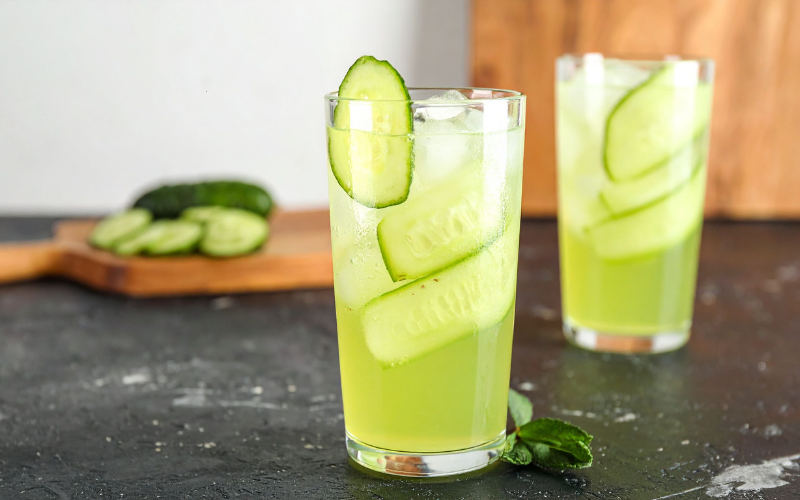
Pineapple gets most of the credit in these juice recipes, largely because of an enzyme called bromelain. It's marketed as something that boosts your metabolism and burns fat directly. Reality tells a more complicated story.
One pineapple grower's own website states plainly that bromelain is rapidly broken down in the body after you consume it and gets dispersed in the gut—meaning it doesn't stick around long enough to do much of anything systemically.
NIH's LiverTox database adds a bit of nuance here, noting that bromelain does get absorbed intact to some degree, but stops short of saying that translates into any proven benefit.
A 2025 review in the International Journal of Molecular Sciences looked at bromelain's effects on fat cells and found some interesting activity in lab and animal settings—but it also pointed out something important: there's a lack of human clinical trials testing whether bromelain actually helps people lose weight. So the enzyme does something, somewhere, under certain conditions.
Whether that something happens inside your body after you drink a glass of juice is a different question entirely, and one that hasn't been answered yet.
This brings up a study that gets cited constantly in weight-loss articles about this juice—usually just referred to as “the 2018 study.”
What often goes unmentioned is that this research was conducted on rats, not humans. The animals were fed a high-fat diet alongside pineapple juice, and researchers did observe some favorable changes in body weight and fat-related gene activity.
That's a legitimate finding, but it's a finding about rodent physiology under lab conditions, not a green light for humans expecting the same results from their morning smoothie.
Cucumber, meanwhile, deserves a bit more credit—just not the kind of credit the marketing implies. Its actual value comes down to a few straightforward properties:
- Very low calorie density, meaning you get volume without much energy cost
- High water content (cucumbers are roughly 95% water), which contributes to feeling full
- Usefulness as a displacement food—replacing higher-calorie options in your diet with something lighter
None of that is magic. It's just basic nutrition math: swapping a calorie-dense drink for a calorie-light one tends to help, regardless of which vegetable is involved.
There's also a structural issue with juicing itself that applies to both ingredients. The process strips out most of the fiber naturally present in whole pineapple and cucumber.
Fiber is what slows digestion, supports satiety, and helps prevent blood sugar spikes. Once you juice these foods instead of eating or blending them whole, you lose a good portion of those benefits.
If you want to preserve more of the original fiber content, a blended smoothie that keeps the pulp intact will serve you better than a strained juice.
Calories, Sugar, and Blood Sugar — What a Serving Really Contains
Numbers matter here more than most recipe blogs let on. A one-cup (250g) serving of unsweetened pineapple juice contains about 133 calories and roughly 25 grams of sugar. Cucumber juice, by contrast, adds almost nothing in either category—it's mostly water with a negligible calorie count.
That gap explains something important: in any pineapple-cucumber blend, pineapple is doing essentially all the caloric and sugar heavy lifting. Cucumber is along for the ride, contributing volume and hydration but barely moving the needle on energy content.
This means portion control really comes down to one variable—how much pineapple juice you're using, not how much cucumber.
Keeping your pineapple portion modest (well under a full cup) is the single most effective way to control what you're actually consuming.
The sugar content also raises a blood sugar concern that most timing advice conveniently skips over. Because juicing removes fiber, the natural sugars in pineapple get absorbed into your bloodstream much faster than they would from eating the whole fruit.
Drinking this juice on an empty stomach—the exact scenario most often recommended—is precisely the situation most likely to cause a sharp glucose spike.
For people managing diabetes or blood sugar sensitivity, this timing advice works against their interests rather than for them.
Zooming out to the broader research on fruit versus juice, the pattern holds fairly consistently:
- Large cohort studies tend to find whole fruit more favorable than fruit juice for both weight management and diabetes risk
- Some research links daily fruit juice consumption to modest weight gain and slightly elevated diabetes risk
- Results across studies are mixed, and some analyses of 100% fruit juice find neutral effects on blood sugar
None of this makes pineapple-cucumber juice dangerous in moderation. But it does mean treating it as a health halo—something you can drink freely because it's “natural” or “fresh-pressed”—misses the actual math involved. The calories and sugar are real, and how your body handles them depends heavily on the fiber that got left behind in the juicer.
Who Should Be Cautious — Risks and Contraindications
The morning, empty-stomach approach that gets recommended so often isn't a good fit for everyone. A handful of health conditions and medications turn this juice from a mild dietary choice into something worth talking to a doctor about first.
Acid reflux and GERD. Pineapple juice is notably acidic, sitting somewhere in the pH range of 2.5 to 3.9 depending on how it's stored. That acidity can trigger heartburn or reflux symptoms, and drinking it on an empty stomach—without any food to buffer it—makes irritation more likely. If you already deal with GERD, the exact timing this juice gets marketed for is probably the worst time for your stomach lining.
Diabetes. As covered earlier, the sugar in pineapple juice gets absorbed quickly once fiber is removed through juicing. For anyone managing blood sugar, this creates real spike potential, especially first thing in the morning before anything else has been eaten.
Medication interactions. Bromelain isn't just inert when it comes to drug interactions. It can interact with:
- Blood thinners, including warfarin
- Antiplatelet medications
- Certain antibiotics, including amoxicillin and tetracyclines
If you're on any of these, bromelain's blood-thinning properties can compound their effects in ways that aren't safe to manage on your own.
It's also worth avoiding bromelain in the lead-up to surgery, since it may increase bleeding risk during and after a procedure.
Other considerations worth a quick mention:
- Kidney disease — pineapple contributes a potassium load that people with impaired kidney function may need to monitor
- Pineapple allergy — an obvious one, but worth stating clearly since allergic reactions can range from mild to serious
- Dental enamel erosion — the combination of acidity and sugar in this juice isn't kind to tooth enamel over repeated exposure
None of this means the juice is inherently dangerous for the average healthy person in reasonable amounts. But “reasonable amounts” and “healthy person” are doing a lot of work in that sentence.
If you fall into any of the categories above, a conversation with your doctor is a smarter first step than following a recipe blog's timing advice.
A Practical, Evidence-Based Plan for Using This Juice
If you strip away the marketing and just look at what actually holds up, a sensible approach starts to emerge. Here's how to think about using this juice without expecting it to do something it can't.
Treat it as a swap, not a solution. The most realistic benefit here isn't fat-burning—it's substitution. Replacing soda, sweetened coffee, or other high-calorie drinks with an unsweetened pineapple-cucumber juice lowers your overall calorie intake simply because you're drinking something lighter. That's a genuine win, just not the one the viral posts are selling.
Keep pineapple portions in check. Since pineapple carries nearly all the calories and sugar in this combination, that's the ingredient to measure carefully. Lean toward more cucumber and less pineapple if your priority is limiting sugar intake.
Use the preload strategy, but don't overthink the ingredients. Drinking a low-calorie liquid about 30 minutes before a meal can help reduce how much you eat afterward. This juice works for that purpose, but so does a glass of plain water—arguably better, since you skip the sugar entirely. Pick whichever you'll actually stick with consistently.
Choose whole fruit or blended smoothies when fiber matters. If digestion, satiety, or blood sugar stability are priorities for you, keeping the pulp intact through blending—rather than straining it out through juicing—preserves more of the original nutritional value.
Avoid juice-only cleanses entirely. A few guidelines worth following if you're tempted by a “reset”:
- Never rely on juice alone for more than a single day
- Always include at least one balanced, protein-containing meal even during a light reset
- Skip extended juice fasts altogether—the weight lost this way is water and muscle, not fat, and it returns quickly
Two related myths are worth clearing up before you go. First, this juice cannot target belly fat specifically—fat loss happens across the body as a whole, not in one targeted area, no matter what you're drinking.
Second, the “detox” angle doesn't hold up either; your liver and kidneys already handle that job continuously, and no juice recipe speeds up or improves that process.
Used with realistic expectations, this juice can fit into a calorie-conscious routine just fine. Used as a substitute for an actual plan involving diet and activity, it will disappoint you every time.
Conclusion
Pineapple and cucumber juice can absolutely have a place in a weight-loss routine, but not because of any magic tied to timing, bromelain, or “detox” properties—the real benefit comes from swapping it in for higher-calorie drinks and using it as a light pre-meal filler.
Total calorie balance, not the clock, is what actually drives results.
Keep your expectations grounded, watch your pineapple portions, and you'll get whatever modest benefit this juice has to offer without falling for the hype.