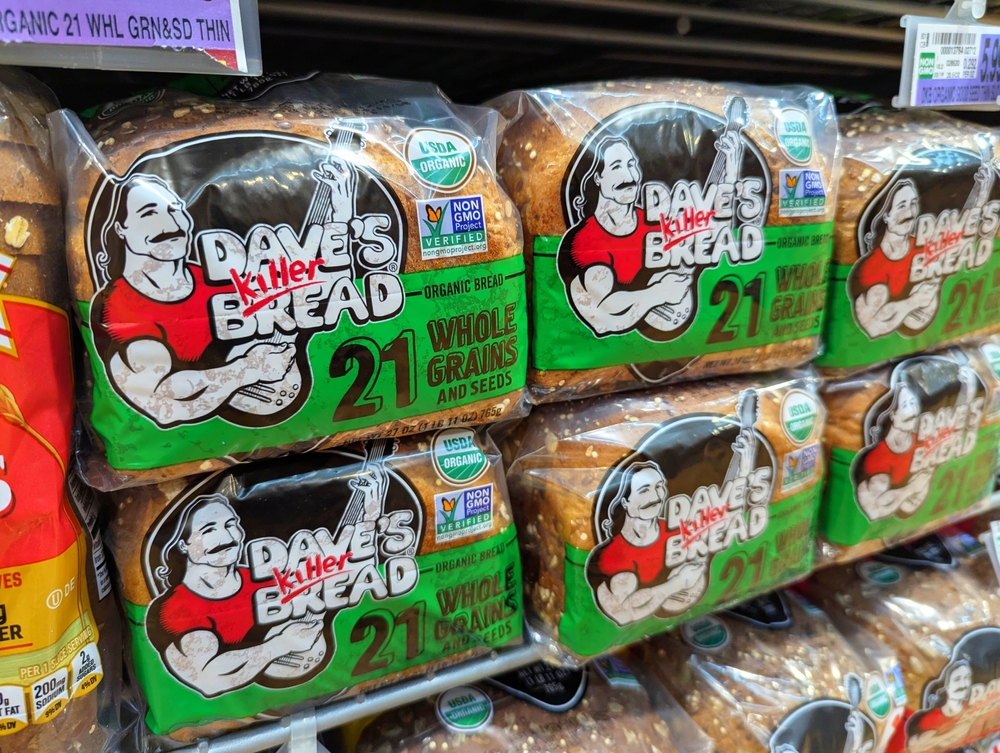
Dave's Killer Bread can fit into a weight loss diet if you stick to 1-2 slices daily and choose the Powerseed variety, but the standard varieties contain 5 grams of added sugar per slice—meaning a sandwich delivers 10 grams of sugar, which can undermine your progress.
The high fiber content (5 grams per slice) helps keep you full, but portion control is non-negotiable since each slice packs 110 calories compared to 60 in regular bread.
Keep reading to learn which variety is best for weight loss, how to incorporate it strategically, and how it stacks up against alternatives like Ezekiel bread.
What's Actually in Each Slice: Breaking Down the Varieties
The most popular option, 21 Whole Grains & Seeds, delivers 110 calories per slice—nearly double what you get from conventional breads like Wonder Wheat or Nature's Own, which clock in around 60 calories.
Each slice contains 5 grams of protein, 5 grams of fiber, 5 grams of added sugar, and 170 milligrams of sodium.
Make a sandwich with two slices and you're at 220 calories before adding any fillings.
If those numbers concern you, the thin-sliced version offers a smarter compromise.
At 60-70 calories per slice, it lands closer to regular bread territory while maintaining 3 grams of fiber and 3-4 grams of protein.
Two thin slices for your sandwich total just 120-140 calories, giving you more room in your daily budget for nutrient-dense toppings like avocado, turkey, or eggs.
The Powerseed variety stands apart as the clear winner for weight management.
Nutritionists and dietitians consistently recommend this one because it contains only 1 gram of sugar per slice—sweetened with organic fruit juices instead of cane sugar.
You still get 4 grams of fiber, 5 grams of protein, and 110 calories, but without the sugar load that can trigger cravings later.
The formula was specifically designed to maximize nutrition while minimizing the ingredient most likely to derail your progress.
Here's the practical takeaway: if Powerseed is available, grab it.
If not, thin-sliced varieties give you portion control without requiring willpower.
The regular thick-sliced versions can work, but you'll need to be more deliberate about limiting yourself to one slice instead of two.
The Added Sugar Problem You Need to Know About
Standard Dave's Killer Bread varieties pack 5 grams of added sugar into every slice.
Make a sandwich with two slices and you've consumed 10 grams—that's 26% of your daily recommended sugar intake and more than a quarter of what you'd get from a Coke.
Put that in perspective: Ezekiel bread contains zero added sugar, while Nature's Own has less than 1 gram.
Dietitians consistently flag this sugar content as the primary concern for anyone focused on weight loss. The issue isn't just the extra calories, though those add up quickly.
Added sugar delivers energy without making you feel full, so you're spending part of your calorie budget on something that won't help you stay satisfied until your next meal.
The metabolic impact matters even more.
When you eat added sugar, your blood glucose spikes, prompting an insulin response that can leave you hungrier an hour or two later.
This roller coaster effect makes calorie control significantly harder throughout the day.
Research links excess added sugar consumption to increased obesity risk, partly because of these hormonal disruptions that drive additional eating.
Think of it this way: those 10 grams of sugar in your sandwich aren't actively working against your hunger.
They're just sitting there, contributing calories while your body craves more food sooner than it should.
That's why the Powerseed variety changes the equation so dramatically—cutting sugar to just 1 gram per slice means your sandwich delivers nutrition without the blood sugar instability that can derail your entire afternoon.
Why the Fiber Content Actually Helps You Lose Weight
Here's where Dave's Killer Bread earns its reputation: a single slice delivers 5 grams of fiber, hitting 17% of your daily target in one go.
Most commercial breads struggle to reach 2-3 grams, making this a genuine advantage if you're trying to manage your weight.
Fiber works for weight loss in ways that directly counteract the sugar problem.
When you eat high-fiber foods, digestion slows down, which means the nutrients enter your bloodstream gradually instead of spiking your blood sugar.
This steadier energy release keeps you satisfied longer and helps prevent the hunger crashes that send you searching for snacks between meals.
Research consistently shows that people eating high-fiber diets have better weight management outcomes, largely because they naturally consume fewer calories throughout the day without feeling deprived.
The thick slices contribute to this effect in an unexpected way.
Because they're more substantial and take longer to chew, your brain registers satisfaction more effectively than it would with thin, fluffy bread.
That physical fullness can stop you from reaching for additional food later, assuming you respect portion limits.
The blend of 21 different grains does more than sound impressive on the package.
This diversity promotes gut health and metabolic function in ways that single-grain breads can't match.
Your microbiome thrives on variety, and a healthy gut correlates with more efficient metabolism and better appetite regulation.
What separates this from empty carbs is simple: the calories come from seeds and whole grains that deliver actual nutrition.
You're not just filling space in your stomach—you're providing your body with compounds that support the biological processes needed for sustainable weight loss.
How Dave's Compares to Other Weight Loss Breads
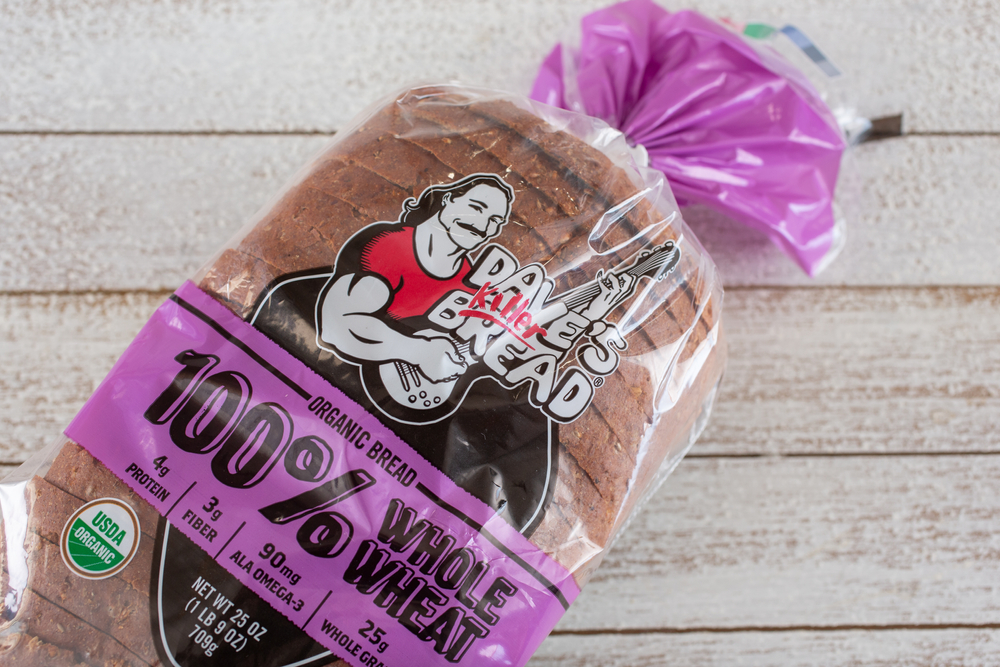
Ezekiel bread sits at the top of nearly every dietitian's recommendation list for weight loss, and the nutritional profile explains why.
Made from sprouted grains—a process that increases nutrient availability and reduces antinutrients—it contains all nine essential amino acids, making it a complete protein source.
It has zero added sugar, lower sodium at 75 milligrams compared to Dave's 170, and no added oils.
Medical professionals consistently rate Ezekiel an “A-” while giving Dave's a “B/B-.”
On paper, Ezekiel wins. In practice, there's a problem that numbers can't capture.
Ezekiel bread is significantly denser, has an earthy, nutty taste that many people find off-putting, and must be stored frozen to prevent spoilage.
These aren't minor inconveniences—they directly affect whether you'll actually eat it consistently.
If you can't stand the texture or flavor, the superior nutrition becomes irrelevant because you won't stick with it long enough to see results.
This is where Dave's makes its case.
The taste and texture are far more enjoyable, which matters more for long-term weight loss than any single nutritional metric.
You can keep it in your pantry, make a sandwich that actually tastes good, and not feel like you're punishing yourself for trying to eat healthier.
Dietary adherence beats perfect nutrition every time, because the diet you can maintain is always better than the optimal diet you abandon after three weeks.
Dave's also clears a much higher bar than most commercial breads:
- 100% organic ingredients with no high-fructose corn syrup
- No artificial preservatives, colors, or flavors
- Non-GMO verified throughout
- Made with whole food ingredients instead of enriched refined flour
You're not choosing between the best option and junk food.
You're choosing between excellent and very good, and sometimes “very good that you'll actually eat” delivers better results than “excellent that stays in your freezer.”
Your Action Plan: How to Use It for Weight Loss
Portion control isn't optional—it's the foundation of making this work.
Limit yourself to 1-2 slices daily maximum, and keep bread to roughly 25% of your plate.
Open-faced sandwiches solve the calorie problem elegantly: you get the satisfaction of eating Dave's Killer Bread without doubling your intake.
Thin-sliced varieties make this easier since you won't feel like you're sacrificing substance for the sake of staying within limits.
Context matters here: all your daily grains combined—including pasta, rice, oatmeal, and bread—should total around 6 ounces if you're working with a 2,000-calorie diet.
Dave's can be part of that equation, but it can't be the whole thing.
Never eat the bread by itself. This is where most people undermine their progress without realizing it.
Pair every slice with lean protein like eggs, turkey, or chicken, add healthy fats such as avocado or nut butter, and load up on vegetables.
This combination slows digestion, which enhances satiety and prevents the blood sugar spikes that trigger hunger an hour later.
The bread becomes part of a balanced meal instead of a standalone carb bomb.
Your variety selection matters as much as portion size.
Choose Powerseed whenever you can find it—the 1 gram of sugar versus 5 makes a measurable difference over time.
If Powerseed isn't available, go for thin-sliced options.
Think of Dave's as something for “some days” rather than every day. Rotating it with other foods prevents you from hitting a plateau and keeps your nutrition more varied.
Timing gives you an edge: eating bread earlier in the day when your metabolism is more active means you'll burn those carbohydrates through normal daily activities.
Track how it fits into your calorie budget using a food diary or app, and make sure you're staying in an overall deficit.
The bread itself won't make or break your progress—your total daily intake will.
The Bottom Line: Should You Include It in Your Weight Loss Diet?
Dave's Killer Bread works when you consume it strategically within portion limits, pair it with protein and vegetables, and ensure it fits into your overall calorie deficit.
If you choose Powerseed or thin-sliced varieties and find that including it helps you stick to your eating plan because you genuinely enjoy it, then it belongs in your diet.
It doesn't work when you struggle with portion control, eat multiple slices daily without tracking, or consume it alone as a snack while treating it like a “free food” that doesn't count toward your calorie budget.
The difference between these two scenarios isn't the bread itself—it's how you use it.
Here's what matters more than any nutritional analysis: many successful dieters report that allowing themselves foods they enjoy improves their adherence to the overall plan.
Long-term consistency beats short-term perfection every time.
If banning bread entirely leads you to binge on it three weeks later, you're worse off than if you'd just built it into your meals mindfully from the start.
Quality bread like Dave's can absolutely have a place in your weight loss strategy when you focus on quantity, frequency, and meal context.
The protein content supports muscle maintenance during weight loss, which keeps your metabolism functioning efficiently.
The whole grains provide sustained energy without the crashes you get from refined carbs, making it easier to maintain activity levels throughout the day.
The verdict: Dave's Killer Bread can support weight loss, but it requires mindfulness.
It's not a miracle food that accelerates fat loss, but it's not the enemy sabotaging your progress either.
Choose wisely—grab the Powerseed variety when possible.
Eat moderately—stick to 1-2 slices and build them into balanced meals.
Pair strategically—always include protein, vegetables, and healthy fats.
If you love it and including it helps you maintain your eating plan week after week, then it belongs in your rotation.
If you can't control portions around it or find yourself eating it mindlessly, switch to a lower-calorie alternative that doesn't trigger overconsumption. The best diet is always the one you can sustain.
Conclusion
Dave's Killer Bread can support your weight loss goals if you choose the Powerseed variety, stick to 1-2 slices daily, and always pair it with protein and vegetables.
The 5 grams of fiber helps keep you full, but the added sugar in standard varieties means portion control isn't optional.
If you can build it into balanced meals and stay within your calorie deficit, it's a quality choice that makes your diet easier to sustain long-term.