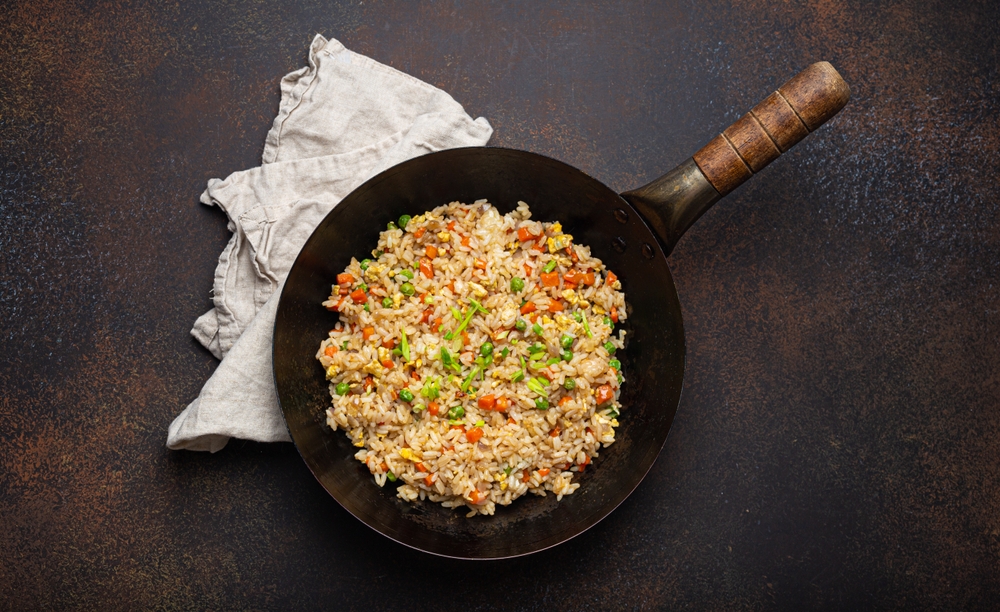
Traditional fried rice—especially from restaurants—isn't good for weight loss, with most servings packing 520 to 1,100+ calories that can derail your daily calorie budget.
However, homemade versions with smart modifications can drop down to just 200-265 calories per serving, making them a workable option if you prepare them correctly.
Keep reading to understand exactly what makes restaurant fried rice so problematic and how to transform this dish into something that actually fits your weight loss goals.
The Caloric Reality: Why Standard Fried Rice Challenges Weight Loss
A single cup of fried rice—roughly the size of a baseball—lands between 289 and 354 calories depending on what protein you choose.
Vegetable fried rice sits at the lower end with 289 calories, while pork fried rice tops out at 354.
Shrimp fried rice offers an attractive middle option at 329 calories with 13 grams of protein, giving you the best protein-to-calorie ratio among common varieties.
The macronutrient breakdown reveals why this dish fights against your weight loss efforts.
You're looking at 57-75% of calories coming from carbohydrates, with only 9-16% from protein.
Combine that with a fiber content of just 1.4-2 grams per cup, and you've got a meal that provides limited satiety relative to its calorie count.
Your body digests it quickly, and hunger returns sooner than it would with higher-protein, higher-fiber alternatives.
The real caloric culprit often hides in plain sight: cooking oil.
A single tablespoon contains 124 calories, and restaurant kitchens routinely use two to four tablespoons per serving to achieve that signature crispy texture.
This means 250-500 calories in a restaurant serving come from oil alone—before you've even counted the rice, eggs, or protein. That's nearly half the dish's total calories from nothing but fat.
Restaurant Fried Rice: The Weight Loss Saboteur
The gap between homemade and restaurant fried rice represents the most critical distinction for anyone trying to lose weight.
Restaurant versions routinely deliver 40-100% more calories than properly prepared homemade versions, and the differences extend well beyond just oil usage.
Portion sizes at restaurants typically range from 9 to 14 ounces—equivalent to two to three cups of rice rather than the recommended one-cup serving.
A side order from a popular chain contains 520-620 calories, while an entree-sized portion can exceed 1,100 calories.
That's more than half your daily calorie budget in a single dish.
Sodium levels in these preparations create another layer of problems.
You're looking at 850-1,000+ milligrams per serving, representing 35-50% of the recommended daily maximum.
This excess sodium causes water retention that can mask fat loss progress on the scale and leave you feeling bloated.
Even if you're losing fat, the scale won't reflect it.
Many restaurant preparations also include MSG, which some studies have linked to increased appetite and weight gain.
Combined with minimal vegetable content that leaves you hungry soon after eating, restaurant fried rice creates a perfect storm of caloric excess and poor satiety.
You consume massive calories, feel temporarily satisfied, then find yourself hungry again within a couple of hours—exactly what you don't want when trying to lose weight.
How Fried Rice Affects Your Blood Sugar and Hunger Levels
Fried rice carries a glycemic index of 73-80, firmly in the “high” category.
This matters for weight loss because high-GI foods cause rapid blood sugar spikes followed by crashes that trigger hunger and cravings.
White rice alone scores an exceptionally high GI of 91, and while the added fats and proteins in fried rice moderate this slightly, the dish still promotes the blood sugar rollercoaster that makes calorie control difficult.
The good news: several factors can lower the glycemic impact.
Using brown rice reduces the GI to the medium range of 50-68.
Adding protein slows glucose absorption.
Perhaps most surprisingly, cooking rice and then cooling it in the refrigerator for 24 hours before using it in fried rice increases resistant starch content, which research shows reduces digestibility and estimated glycemic index.
This “cook-cool-reheat” method may reduce calorie absorption by 10-15%.
The satiety problem runs deeper than blood sugar alone.
Rice scores 138 on the Satiety Index, making it more filling than white bread but far from ideal for weight management.
The problem worsens when rice is fried: the increased energy density from oil actually reduces satiety despite the higher calorie count.
Research shows rice meals are less satiating than equivalent potato meals for the same carbohydrate content.
The relatively low protein content of most fried rice preparations—typically 6-16 grams per cup—provides insufficient staying power for weight loss dieters who need sustained fullness between meals.
Restaurant versions with minimal vegetables compound this issue, leaving stomachs empty soon after consumption.
Strategic preparation can improve satiety significantly.
Loading fried rice with vegetables increases volume without proportionally increasing calories, while choosing higher-protein additions like shrimp or chicken breast helps extend fullness and keep you satisfied longer.
Modifications That Make Fried Rice Weight-Loss Compatible
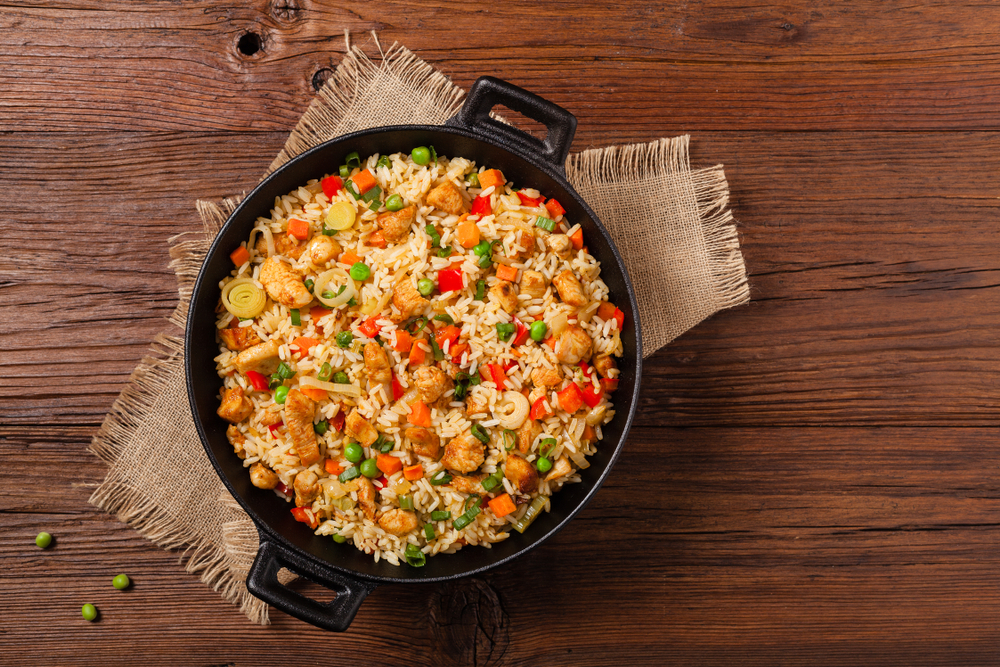
The most impactful modification is substituting cauliflower rice for white rice.
Raw cauliflower rice contains just 25 calories per cup compared to 200-218 for white rice—an 87-88% reduction in rice-based calories.
A complete cauliflower fried rice dish typically contains 108-144 calories per serving compared to 333-354 for traditional versions.
For those who find cauliflower rice too different in texture, a 50/50 blend with regular rice offers a reasonable compromise that still cuts calories significantly.
Oil reduction provides the second-largest calorie savings.
Switching from two tablespoons of poured oil to cooking spray reduces fat-derived calories from 240 to roughly 20-40—a potential savings of 200+ calories per batch.
High-quality nonstick cookware makes this feasible without sacrificing the crispy texture that makes fried rice satisfying.
The plate method offers practical portion guidance:
- Half your plate: vegetables
- One-quarter: protein
- One-quarter: rice only
For active weight loss, keep rice portions to approximately half a cup—about the size of a tennis ball.
Among protein options, shrimp delivers the best weight-loss profile with only 329 calories and 6 grams of fat per cup of fried rice, compared to 354 calories and 8 grams of fat for pork fried rice.
The 25-calorie difference per serving compounds over time, and shrimp provides comparable protein with less saturated fat.
The brown rice versus white rice debate yields surprising results: the calorie difference is negligible at just 13 calories per cup.
However, brown rice provides 3.5 grams of fiber compared to 0.6 grams in white rice, promoting greater fullness.
Brown rice's lower glycemic index also means more stable blood sugar and reduced subsequent cravings.
As a bonus, brown rice's firmer texture actually makes it ideal for high-heat fried rice preparation, where softer grains can turn mushy.
Regional fried rice varieties—Chinese, Thai, Japanese, and Korean—differ more in flavor profile than caloric impact.
The determining factors for weight loss remain consistent across styles: oil quantity, protein choice, vegetable content, and portion size matter far more than regional origin.
Your Complete Framework for Weight-Loss-Friendly Fried Rice
Transforming fried rice from a diet-breaker to an acceptable occasional meal requires combining multiple modifications.
A standard restaurant serving contains 635+ calories: 205 from rice, 240 from oil, 100 from meat, and 90 from a whole egg.
An optimized version using half the rice supplemented with extra vegetables, cooking spray instead of poured oil, lean shrimp, and egg whites drops to approximately 265 calories—a 58% reduction that brings the dish into reasonable territory for weight loss.
The optimal homemade approach yields roughly 200-250 calories per satisfying serving:
- 1 cup cooked brown rice or cauliflower rice for 4 servings
- 2 cups vegetables (doubled from typical recipes)
- 4 ounces shrimp or chicken breast
- 2 egg whites plus 1 whole egg for texture with reduced calories
- Low-sodium soy sauce
- Just 1 teaspoon sesame oil for flavor
This recipe framework gives you the flavors you want while slashing calories to a level that actually fits within most weight loss diets.
The key is understanding that fried rice exists on a spectrum: from calorie bombs exceeding 1,000 calories to reasonable 200-calorie versions that fit comfortably within your daily budget.
Your position on that spectrum depends entirely on preparation choices you control.
For best results, prepare fried rice at home no more than once weekly, use the modification strategies outlined above, and treat restaurant versions as an occasional indulgence rather than a regular meal option.
When you do order out, share an entree portion or immediately portion out a single cup and save the rest for another day.
Conclusion
Traditional restaurant fried rice works against weight loss goals due to high caloric density, excessive oil, large portions, and poor satiety.
However, you don't need to eliminate this dish entirely—homemade preparations with strategic modifications can reduce calories by more than half while preserving the flavors that make it appealing.
Success comes from understanding that your choices determine whether fried rice becomes a 1,000-calorie diet disaster or a reasonable 200-calorie meal that fits your weight loss plan.