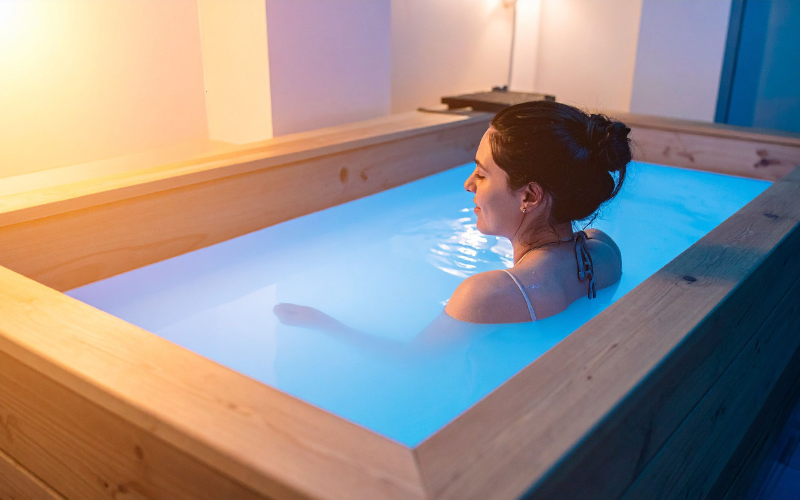
Cold baths do burn a few extra calories while you're in them, but no, they don't meaningfully help you lose weight — the effect is small and your appetite tends to make up the difference anyway.
Keep reading to see what the research actually found and why the numbers don't add up to real fat loss.
How Cold Exposure Is Supposed to Burn Calories
The idea that cold water can melt away fat isn't pulled out of thin air — there's real physiology behind it. The question is whether any of these mechanisms add up to enough calorie burn to matter.
Brown fat is the headline mechanism. Unlike regular white fat, which stores energy, brown adipose tissue burns it. It's packed with mitochondria and uses a protein called UCP1 to generate heat directly, a process known as non-shivering thermogenesis. Adults carry small deposits of it around the neck, shoulders, and spine, and cold exposure reliably switches it on — imaging studies confirm it starts pulling in glucose and fatty acids as soon as your body starts cooling down.
“Browning” sounds promising but doesn't hold up as well in people. With repeated cold exposure, white fat can start behaving more like brown fat, gradually shifting toward an energy-burning phenotype instead of an energy-storing one. This shift is well documented in rodents, but human studies tell a messier story — one trial found no browning of abdominal fat even after 10 days of cold acclimation. So while the mechanism exists, it's far less dependable in humans than headlines suggest.
Shivering does the heavy lifting, but you can't sustain it. When brown fat alone can't keep you warm, your muscles start shivering, and this is where the real calorie burn happens — intensities during cold water immersion have been measured at levels comparable to 40 to 56% of near-maximal effort. That sounds significant until you consider that nobody can shiver through a workout session. It's intense, uncomfortable, and short-lived by design.
Your metabolic rate does rise, but how much depends heavily on the method. Sitting in a mildly cool room bumps up energy expenditure by a modest 3 to 7%. Full water immersion or cooling suits push that number much higher, with reported increases ranging anywhere from 10% to 280%. That's a massive range, which says more about inconsistent study conditions than about a reliable, repeatable effect you could count on.
Appetite hormones might shift too, but the evidence isn't settled. Cold exposure has been studied for its effects on hunger-related hormones like ghrelin, leptin, GLP-1, and PYY. So far, human research hasn't found a consistent pattern — some studies show no meaningful change, others hint at a push toward increased hunger. Either way, there's no clear hormonal case for cold exposure suppressing appetite.
What the Actual Research Shows About Calorie Burn
Mechanisms are one thing — actual numbers are another. When you pull together the studies that measured real calorie burn, the results are underwhelming.
The best available evidence points to about 188 extra calories a day. A large analysis pooling 10 controlled trials found that mild cold exposure, in the range of 16 to 19°C, increased energy expenditure by an average of 188 calories daily. Put that in perspective: that's roughly what you'd burn on a 20 to 30 minute walk, or what you'd find in a single bagel. It's a real effect, but not a dramatic one, and definitely not something that reshapes a physique on its own.
The most cited “success story” is a single small study that hasn't been repeated. A 6-week trial had a group of young, lean men sit in cool temperatures for two hours a day, and the cold-exposed group lost a small amount of body fat compared to controls. On the surface, that sounds like proof cold exposure works. But a few details matter:
- Only 12 people were in the cold group, and just 8 were fully re-scanned at the end
- Participants were deliberately selected because they had low starting levels of brown fat
- Food intake wasn't tracked or controlled, meaning diet could easily explain part of the result
- One outlier was excluded from the final analysis
None of this means the finding is wrong — it just means it's far too thin to build broad conclusions on, especially since no larger study has reproduced it since.
Brown fat's actual calorie contribution appears to be small. Broader scientific reviews estimate that brown fat activity alone may only account for something in the range of 15 to 25 calories a day, with some estimates landing even lower. That's a rounding error compared to daily calorie needs, and it helps explain why the meta-analysis numbers, boosted mostly by shivering and general metabolic increases, look so much larger than brown fat's individual contribution.
Lab conditions and home routines aren't the same thing. Most of the calorie-burn numbers you see quoted come from controlled studies using mild, sustained cold, think chambers or cooling suits held at a steady temperature for hours. That's a completely different exposure than a 3 to 5 minute ice-water plunge at home. The physiological response to a quick, intense cold shock doesn't necessarily scale the same way, so borrowing lab numbers to estimate what your ice bath is doing isn't accurate.
Your results will vary more than you'd expect. Brown fat activity naturally declines with age and tends to be lower in people with obesity, meaning the people most drawn to cold exposure for weight loss are often the ones least likely to benefit from it. Sex differences and individual variation in baseline brown fat levels add another layer of unpredictability, making it hard to promise any consistent outcome from person to person.
The Appetite Problem That Undoes the Calorie Burn

Even if cold exposure burns some extra calories, that's only half the equation. What you eat afterward turns out to matter just as much, and this is where the whole idea starts to fall apart.
Animal studies already showed this pattern years ago. Mice exposed to intermittent cold roughly doubled their metabolic rate, which sounds like a huge win. But they simply ate more to match it, ending up with no net change in weight or fat. Their bodies treated the extra energy burn as a deficit to fill, not a deficit to keep.
Human research shows the same thing happening. A crossover study had participants sit in cold water at 16°C for 30 minutes, then compared their eating behavior to sessions in warm or room-temperature water. Afterward, given free access to food, they ate roughly 240 more calories following the cold session than after the warmer ones. That's more than enough to erase whatever calories the cold exposure burned in the first place.
Oddly, people didn't report feeling hungrier. Despite eating significantly more, participants didn't describe an increased sense of hunger during or after the cold water. The extra eating happened anyway, almost as if the body were compensating on a level separate from conscious appetite. That's a more concerning finding than simple hunger, since it means the drive to eat more isn't something you can necessarily catch or resist through willpower alone.
For anyone hoping to use cold exposure as a deficit strategy, this is the sticking point. You can't out-calculate a compensation response you're not even aware is happening. Any calories burned during the cold session are vulnerable to being replaced, often without you noticing, at your very next meal.
This is exactly why experts remain unconvinced. It's not that the calorie burn from cold exposure is fake — it's that the body seems to actively work to cancel it out. A weight-loss method only works if it creates a sustained deficit, and appetite compensation makes that extremely difficult to achieve through cold exposure alone.
What Experts and Reviews Actually Conclude
Individual studies are useful, but it's worth stepping back to see where the broader scientific and medical community lands once all the evidence is weighed together.
Obesity-medicine specialists don't recommend cold exposure for weight loss. When the calorie burn is compared against known compensation effects, specialists in the field consistently describe the impact as not significant enough to matter. It simply isn't part of standard clinical guidance for anyone trying to lose weight.
Review after review reaches the same conclusion. Cold-induced thermogenesis has been repeatedly described as ineffective as a standalone weight-loss strategy. This isn't one skeptical voice — it's a pattern across multiple independent evaluations of the evidence, all converging on the same verdict.
Winter swimmers are often used as a real-world example, but the claim gets overstated. Research on winter swimmers who combine cold dips with sauna sessions has found improvements in cold-induced thermogenesis and thermoregulation. That's a genuine finding. But the researchers themselves were careful to frame it as a potential strategy for increasing energy expenditure, one that could only lead to weight loss if a person managed to avoid eating back the extra calories burned. That's a conditional statement, not a demonstrated outcome, and the distinction matters.
The people most interested in this method tend to benefit from it the least. Brown fat activity is already reduced in older adults and further diminished in people with obesity, meaning the population most likely to try cold exposure for weight loss has the least biological machinery available to make it work. This mismatch between interest and physiological reality is one of the most overlooked issues in the whole conversation.
A lot of the confidence behind cold-baths-for-weight-loss claims traces back to commerce, not clinical research. Many of the bold numbers circulating online, often framed as guaranteed fat-burning results, originate from companies selling cold plunge tubs and related equipment rather than from peer-reviewed studies. That doesn't make cold exposure worthless, but it does mean the loudest claims about it usually come from the people with the most to gain by you believing them.
Where Cold Exposure Does Show Real Benefits (Just Not Weight Loss)
None of this means cold exposure is pointless — it just means weight loss isn't where it earns its keep. The benefits that do hold up are worth understanding on their own terms.
Mental health and quality-of-life improvements have decent support. A review pulling together multiple studies and thousands of participants found cold water immersion may reduce stress, improve sleep, and boost overall quality of life. Interestingly, these effects often show up later rather than immediately, suggesting the benefit builds over time rather than delivering an instant mood fix in the moment.
Recovery after exercise is one of the better-established uses. Cold exposure reliably reduces delayed-onset muscle soreness, the achy, stiff feeling that shows up a day or two after a hard workout. It also tends to improve how recovered people feel afterward, which is part of why athletes have used ice baths for decades, well before the current wellness trend around them.
There's a plausible metabolic benefit too, though it's not about burning fat. Some evidence points to improvements in insulin sensitivity and glucose metabolism with regular cold exposure. This is a separate pathway from calorie burn entirely, one connected more to how your body processes blood sugar than to how much energy it expends.
The real issue is that these benefits get lumped in with weight loss claims when they shouldn't be. Popular messaging often blurs the line between “this is good for recovery” and “this will help you lose weight,” as if any health benefit automatically doubles as a fat-loss benefit. It doesn't. Improved sleep, lower stress, better recovery, and better glucose control are all legitimate reasons to consider cold exposure — they just don't add up to a smaller number on the scale, and treating them as if they do sets people up for disappointment.
How to Approach Cold Exposure Safely (If You Still Want to Try It)
If you still want to give cold exposure a try, that's reasonable, as long as you go in with the right expectations and the right precautions.
Keep your expectations realistic. Any fat-loss effect you might get is small, and it's easily wiped out by eating just slightly more afterward, something your body may push you toward without you even noticing. Think of cold exposure as a possible bonus for recovery or mood, not a weight-loss method you can rely on.
A conservative protocol is the smartest way to start. Rather than jumping straight into an ice bath, ease in with:
- Water in the mild range, not extreme sub-zero temperatures
- Short sessions lasting just a few minutes, not prolonged soaks
- Gradual acclimation over multiple sessions, allowing your tolerance to build naturally rather than forcing it on day one
Certain safety precautions matter every single time, no exceptions:
- Never go into cold water alone — have someone with you or a clear check-in plan
- Focus on controlling your breathing through the first minute or so, when the initial shock response hits hardest
- Keep your head above water at all times, since submersion adds unnecessary risk on top of the cold shock itself
Some people need medical clearance before trying this at all. If you have a heart condition, high blood pressure, thyroid disease, or any related cardiovascular concern, talk to a doctor first. The physical stress cold water puts on your heart and blood pressure is real, and it's not worth testing without knowing your baseline risk.
Know when to get out immediately. Stop the session right away if you experience prolonged, violent shivering, numbness, or any sense of confusion. These aren't signs to push through — they're signs your body is struggling to manage the cold and needs warmth right away.
The evidence could shift, but it would take a specific kind of study to do it. A large trial, following participants for several months, that actually tracks and controls food intake while measuring fat loss in people with overweight or obesity, would be the kind of research needed to challenge the current conclusion. Until a study like that exists, cold baths remain an unproven method for weight loss, even as safer, smaller-scale use for recovery or mood remains reasonable.
Conclusion
Cold baths simply aren't a reliable path to weight loss. Whatever calories they burn, your appetite tends to make up the difference, and the research just doesn't back up the bold claims floating around online, even though the recovery and mood benefits are real.
If losing weight is genuinely your goal, diet and exercise remain the two levers with actual proven results, nothing about cold exposure changes that math. So go ahead and use a cold plunge if it helps you sleep better or bounce back faster after a workout, just don't expect it to do the work that a calorie deficit is built to do.