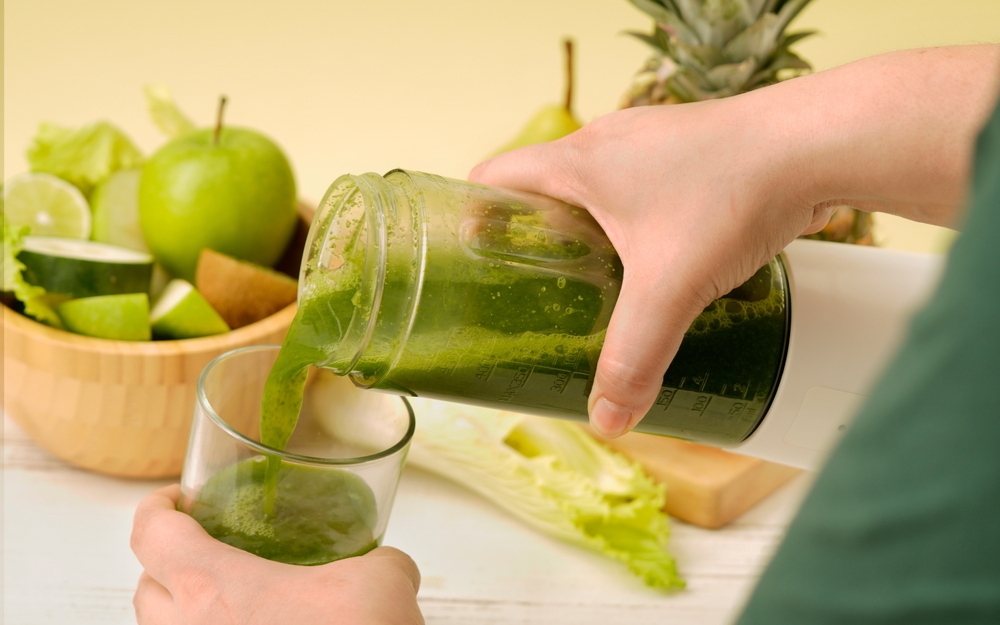
No, green juice is not an effective weight loss tool.
While you might lose a few pounds during a juice cleanse, scientific research shows this comes from water loss and severe calorie restriction—not fat burning—and the juicing process actually removes the fiber that makes vegetables effective for weight management in the first place.
Keep reading to understand what the limited research really shows, why health experts unanimously oppose juice cleanses, and how green juice can fit into your diet without sabotaging your weight goals.
What Research Actually Shows About Green Juice and Weight Loss
When you look for scientific evidence supporting green juice as a weight loss tool, you'll find surprisingly little.
The research landscape is sparse, limited in scope, and doesn't deliver the conclusions juice advocates hope for.
The most frequently cited study comes from UCLA in 2017, where researchers followed just 20 participants who consumed only vegetable and fruit juices for three days.
While participants did lose an average of 1.7 kilograms, the researchers made a critical finding: this weight loss happened because people were eating only about 1,310 calories daily, not because juice itself has fat-burning properties.
Even more telling, the gut microbiome changes researchers observed during the cleanse reversed completely within two weeks of returning to normal eating.
A 2010 study from Baylor College of Medicine offers slightly more substance. Participants who drank 8-16 ounces of vegetable juice daily lost roughly four pounds over 12 weeks, compared to one pound in people who didn't drink juice.
Before you get excited, though, consider two things: Campbell Soup Company funded the research, and that weight loss averages out to just 0.33 pounds per week—hardly the dramatic results juice cleanses promise.
More recent research raises red flags instead of supporting juice diets.
A February 2025 study from Northwestern University found that even short three-day juice-only diets can trigger shifts in gut and oral bacteria that link to inflammation in the body.
The reality you need to understand: no large-scale clinical trials support green juice as an effective weight loss method.
The scientific consensus points clearly to one conclusion—any weight loss you see from juice consumption stems from eating fewer calories overall, not from metabolic enhancement or special fat-burning properties in the juice itself.
When people lose weight during juice cleanses, what they're really losing is:
- Water weight from reduced sodium and carbohydrate intake
- Glycogen stores (the carbohydrates your muscles and liver keep on hand)
- Minimal actual fat (rarely exceeding 0.25 pounds daily)
This explains why the weight comes back so quickly once you return to normal eating.
You weren't burning fat at an accelerated rate—you were just temporarily depleting your body's readily available energy stores and shedding water.
The Fiber Problem That Undermines Every Weight Loss Claim
Here's the fundamental flaw in relying on green juice for weight loss: the juicing process removes most of the insoluble fiber—the very component that makes vegetables effective for weight control.
When you juice kale, spinach, and cucumber, those whole vegetables lose their substantial dietary fiber content.
A typical green juice contains less than 1 gram of fiber per serving. Compare that to the 25-38 grams adults need daily, and you start to see the problem.
Why this matters for your weight: A 2011 study published in Obesity Reviews found that increased fiber intake reduced appetite by 5% and decreased long-term calorie consumption by 2.6%.
Over four months, this translated to average weight loss of nearly 2 kilograms.
Fiber does this work through a specific mechanism—it creates a viscous gel in your digestive tract that slows glucose absorption, preventing the blood sugar spikes and subsequent crashes that trigger hunger.
Without fiber, green juice behaves completely differently in your body. It moves rapidly through your digestive system, causing your blood sugar to spike instead of staying stable.
Robin Foroutan, an integrative medicine dietitian, puts it plainly: juice “spikes your blood sugar in a more dramatic way than if you ate the actual fruit or vegetable.”
This spike leaves you hungry again soon after drinking, often within 30-60 minutes.
The difference between eating and drinking your vegetables extends beyond fiber content:
When you chew whole vegetables:
- Your jaw movement triggers the release of CCK and GLP-1, hormones that signal fullness to your brain
- The mechanical act of chewing slows consumption and gives your body time to register satiety
- Fiber creates physical volume in your stomach
When you drink green juice:
- Liquid calories bypass the chewing process entirely
- Satiety signals activate less effectively
- No fiber bulk means your stomach empties faster
This explains why you can drink a 200-calorie green juice and feel hungry an hour later, while eating 200 calories of whole vegetables keeps you satisfied for hours.
You're not getting the biological feedback systems that help you naturally regulate how much you eat.
Why Health Experts Unanimously Oppose Juice Cleanses
Medical professionals and registered dietitians don't mince words when it comes to juice cleanses for weight loss—they consistently advise against them.
The reasoning goes deeper than you might expect.
Amber Sommer, a registered dietitian at Cleveland Clinic, explains the core problem: “When you're swapping out food for juice, you're not getting enough calories, protein or fiber.
That can actually slow down your metabolism.” This isn't just theoretical concern.
The numbers reveal a stark reality: juice cleanses typically provide only 10-15 grams of protein daily, while your body needs 46-56 grams to maintain basic functions.
When you deprive your body of adequate protein, it doesn't just burn fat for energy.
Instead, it begins breaking down muscle tissue to get the amino acids it needs.
This creates a vicious cycle for anyone trying to lose weight, because muscle mass drives your metabolic rate.
Lose muscle, and you've actually impaired your ability to manage weight long-term, even after the cleanse ends.
What that initial weight loss really represents:
During a 3-7 day juice cleanse, you might lose 1-4 pounds.
That sounds encouraging until you understand what you're actually losing.
The vast majority comes from water weight and depleted glycogen stores—the carbohydrates your muscles and liver keep readily available.
True fat loss during these cleanses rarely exceeds 0.25 pounds per day.
Kayla Moran, a registered dietitian at the University of Rochester Medical Center, addresses this misconception directly: “Any initial weight loss is usually due to the depletion of energy stores and water, not fat loss.”
Major medical institutions including Mayo Clinic and NewYork-Presbyterian confirm what happens next: the weight you lost during the cleanse typically returns once you resume normal eating. This isn't a failure of willpower—it's basic physiology.
Your body restores its glycogen stores and rehydrates, bringing the numbers on the scale right back up.
The psychological aftermath can prove equally problematic.
Extreme restriction often triggers rebound overeating.
After days of consuming only juice, your body's hunger signals intensify, making it difficult to return to moderate eating patterns.
You end up consuming more calories than you would have without the cleanse, potentially gaining back more weight than you lost.
Real Health Risks Beyond Failed Weight Loss Attempts

Green juice's ineffectiveness for weight loss might seem like the end of the story, but for certain people, regular consumption carries genuine health risks that go well beyond wasted effort and money.
Kidney damage from oxalates represents the most serious documented concern.
Spinach and kale contain high levels of oxalic acid, and when you concentrate these vegetables into juice form, you can end up consuming 200-400 milligrams of oxalate per glass.
Several medical case reports have linked acute kidney failure directly to excess oxalate intake from green juices.
If you have existing kidney issues or a history of kidney stones, this risk intensifies significantly—your kidneys may struggle to process and eliminate these concentrated oxalates.
For people taking warfarin or other blood-thinning medications, green juice creates a different problem. These juices are typically loaded with vitamin K, which directly counteracts how blood thinners work in your body.
The American Heart Association warns that juices containing greens can provide 60+ micrograms of vitamin K per serving—enough to significantly affect INR levels and compromise the effectiveness of your medication.
If you're on blood thinners, even occasional green juice consumption could interfere with your treatment.
Blood sugar disruption poses particular danger for people managing diabetes.
Remember that fiber problem we discussed earlier?
Without fiber to slow absorption, the natural sugars in green juice hit your bloodstream rapidly, causing the kind of glucose spikes that people with diabetes work hard to avoid.
This becomes especially problematic if someone mistakenly believes green juice is a “healthy” choice and consumes it regularly.
Thyroid function concerns round out the risk profile.
Cruciferous vegetables like kale contain goitrogens—compounds that may interfere with thyroid function when consumed in concentrated amounts over time.
For most people eating normal portions of these vegetables, this isn't an issue.
But juicing concentrates these compounds substantially.
Given these risks, you should consult with your doctor before making green juice a regular part of your diet, especially if you have any existing health conditions or take medications.
How to Include Green Juice Without Sabotaging Your Weight Goals
If you enjoy green juice and want to keep it in your diet, you can do so without undermining your weight management efforts—but you need to approach it strategically.
Treat juice as an occasional supplement rather than a dietary foundation.
Limit consumption to 4-6 ounces daily at most, and follow the 80/20 rule: your juice should be 80% vegetables with a maximum of 20% fruit.
This keeps sugar content in check while maintaining some palatability.
Never use green juice as a meal replacement. Instead, pair it with protein-containing foods like eggs or nuts.
This combination moderates your blood sugar response and provides the satiety that juice alone can't deliver.
Think of juice as a beverage alongside breakfast, not as breakfast itself.
When buying commercial green juice, check two things:
- Vegetables should appear first on the ingredient list, not buried after three types of fruit juice
- Sugar content should stay below 10 grams per serving
These two criteria separate genuinely vegetable-focused juices from fruit juice blends masquerading as health drinks.
A more effective alternative: Swap juicing for blending.
Smoothies retain all the fiber from whole vegetables, giving you the satiety benefits that juice strips away.
Add protein powder or nut butter to your blended greens, and you've created a nutritionally complete option that supports weight management far more effectively than extracted juice ever could.
You get the convenience of a drinkable meal without sacrificing the components that help control hunger.
The bottom line deserves to be stated plainly: whole vegetables outperform juice for weight management in every measurable way.
Small quantities of vegetable-focused green juice can add nutrients to an already healthy diet, but they cannot replace whole foods or accelerate fat loss.
If you're serious about losing weight, your energy is better spent eating whole vegetables, ensuring adequate protein intake, and maintaining the fiber consumption that keeps hunger at bay.
Conclusion
Green juice's reputation as a weight loss tool rests on marketing appeal rather than scientific evidence.
The research shows any weight loss comes from caloric restriction while the removal of fiber undermines the very mechanisms that make vegetables effective for weight management.
If losing weight is your goal, you'll get better results by eating whole vegetables, maintaining adequate protein intake, and keeping the fiber that naturally controls your appetite.