Honey Nut Cheerios isn't a good choice for weight loss because it contains 12 grams of added sugar and only 3 grams of protein per serving, which creates blood sugar spikes and leaves you hungry within a couple of hours.
That said, at 140 calories per cup, it won't wreck your diet if you use strict portion control, add protein like Greek yogurt or eggs, and limit it to 2-3 times per week rather than eating it daily.
Keep reading for the complete breakdown of what's actually in this cereal, what the science says, and how to make it work if you really want to keep eating it.
The Short Answer: Honey Nut Cheerios Isn't Ideal for Weight Loss (But It Won't Ruin Your Diet Either)
The fundamental problem with Honey Nut Cheerios comes down to what's in each serving versus what your body needs to stay full. You get 12 grams of added sugar but only 3 grams of protein in one cup.
This creates a predictable pattern: your blood sugar spikes quickly after eating, then crashes within a couple of hours, triggering hunger signals that can lead to overeating later in the day.
Here's what makes this particularly frustrating for weight loss:
The macronutrient breakdown works against you. When you eat something high in sugar and low in protein, your body burns through it fast.
Protein takes longer to digest and keeps you satisfied, while sugar provides quick energy that disappears just as quickly.
Think of it like comparing firewood to kindling—one burns slow and steady, the other flares up and dies out.
No research backs it up. Not a single published study has tested whether Honey Nut Cheerios specifically helps with weight loss.
The cereal simply hasn't been studied in this context, so any claims about its effectiveness are speculation rather than science.
It fails official nutrition standards. The FDA's updated “healthy” labeling standard caps added sugar for cereals at 2.5 grams per serving.
Honey Nut Cheerios contains 12 grams—nearly five times over the limit. Under rules that manufacturers must comply with by February 2028, this cereal can't legally carry a “healthy” label.
That said, the calorie count tells a different story. At 140 calories per cup, Honey Nut Cheerios won't destroy your daily calorie budget.
For context, that's less than a medium banana with two tablespoons of peanut butter. The issue isn't that it's calorically dense—it's that those 140 calories don't deliver the nutrition you need to feel satisfied.
Can it work anyway? Yes, but only with deliberate modifications.
If you add a significant protein source (such as Greek yogurt or eggs), measure your portions precisely every single time, and limit yourself to 2-3 servings per week rather than eating it daily, you can keep Honey Nut Cheerios in your diet without derailing your weight loss.
Just understand that you're working around the cereal's nutritional profile, not benefiting from it.
What's Actually in Your Bowl: Breaking Down the Nutrition Label
The ingredients list tells you everything you need to know before you even look at the numbers.
Whole grain oats appear first, which sounds promising—until you notice that three of the next five ingredients are sweeteners: sugar, honey, and brown sugar syrup.
The cereal is essentially oats coated in multiple forms of sugar.
Here's what one cup (37 grams) actually delivers:
- 140 calories
- 30 grams of carbohydrates
- 12 grams of added sugar
- 3 grams of fiber
- 3 grams of protein
Add half a cup of skim milk and you're looking at roughly 180 calories and 7 grams of protein total. Most dietitians recommend 20-30 grams of protein at breakfast for weight loss, which means this combination falls dramatically short even with the milk added.
The glycemic index problem runs deeper than the sugar count suggests. Honey Nut Cheerios scores between 74-75 on the glycemic index, placing it squarely in the “high” category (anything above 70 qualifies).
A study indexed in PubMed found that Honey Nut Cheerios produced “a much larger blood sugar and insulin response” compared to steel-cut and old-fashioned oats.
This matters because high-GI foods create a specific physiological pattern that undermines weight loss. Your blood glucose shoots up rapidly after eating, triggering a strong insulin response.
Within 2-3 hours, your blood sugar crashes below baseline, which stimulates hunger hormones and sends you looking for your next meal or snack. You end up eating more frequently throughout the day, even though you technically consumed enough calories.
Comparing Honey Nut to Original Cheerios reveals just how much the “honey nut” modification costs you nutritionally:
| Nutrient | Honey Nut Cheerios (1 cup) | Original Cheerios (1½ cups) |
|---|---|---|
| Calories | 140 | 140 |
| Added sugar | 12g | 1g |
| Protein | 3g | 5g |
| Fiber | 3g | 4g |
| Whole grain | 22g | 34g |
| Iron | 3.6mg (20% DV) | 13mg (70% DV) |
Same calorie count, completely different nutritional value. Original Cheerios gives you 12 times less added sugar, 67% more protein, and 55% more whole grain per serving.
The iron content difference is particularly stark—Original delivers 70% of your daily value compared to just 20% from Honey Nut.
The FDA's updated “healthy” labeling standard, which manufacturers must comply with by February 2028, caps added sugar at 2.5 grams per serving for cereals.
Honey Nut Cheerios contains 12 grams—nearly five times over the federal threshold for what can be marketed as a healthy food.
What the Research Says About Cereal and Weight Loss
No peer-reviewed study has specifically tested Honey Nut Cheerios for weight loss. The cereal simply hasn't been studied in isolation, which means any claims about its effectiveness are extrapolation rather than direct evidence.
The broader research on breakfast cereals and weight management paints a nuanced picture. A 2023 systematic review published in Advances in Nutrition analyzed 28 studies on ready-to-eat cereal and body weight.
The observational data looked promising at first glance—frequent cereal consumers had lower BMIs than non-consumers. However, this likely reflects confounding variables rather than cause and effect.
People who eat breakfast cereal regularly tend to exhibit other health-conscious behaviors like exercising more and eating more fruits and vegetables.
The randomized controlled trials within that same review told a clearer, less encouraging story.
Cereal used as a calorie-controlled meal replacement can produce weight loss, but the review concluded this approach is “not superior to other options” for achieving a calorie deficit.
In other words, cereal works for weight loss only when it replaces higher-calorie meals you would have otherwise eaten. It offers no metabolic advantage or special fat-burning properties.
One critical detail about this review deserves attention: it was funded by General Mills' Bell Institute of Health and Nutrition, with one author employed directly by the company.
This doesn't automatically invalidate the findings, but it raises questions about what research questions were asked and how results were interpreted.
The beta-glucan fiber argument falls apart under scrutiny. Whole grain oats contain beta-glucan, a soluble fiber that has shown some promise for satiety in studies using 3-7 grams daily. Honey Nut
Cheerios provides only 0.75 grams per serving. You would need to eat four servings—consuming 48 grams of added sugar in the process—just to reach the minimum therapeutic dose studied in research.
The European Food Safety Authority reviewed the evidence in 2009 and concluded that a cause-and-effect relationship between beta-glucan and maintaining normal body weight “could not be established.”
Research consistently demonstrates that higher-protein breakfasts outperform cereal for controlling hunger and reducing overall calorie intake:
Study 1: Researchers compared a 350-calorie high-protein breakfast containing 35 grams of protein against a 350-calorie cereal breakfast with 13 grams of protein.
The high-protein version significantly reduced levels of ghrelin (the hunger hormone) and cut evening snacking compared to the cereal breakfast—same calories, dramatically different effects on appetite control.
Study 2: A crossover study measured total energy intake following different breakfast types.
Participants consumed significantly fewer calories throughout the day after an egg breakfast compared to a cereal breakfast—4,518 kilojoules versus 5,283 kilojoules, with statistical significance at p=0.001.
The pattern across studies is unmistakable. When you eat more protein at breakfast, you naturally eat less food for the rest of the day without consciously trying to restrict calories.
Cereal, particularly sweetened varieties like Honey Nut Cheerios, simply doesn't trigger the same satiety response.
The Hidden Portion Control Problem Most People Miss
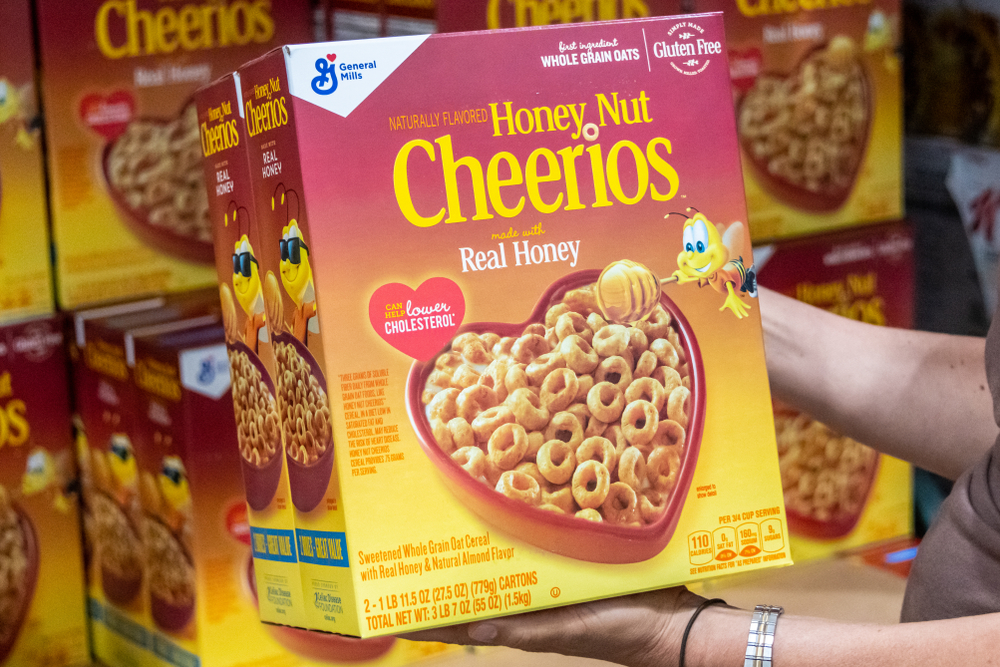
One cup of Honey Nut Cheerios fills an average cereal bowl only about one-third to one-half full.
This creates an immediate visual disconnect—what the nutrition label calls a serving looks absurdly small in your bowl, so most people instinctively pour more.
Research from Consumer Reports found that 92% of participants exceeded the recommended serving sizes when pouring cereal.
The average “overpour” for Cheerios specifically was 132%, meaning people poured more than double what they intended.
Most people end up with 1.5 to 2 cups in their bowl, which translates to 210-280 calories and 18-24 grams of sugar before adding any milk.
The cereal industry's packaging actively encourages this problem.
A 2017 study published in BMC Public Health analyzed cereal box photos and found they depict serving sizes that are 64.7% larger than what the nutrition label describes.
When researchers showed participants these exaggerated images, people poured 17.8% more cereal than they would have otherwise.
The photos on the box literally train you to think a larger portion is normal.
Here's why this matters more than you might think: adults consume approximately 92% of whatever they serve themselves.
Overserving translates directly to overeating. If you pour two cups of Honey Nut Cheerios instead of one, you're not going to leave half of it in the bowl—you're going to eat 280 calories and 24 grams of sugar and track it as one serving in your food diary.
For someone trying to lose weight through calorie tracking, eyeballing a bowl of Honey Nut Cheerios is one of the most reliable ways to undercount both sugar and calories.
You think you ate 140 calories for breakfast, but you actually consumed 240-280. Do this several times per week, and you've created a calorie surplus that completely negates your deficit from other meals.
The math stops working, and you can't figure out why you're not losing weight.
How to Make Honey Nut Cheerios Work If You Keep Eating It
If you want to keep Honey Nut Cheerios in your diet while losing weight, you need to treat it as a base ingredient that requires modification, not as a complete meal. Here's how to minimize the damage.
Add protein aggressively—this is the single most important change you can make. The 3 grams of protein in one cup won't keep you satisfied for more than two hours. You need to close that gap dramatically:
- Use one cup of Greek yogurt (15-20 grams of protein) as your base instead of milk, then sprinkle the measured Cheerios on top
- Eat two eggs (12-14 grams of protein) alongside your bowl rather than treating the cereal as your entire breakfast
Either approach transforms the meal's satiety profile completely. You're no longer eating sugar with a side of oats—you're eating protein with some cereal for texture and flavor.
Measure every single time, no exceptions. Use a measuring cup and level it off at exactly one cup. Don't estimate. Don't eyeball.
Research shows that bowl size directly influences pour volume, so use a smaller bowl that makes one cup look more substantial. A kitchen scale is even better—37 grams is your target weight.
This feels obsessive until you realize that most people pour 1.5-2 cups without measuring, effectively doubling their calorie and sugar intake while tracking it as one serving.
Cut the sugar with a 50/50 mix. Combine half Honey Nut Cheerios with half Original Cheerios in the same bowl.
This drops your added sugar from 12 grams to roughly 6.5 grams per serving while preserving enough sweetness to keep the meal enjoyable.
You're not switching to plain oatmeal—you're just diluting the sugar load by half.
Limit frequency to 2-3 times per week maximum.
Reserve Honey Nut Cheerios for mornings when you need something fast and convenient, not as your default breakfast.
On other days, choose options that actually support weight loss:
- Eggs with vegetables: ~20g protein, 0g added sugar, 250-300 calories
- Cottage cheese with fruit: ~25g protein, 250 calories
- Steel-cut oatmeal with nuts: glycemic index around 55 compared to Honey Nut's 74
Choose your milk strategically based on your calorie budget. Unsweetened almond milk adds only about 15 calories per half cup versus 75 calories for whole milk.
If you're using dairy, skim milk adds 4 grams of protein per half cup at a modest 40-calorie cost, which at least helps close the protein gap slightly.
Track your sugar budget carefully throughout the day. One serving of Honey Nut Cheerios consumes 48% of the American Heart Association's daily added sugar limit for women (25 grams total) and 33% of the limit for men (36 grams total).
If you eat this cereal at breakfast, you must be disciplined about sugar for the rest of the day—no sweetened coffee drinks, no dessert, no sugary snacks. You've already used up most of your allowance before 9 AM.
Better Breakfast Options and the Final Verdict
Registered dietitians are nearly unanimous: Honey Nut Cheerios is not an optimal weight loss food.
Nutritionist Lisa Richards summarizes the professional consensus bluntly—the cereal is “lacking in nutrients beneficial to weight loss and has a hefty amount of nutrients that stall weight loss like added sugar.”
Here's how Honey Nut Cheerios stacks up against expert recommendations for a weight loss breakfast:
| Nutrient | Expert Target | Honey Nut Cheerios (1 cup + milk) |
|---|---|---|
| Protein | 20-30g | 7g |
| Fiber | 5-8g | 3g |
| Added sugar | <2.5-5g | 12g |
| Healthy fats | Should be present | Minimal |
It fails every single benchmark. Weight Watchers assigns it 4 SmartPoints for three-quarters of a cup versus 3 SmartPoints for Original Cheerios, reflecting its lower nutritional value per calorie.
Noom would likely classify it as a yellow-to-orange food—permissible but best consumed in small amounts infrequently.
The nutritional profile actively works against weight loss goals through multiple mechanisms: high added sugar, low protein, low fiber, and a high glycemic index of 74-75.
This combination leaves most people hungry within 2-3 hours, which typically triggers mid-morning snacking that adds unplanned calories to your day.
That said, the 140 calories per cup is modest and not catastrophic from a pure calorie perspective.
The whole grain oats provide some nutritional value, including small amounts of fiber and minerals.
If you're replacing a 500-calorie fast food breakfast with Honey Nut Cheerios, you'll likely lose weight simply through calorie reduction—but that weight loss comes from eating fewer calories, not from any special property of the cereal itself.
Here's the hierarchy of breakfast options for weight loss, ranked from best to worst:
Top tier: Eggs, Greek yogurt, or cottage cheese paired with vegetables and fruit deliver 3-8 times more protein (20-30 grams) with zero added sugar.
A three-egg omelet with spinach and peppers, for instance, provides about 20 grams of protein at roughly 250-300 calories.
Middle ground: Steel-cut oatmeal with nuts offers better satiety and a significantly lower glycemic index (around 55 compared to Honey Nut's 74). You'll stay fuller longer and avoid the blood sugar roller coaster.
Within the Cheerios family: Original Cheerios is dramatically better than Honey Nut—12 times less added sugar, 67% more protein, and 55% more whole grain at the same calorie count.
Bottom tier: Honey Nut Cheerios works for weight loss only when it replaces higher-calorie meals through deliberate calorie restriction, not through any metabolic advantage.
If you decide to keep Honey Nut Cheerios in your rotation, three things are non-negotiable: strict portion control using measuring tools, aggressive protein supplementation with Greek yogurt or eggs, and limiting frequency to 2-3 times per week.
Without all three modifications, you're fighting against the cereal's nutritional profile rather than working with it.
Conclusion
The honest answer is that Honey Nut Cheerios' high sugar, low protein, and high glycemic index make it a poor choice for weight loss compared to eggs, Greek yogurt, or even Original Cheerios.
At 140 calories per cup, it won't wreck your diet, but it won't help you lose weight either—it simply doesn't keep you full long enough to prevent overeating later in the day.
If you love it and want to keep eating it, measure your portions precisely, add significant protein, and treat it as an occasional convenience food rather than your daily breakfast.