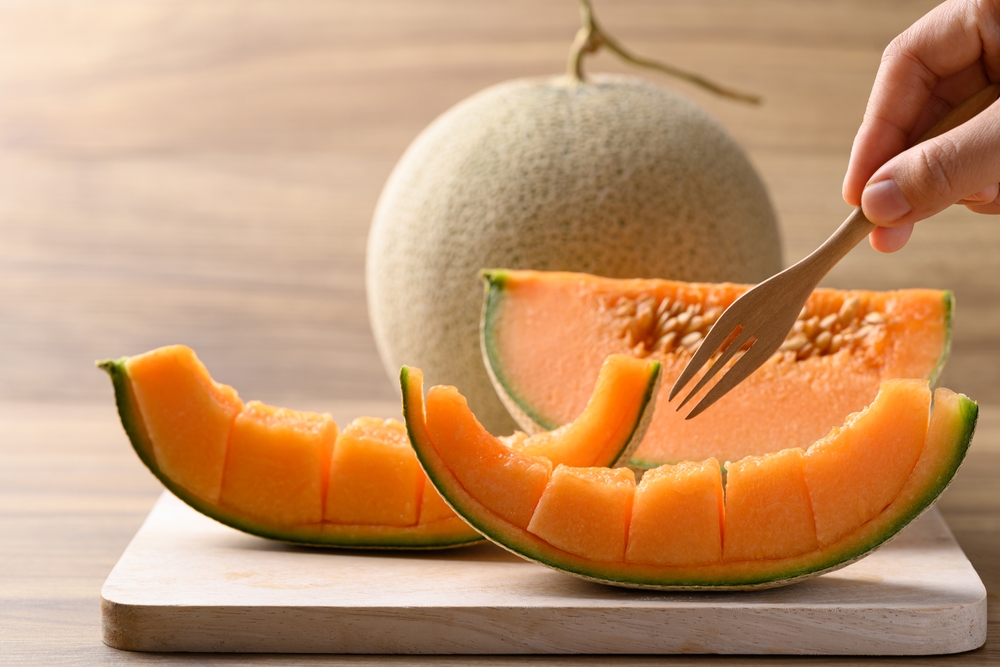
Yes, melon is a genuinely useful weight loss food — not because it burns fat, but because its extremely low calorie count and high water content help you eat satisfying portions without blowing your calorie budget.
Keep reading to see exactly how each melon stacks up, what the research says, and how to get the most out of it.
Why Melon's Calorie Count Makes It Worth Considering
The numbers alone make a strong case. A cup of diced watermelon contains just 46 calories, cantaloupe comes in at 60, and honeydew at 61. To put that in perspective, those same calories get you roughly three potato chips or a single Oreo cookie.
What makes this meaningful beyond the raw calorie count is energy density — the ratio of calories to weight.
All three melons fall between 0.30 and 0.36 kcal per gram, placing them in what researchers classify as “very low energy density” foods (anything under 0.6 kcal/g). This is where the real weight loss advantage lives.
Dr. Barbara Rolls at Penn State spent decades studying how people eat, and one finding stands out: humans tend to eat a fairly consistent volume of food each day regardless of how calorie-dense that food is.
That means swapping energy-dense snacks for low-density alternatives like melon can cut your total calorie intake by around 30% — without leaving you any hungrier than before. You're not eating less food; you're just eating food that costs far fewer calories per bite.
The Sugar and Fiber Reality
Melon's macro profile is simple: it's mostly water and carbohydrates, with negligible protein (0.5–0.9g per cup) and virtually no fat.
The carbs are what tend to raise questions — specifically the sugar — but context changes the picture considerably.
Watermelon contains about 9.6 grams of sugar per cup. That sounds like a lot until you stack it against a medium banana at 14 grams, a medium apple at 19 grams, or a 12-ounce soda at 39 grams.
Melon is nowhere near the top of the sugar list, and unlike soda, it comes packaged with water, vitamins, and volume that actually fill you up.
Where melon genuinely falls short, though, is fiber — and this is worth paying attention to.
| Fruit | Fiber per Cup |
|---|---|
| Raspberries | 8g |
| Apple | 4.4g |
| Cantaloupe / Honeydew | 1.4g |
| Watermelon | 0.6g |
Fiber slows digestion, stabilizes blood sugar, and keeps you full well after a meal. At 0.6 grams per cup, watermelon barely moves the needle on any of those fronts.
Cantaloupe and honeydew do a little better at 1.4 grams, but they're still a far cry from higher-fiber fruits.
This is why melon works best when paired with a protein source — Greek yogurt, cottage cheese, or a handful of nuts.
Protein compensates for what the fiber can't do, extending satiety and preventing the kind of quick hunger rebound that undermines your calorie goals.
The Glycemic Index Myth — and the Number That Actually Matters
Watermelon's glycemic index of 72–80 has scared off a lot of weight-conscious eaters, putting it in the same “high GI” bracket as white bread.
That reputation is misleading, and understanding why makes a real difference in how you approach melon.
The glycemic index measures blood sugar response to 50 grams of available carbohydrate from a given food.
To hit 50 grams of carbs from watermelon, you'd need to eat roughly five cups in one sitting. That's not a snack — that's a challenge. The GI score simply doesn't reflect how most people actually eat melon.
The more useful number is glycemic load, which factors in how much carbohydrate a realistic serving actually delivers. Here's how all three melons look on that scale:
- Watermelon: GL of 4–5 per serving
- Cantaloupe: GL of 4 per serving
- Honeydew: GL of approximately 5.2 per serving
All three fall firmly in the “low” category. A 2019 clinical trial reinforced this directly — despite watermelon containing more total sugar than the cookie snack it was compared against (17g vs. 9g), there was no meaningful difference in blood sugar or insulin response between the two.
The water content and physical structure of whole melon effectively buffer how quickly sugar hits your bloodstream.
A few practical habits help keep things in check:
- Stick to one cup per sitting to keep glycemic load low
- Pair with protein or fat — Greek yogurt or nuts work well — to slow sugar absorption further
- Skip the juice — blending or juicing strips out the food matrix that buffers the glycemic response, leaving you with concentrated sugar and little else
What the Clinical Research Actually Shows
The most direct evidence comes from a 2019 randomized crossover trial involving 33 overweight and obese adults with BMIs between 25 and 40.
Participants ate either two cups of watermelon daily or an isocaloric portion of low-fat cookies for four weeks, then switched groups after a washout period. Same calories, very different outcomes.
The watermelon group saw reductions across the board:
- Body weight and BMI both decreased
- Systolic blood pressure dropped
- Waist-to-hip ratio shrank
The cookie group, eating the exact same number of calories, actually gained body fat and saw blood pressure rise. The calorie count was identical — the food itself made the difference.
Hunger suppression told an equally clear story. Watermelon kept appetite at bay for up to 90 minutes after eating, compared to just 20 minutes for the cookies.
Participants also reported feeling fuller, less interested in eating again, and more satisfied overall. That gap in satiety duration is what drives real-world calorie reduction over time.
A 2021 review covering two decades of watermelon research concluded that the fruit likely supports weight control through satiety mechanisms — but was careful to note that large-scale human trials are still missing.
The evidence points in the right direction without yet being definitive.
The broader fruit literature adds useful context. A 2016 analysis tracking over 133,000 adults across 24 years found that eating more fruit was consistently linked to less weight gain over time.
That said, apples and berries showed the strongest effects — melons didn't stand out as top performers in that dataset. Melon is well-supported, but it isn't the highest-performing fruit in long-term weight research.
The Compounds That Show Promise (But Aren't Proven Yet)
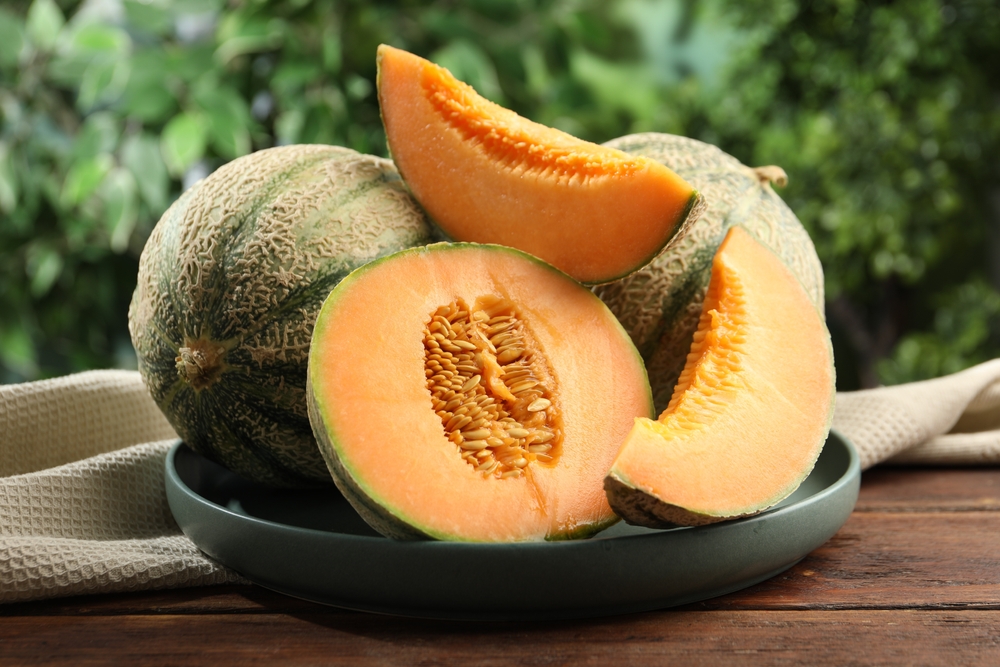
Melon contains several bioactive compounds that have generated genuine scientific interest for their potential role in fat metabolism. None are ready to influence your food choices yet, but they're worth understanding.
Citrulline is watermelon's most talked-about compound — and the most overhyped. A cup of watermelon delivers roughly 250mg of this amino acid, which the body converts to nitric oxide and may use to support blood flow and exercise performance. The problem is dosage.
Studies on citrulline typically use 3–6 grams per day, meaning you'd need to eat 12–24 cups of watermelon flesh to match what researchers test in labs.
A 2025 meta-analysis of 21 randomized controlled trials found no significant effect of citrulline supplementation on BMI, body weight, or fat mass at those levels. Even at supplement doses, the evidence is thin.
The other compounds are earlier in the research pipeline but more mechanistically interesting:
- Lycopene (~7,000 mcg per cup in watermelon): epidemiological data links higher lycopene intake to lower waist circumference; animal studies show it can promote the conversion of energy-storing white fat into calorie-burning beige fat — but no large human trials exist yet
- Cucurbitacin E (found in watermelon and related fruits): cell and animal studies show it suppresses fat cell formation and triggers similar fat-browning effects; again, zero human clinical trials to date
- Beta-carotene (3,575 mcg per cup in cantaloupe): animal models suggest it may dial down fat-forming gene activity when converted to retinoic acid in the body
The pattern across all four compounds is the same — promising preclinical signals, no validated human evidence at the amounts you'd actually eat. They aren't reasons to add melon to your diet. The calorie math is.
How to Actually Use Melon for Weight Loss (and Which One to Pick)
Which melon should you choose? It depends on what you're optimizing for. Watermelon wins on pure calorie count at 46 per cup, making it the best swap when minimizing calories is the priority.
Cantaloupe, however, edges ahead as the better all-around weight loss fruit — it has more than double the fiber (1.4g vs. 0.6g), a lower glycemic index of around 65, and packs 72% of your daily vitamin C plus 33% of your vitamin A into a single cup.
Honeydew sits in the middle on most measures and is a reasonable choice, just not the standout.
How much and when matters more than most people realize. The dietitian consensus lands at 1–2 cups per day, always paired with a protein source.
Greek yogurt, cottage cheese, and nuts are the most practical options — they compensate for melon's low fiber and extend satiety well beyond what melon can manage alone.
As for timing, eating melon before a meal can reduce your calorie intake at that meal by around 18%.
It also works well as a mid-afternoon snack in place of processed alternatives, or as dessert when sweet cravings hit.
A few specific situations worth flagging:
- IBS or FODMAP sensitivity: Watermelon is high-FODMAP — only about 1.5 tablespoons qualifies as a low-FODMAP serving, making it a poor choice if your gut is sensitive. Cantaloupe is the safest option here, remaining low-FODMAP at up to half a cup.
- Overconsumption: Eating four or more cups of watermelon daily can push lycopene intake above 30mg, which is associated with nausea and digestive discomfort. More isn't better.
- Melon cleanses: Any diet built around eating only melon is universally flagged by nutrition professionals as unsafe. These approaches are unsustainable and more likely to cause muscle loss than fat loss.
The practical framework is straightforward — 1 to 2 cups daily, paired with protein, used strategically in place of higher-calorie options.
Conclusion
Melon earns its place in a weight loss diet, but for one simple reason: it lets you eat a satisfying volume of food for very few calories, making it easier to stay within your targets without feeling deprived.
Cantaloupe is the strongest overall pick, watermelon the leanest by calories, and either works well when paired with protein and used in place of processed snacks.
Just don't expect melon to do the heavy lifting on its own — it's a smart supporting tool in a broader diet strategy, not a shortcut.