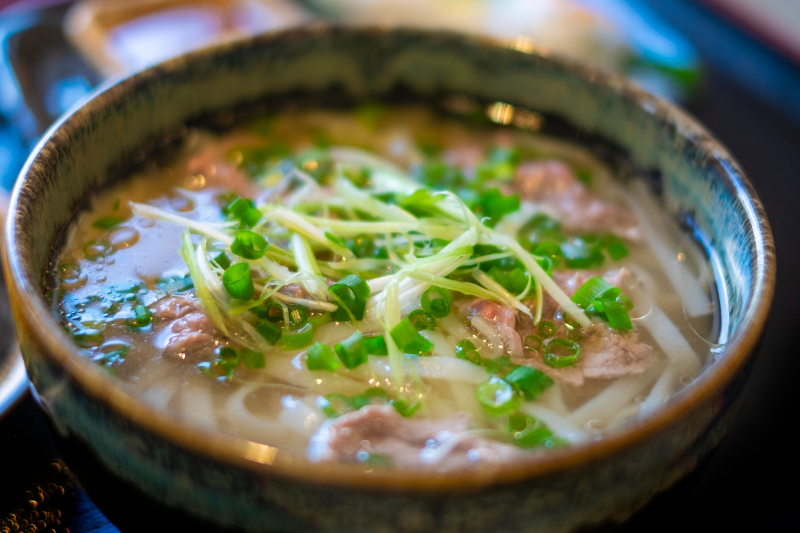
Pho can absolutely support weight loss — a standard restaurant bowl delivers 350–500 calories with around 30g of protein, which is a solid profile for a filling meal.
That said, a few common pitfalls like oversized noodle portions and high sodium can quietly work against your goals, so keep reading to find out exactly how to make pho work for you.
What's Actually in a Bowl of Pho
A single cup of pho clocks in at around 215 calories, 15g of protein, 25g of carbs, and 5.5g of fat — but nobody eats just one cup.
A standard restaurant bowl is 2–3 cups, which changes the math considerably. Here's how the numbers break down across bowl sizes:
| Homemade | Restaurant (Medium) | Restaurant (Large) | |
|---|---|---|---|
| Calories | 300–400 | 350–500 | 600–900+ |
| Protein | 25–30g | 25–33g | 30–40g |
| Carbs | 35–50g | 40–60g | 80–100g+ |
| Sodium | 600–800mg | 1,000–1,500mg | 1,500–2,500mg |
Protein choice also moves the needle. Chicken pho runs 350–450 calories with just 2–5g of fat, while beef pho sits closer to 400–500 calories with 5–10g of fat.
Within beef pho specifically, lean flank steak adds roughly 50–70 calories per ounce compared to 80–100 for fatty brisket — a gap that adds up across a full serving.
Rice noodles drive the majority of pho's calories, accounting for 60–70% of the total bowl and delivering 40–60g of carbs with only 2–4g of fiber. They're the single biggest lever you can pull when trimming calories.
Why Pho's Broth-Based Format Supports Satiety
The satiety case for pho starts with its broth. Penn State researchers found that eating a low-calorie soup before a meal reduced total calorie intake by about 20%.
The mechanism is straightforward: water incorporated into food triggers stomach stretch receptors that signal fullness based on volume, not calories.
A separate Penn State study put this into longer-term perspective — people who ate two servings of soup daily as snacks lost 15 pounds over a year compared to 11 pounds for those eating the same calories from solid snacks.
Pho's protein content adds another layer. At around 30g per bowl, it directly influences the hormones that control hunger.
Specifically, it raises GLP-1, CCK, and PYY — all satiety signals — while suppressing ghrelin, the hormone that makes you feel hungry.
That hormonal response is one reason higher-protein diets consistently outperform lower-protein ones for appetite control in the research.
Put it all together and pho's macro split — roughly 29% protein, 48% carbs, and 23% fat — delivers meaningful satiety within a moderate calorie budget, which is exactly what you want from a weight-loss-friendly meal.
The Spices and Broth — Do They Add Any Real Benefit?
Pho's spice base does more than flavor the broth. Ginger has the strongest evidence of the bunch — a 2024 meta-analysis covering 27 randomized controlled trials and 1,309 participants found it produced meaningful reductions in body weight, BMI, and waist circumference. One thermogenesis study found that 2g of ginger increased energy expenditure by roughly 95 calories per day. The honest caveat: those studies used concentrated supplements, and a bowl of pho contains less ginger than a therapeutic dose. Still, it's a net positive.
The other spices contribute in smaller but relevant ways:
- Star anise contains anethole, which animal studies link to better blood sugar regulation and carbohydrate metabolism
- Cinnamon has documented effects on insulin sensitivity, which helps prevent the blood sugar crashes that tend to trigger cravings
As for bone broth, the collagen marketing tends to outrun the science. What is well-supported is simpler: at 30–50 calories per cup with 5–9g of protein, bone broth delivers solid satiety per calorie. That's where its real weight-loss value lies.
Three Things That Can Quietly Wreck a Pho Bowl
A restaurant bowl of pho can arrive with 1,000–2,000mg of sodium before you've added a single condiment.
Hoisin sauce, fish sauce, or sriracha can push that total past 2,375mg — the American Heart Association's full daily limit — in one sitting.
Sodium doesn't cause fat gain directly, but it triggers water retention that can mask real fat loss on the scale and nudge blood pressure in the wrong direction.
One nutrition specialist recommends capping restaurant pho at 2–3 times per week for exactly this reason.
Noodle portions are the second issue. Restaurants typically serve around 150g of cooked noodles — double what you'd use at home — and each extra cup adds 190–210 calories and 45g of carbs.
Ordering a large bowl often just means more noodles, not more protein, which quietly pushes the calorie count past 900 without improving the nutritional value.
The third problem is harder to see: hidden calories from toppings and broth. The main offenders:
- Hoisin sauce — 35–50 calories and 15g of sugar per tablespoon
- Fried shallots — 45–70 calories per tablespoon
- Un-skimmed broth — up to 8g of fat per cup
- Rock sugar and meatball fillers — added carbs and fat with little protein payoff
How Pho Compares to Ramen and Other Meals
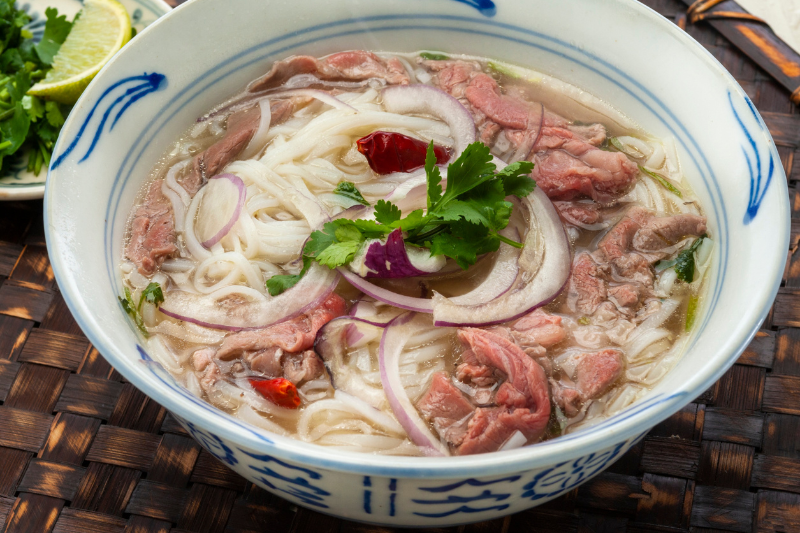
Pho's closest competitor is ramen, and the gap is significant. A restaurant pho runs 350–500 calories; ramen starts at 600 and can reach 1,200. The fat difference is even starker:
| Pho | Ramen | |
|---|---|---|
| Calories | 350–500 | 600–1,200+ |
| Fat | 2–10g | 15–25g (up to 69g tonkotsu) |
| Sodium | 800–1,500mg | 1,500–2,500mg+ |
| Protein | 25–33g | 20–25g |
Tonkotsu ramen is the extreme case — a single bowl can hit 1,241 calories, 69g of fat, and 2,858mg of sodium. Even lighter ramen styles like shoyu or shio average around 700 calories. Pho beats both.
Zoom out further and pho still holds up well. A typical fast food lunch — burger and fries — runs 800–1,000+ calories, and cream-based soups pack considerably more fat per cup than pho's clear broth.
WeightWatchers has specifically flagged pho as a weight-loss-friendly restaurant option, giving it a favorable Points rating. For a satisfying restaurant meal that doesn't require much damage control, pho is genuinely hard to beat.
How to Order (or Make) Pho for Weight Loss
A few straightforward swaps can bring a restaurant bowl from 500+ calories down under 350 without sacrificing much.
At the restaurant:
- Choose the smallest bowl — it saves 250–350 calories compared to a large
- Request eye of round (tái) or chicken breast instead of brisket or meatballs
- Ask for half noodles, which cuts 100–200 calories on its own
- Skip hoisin entirely — one tablespoon adds 35–50 calories and 15g of sugar with no real payoff
- Pile on bean sprouts and Thai basil for volume and fiber at essentially zero calories
- Leave about a third of the broth; it's an easy way to cut several hundred milligrams of sodium
At home, you have even more control:
Start by weighing your noodles — 50g dry rice noodles is a reasonable portion at around 180 calories.
Swapping half of those for shirataki or zucchini noodles drops the bowl to 250–300 total calories. Use coconut aminos instead of fish sauce to keep sodium in check, and skim the fat from your broth before serving.
From there, add bok choy, spinach, or mushrooms to build out fiber and micronutrients without meaningfully adding calories.
A well-built homemade bowl with lean chicken, vegetable noodle mix, and plenty of vegetables can deliver 30g of protein for around 250 calories — which is a genuinely strong nutritional return for a satisfying meal.
Conclusion
Pho earns its reputation as one of the better restaurant options for weight loss — the broth format, protein content, and spice base all work in your favor.
The three things worth keeping in mind are noodle portions, sodium, and protein choice, since those have the biggest impact on whether a bowl helps or hurts your goals.
Get those right, and pho is a meal you can eat regularly without it slowing you down.