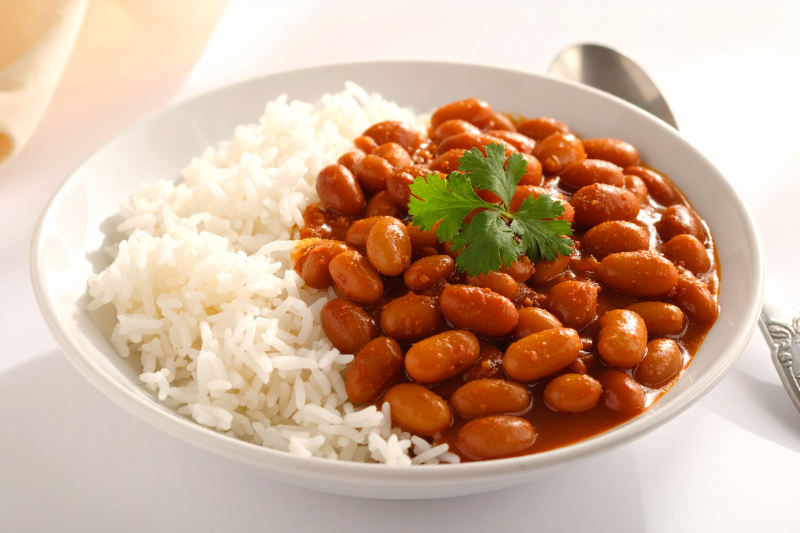
Rice and beans are good for weight loss — but only when you get the portions, ratios, and rice type right.
Keep reading to see exactly what the science says and how to make this combination work in your favor.
What Rice and Beans Actually Give Your Body
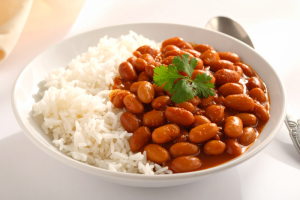
A one-cup serving of cooked rice and beans lands at roughly 272–279 calories, with 10–11 grams of protein and 6–8.5 grams of fiber. That's a solid nutritional return for the calorie cost — but the protein quality is what makes this combination genuinely interesting.
Rice and beans form a complete protein together. Rice is rich in methionine but low in lysine. Beans are the opposite. Combined, they cover all nine essential amino acids your body can't produce on its own.
This matters for weight loss because adequate protein helps preserve muscle during a calorie deficit, and muscle tissue is what keeps your resting metabolic rate from dropping as you lose weight.
Not all beans and rice are equal, though. Here's how the main options stack up:
By fiber — Navy beans lead at 9.6g per half-cup, followed by lentils (7.8g) and black beans (7.5g)
By protein — Lentils come out on top at 8.9g, with black beans offering the best overall protein-to-calorie ratio
By rice type — Brown rice delivers three times the fiber of white rice, while black and wild rice push even further with a glycemic index below 45, meaning a slower, steadier effect on blood sugar.
How Beans Change the Way Your Body Handles Rice
White rice alone has a glycemic index of 73–80 — firmly in the high range. Add beans to the same meal and that number drops dramatically.
A traditional rice-and-beans dish clocks in at a GI of 44, and replacing just 40% of white rice with white kidney beans pushes it down further to 41.5. That's nearly a 45% reduction from a single ingredient swap.
Three separate mechanisms drive this effect, and they work simultaneously:
- Fiber slows gastric emptying — food moves through your digestive system more gradually, blunting the blood sugar spike
- Resistant starch bypasses digestion entirely — roughly 16.4% of the starch in common beans resists enzymatic breakdown, acting more like fiber than a carbohydrate
- Bean phytochemicals inhibit alpha-amylase — this is the enzyme that breaks starch down into sugar, and beans essentially put a brake on it, functioning similarly to certain diabetes medications
The clinical data backs this up. In a randomized trial comparing white rice alone against rice paired with various beans, pinto beans reduced the blood glucose area-under-the-curve by 22% and black beans by 19% — both statistically significant results.
The longer-term implications are just as notable. A study of nearly 1,900 Costa Rican adults found that swapping one daily serving of beans for one serving of white rice was associated with a 35% lower risk of metabolic syndrome — a cluster of conditions that includes high blood pressure, excess abdominal fat, and insulin resistance.
The Weight Loss Evidence — What Studies Actually Show
A meta-analysis pooling 21 randomized controlled trials across 940 participants found that eating about ¾ cup of beans per day produced measurable weight loss — without any deliberate calorie restriction.
The reduction was −0.34 kg over six weeks, which sounds modest until you consider that participants changed nothing else about their diet. Just adding beans moved the needle.
The body composition data is more striking. Women in the highest third of bean consumption had nearly 4 percentage points lower body fat and waist circumferences more than 4 centimeters smaller than those who ate the least beans. Large-scale national health data tells a similar story:
- 22% lower risk of obesity among regular bean consumers
- 23% lower risk of central adiposity — the abdominal fat pattern most closely tied to metabolic disease
The rice-and-beans combination specifically has been studied too. An analysis of over 2,000 Brazilian households found that people eating the traditional rice-and-beans pattern weighed less — researchers pointed to the combo's low energy density, high fiber content, low glycemic index, and minimal fat as the likely drivers.
Beyond weight, the longevity data adds another layer. Every 20 grams of daily legume intake is associated with a 7–8% reduction in all-cause mortality risk. That's roughly two tablespoons — a very small amount for a measurable population-level effect.
The pattern across all these studies is consistent: beans, eaten regularly, support lower body weight and reduced disease risk. The effect at any single meal is small, but it compounds over time.
How Beans Keep You Full Longer
A meta-analysis of nine acute feeding trials found that meals containing pulses produced 31% greater satiety than control meals — with near-zero variation across studies, which is unusually consistent for nutrition research. That fullness advantage comes from a specific hormonal cascade that beans trigger.
Three satiety hormones are involved:
- CCK (cholecystokinin) doubles after a bean meal compared to low-fiber alternatives. It slows gastric emptying and signals fullness to the brain via the vagal nerve.
- PYY (peptide YY) rises significantly after whole bean consumption — and this is where it gets interesting. Black beans raised both CCK by roughly 28% and PYY compared to meals supplemented with an equivalent amount of isolated fiber. Whole beans outperformed the fiber supplement, which suggests something about the bean's complete structure — not just its fiber content — drives the satiety response.
- GLP-1 (glucagon-like peptide-1) gets triggered through a different route. Resistant starch in beans ferments in the colon, producing short-chain fatty acids that prompt specialized gut cells to release GLP-1 — the same hormone targeted by some of today's most prescribed weight-loss medications.
Perhaps the most practical finding is the second meal effect. Beans eaten at lunch have been shown to reduce both appetite and blood glucose response at dinner, hours later.
A rice-and-beans midday meal isn't just managing hunger now — it's making your next meal easier to control too.
The Weight Loss Evidence — What Studies Actually Show
The most rigorous data comes from a meta-analysis of 21 randomized controlled trials involving 940 participants. People eating roughly ¾ cup of beans per day lost an average of 0.34 kg over six weeks — without changing anything else about their diet.
No calorie counting, no food swaps, just adding beans. Small on its own, but meaningful as a baseline effect that compounds with time and consistency.
Body composition data tells a more vivid story. Women who ate the most beans had nearly 4 percentage points less body fat and waist measurements more than 4 centimeters smaller than those eating the least. National health survey data adds further weight:
- 22% lower obesity risk among regular bean consumers
- 23% lower risk of central adiposity — the abdominal fat pattern most strongly linked to heart disease and metabolic dysfunction
The rice-and-beans pairing has its own dedicated evidence. An analysis of over 2,000 households in Rio de Janeiro found that people following the traditional rice-and-beans eating pattern consistently weighed less — with researchers attributing this to the combination's high fiber content, low glycemic load, low energy density, and minimal fat.
Zoom out further and the picture gets even more compelling. Each additional 20 grams of daily legume intake — roughly two tablespoons — is associated with a 7–8% reduction in all-cause mortality risk. Weight loss is one piece of a much larger health return on a fairly small dietary investment.
How Beans Keep You Full Longer
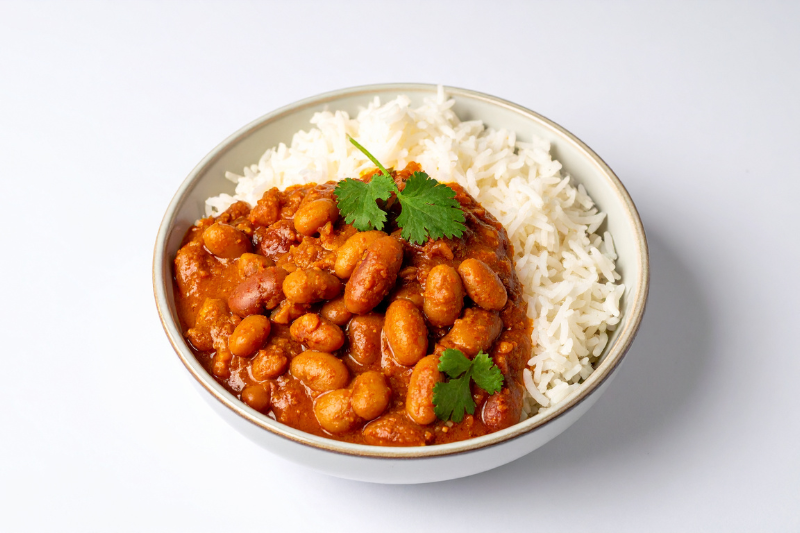
Beans don't just add bulk to a meal — they trigger a hormonal response that actively suppresses hunger. A meta-analysis of nine feeding trials found that pulse-based meals produced 31% greater satiety than control meals, with almost no variation across studies. That kind of consistency is rare in nutrition research and worth paying attention to.
Three hormones drive this effect:
- CCK (cholecystokinin) roughly doubles after a bean meal compared to low-fiber options, slowing how quickly food leaves your stomach and sending fullness signals to your brain through the vagal nerve
- PYY (peptide YY) rises meaningfully after whole bean consumption — black beans specifically pushed CCK up by about 28% and raised PYY levels compared to meals where fiber came from an isolated supplement rather than whole beans
- GLP-1 (glucagon-like peptide-1) gets activated through fermentation: resistant starch in beans travels to the colon, where gut bacteria break it down into short-chain fatty acids that trigger GLP-1 release — the same hormone that popular weight-loss medications are designed to mimic
The PYY finding deserves extra attention. When researchers matched the fiber content between whole beans and a supplement, whole beans still won. That points to something in the bean's complete food matrix — beyond fiber alone — that the isolated version can't replicate.
Then there's the second meal effect. Eating beans at lunch has been shown to reduce both appetite and blood glucose response at dinner. Your midday rice-and-beans meal is, in effect, doing double duty.
Portions, Ratios, and Rice Type — Where Most People Go Wrong
The research points to a clear target for active weight loss: ½ to ¾ cup of cooked rice paired with ½ to 1 cup of cooked beans per meal, landing at roughly 220–350 calories.
That's a reasonable, filling plate — but most people get the ratio wrong by defaulting to equal parts, when shifting to two-thirds beans and one-third rice meaningfully increases fiber and protein density without adding calories.
Rice type makes a bigger difference than most people expect. Here's how the options rank:
- Black and red rice — GI of 42–45, highest fiber among rice varieties, and rich in anthocyanins that research links to improved carbohydrate metabolism
- Wild rice — the lowest calorie option at around 83 calories per half-cup, GI near 45, and reported to sustain fullness for roughly four hours
- Brown rice — the most practical everyday choice; people eating brown rice instead of white lost an average of 1.75 kg more in meta-analysis data
- White basmati — a reasonable compromise at a GI of around 58, lower than regular white rice
- White rice — acceptable, but only when paired with enough beans to offset its high glycemic impact
For beans, black beans, lentils, and navy beans offer the strongest profiles — black beans for their protein-to-calorie ratio, lentils for the highest protein content, and navy beans for leading fiber at 9.6 grams per half-cup. That said, the best bean is the one you'll actually eat consistently.
One underused technique worth adding to your routine: cook your rice, refrigerate it, then reheat before eating. This process converts a portion of digestible starch into resistant starch, which may reduce caloric absorption from that starch by 40–60%.
Real Limitations You Should Know About
Rice and beans are a strong foundation for weight loss, but there are genuine drawbacks worth understanding before making this a daily staple.
White rice in excess is a real problem. Higher white rice intake has been linked to elevated blood pressure, triglycerides, and fasting glucose — independently of how many beans you eat alongside it. Beans offset the glycemic impact, but they don't cancel out the metabolic consequences of consistently eating too much white rice.
Arsenic is present in all rice. Every rice sample purchased from U.S. stores in one review contained detectable arsenic — and brown rice carries roughly 80% more inorganic arsenic than white because arsenic concentrates in the bran layer. That creates an uncomfortable tradeoff with the nutritionally superior option. Practical mitigation steps include cooking rice in a 6:1 water-to-rice ratio and draining the excess, and favoring basmati or jasmine varieties, which tend to test lower for contamination.
Antinutrients are a minor concern, not a dealbreaker. Beans contain phytates and lectins that can reduce mineral absorption, but nutrition researchers generally consider this a non-issue for people eating a varied diet. Proper cooking eliminates toxic lectins entirely, and phytates themselves show antioxidant and potential anti-cancer properties.
Two more practical limitations to keep in mind:
- Portion control matters more than people realize. Without measuring, a rice-and-beans meal can easily hit 500–700 calories. The combination also runs 55–58% carbohydrates by calorie, making it a poor fit for keto or strict low-carb approaches.
- Rice and beans alone won't cover your nutritional bases. Eaten in isolation over time, this combo would leave you short on vitamins A, C, D, and E, plus healthy fats. It works best as the anchor of a varied diet that includes vegetables, fruit, and other protein sources — which is exactly how the world's longest-lived populations eat it.
Conclusion
Rice and beans genuinely support weight loss — the clinical evidence is consistent across trials, population studies, and body composition data — but the details determine whether this works for you or against you.
Keep portions in check, lean toward beans-heavy ratios, choose whole-grain rice varieties when you can, and build the meal around vegetables rather than eating rice and beans in isolation.
Get those basics right and you have one of the most affordable, filling, and nutritionally sound foundations for managing your weight long term.