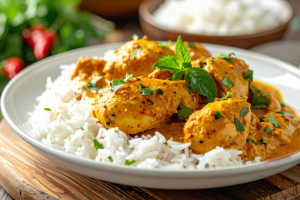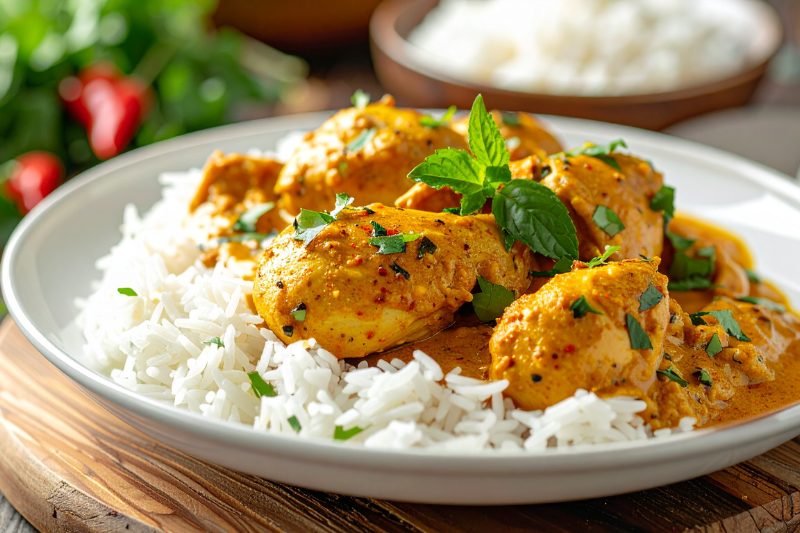
Rice and chicken is genuinely good for weight loss — a standard serving delivers around 485 calories and 59 grams of protein, giving you a high-protein, portion-friendly meal that supports fat loss while helping you hold on to muscle.
That said, how you build the plate and what you pair it with makes all the difference, so keep reading for a closer look at the numbers, the research, and how to actually make it work.
What You're Actually Getting in a Rice and Chicken Meal
A standard weight-loss serving — 6 ounces of grilled skinless chicken breast with one cup of cooked brown rice — comes in at roughly 485 calories with 59 grams of protein, 46 grams of carbs, 7 grams of fat, and 3.5 grams of fiber. That single meal covers about half the daily protein needs of a 150-pound person targeting fat loss.
Chicken breast is one of the leanest protein sources you'll find. Per 100 grams cooked, it delivers 31 grams of protein at just 165 calories, with 80–82% of those calories coming from protein alone. It's also a strong micronutrient source:
- Niacin: 59% of your daily value
- Selenium: 58% DV
- Vitamin B6: 53% DV
Brown rice holds up well on its end too. One cup cooked provides 93% of the daily value for manganese and 20% for magnesium — minerals largely lost when rice is milled into white. On fiber, the gap is significant: brown rice offers 3.5 grams per cup versus just 0.6 grams in white.
What makes this combination particularly well-suited for weight loss is how the macros stack up together. The meal lands at roughly 50% protein, 38% carbohydrates, and 12% fat by calories — a ratio that research consistently links to effective fat loss with minimal muscle breakdown.
Why the Protein in Chicken Drives Fat Loss
Chicken breast doesn't just supply protein — it actively works for you in three distinct ways: it burns calories during digestion, suppresses hunger hormones, and protects muscle while you're in a deficit.
The thermic effect is the most underappreciated piece. Protein requires 20–30% of its own calories just to digest, meaning every 200 calories of chicken costs your body roughly 40–60 calories to process.
Carbs burn only 5–10% and fat just 0–3% in comparison. In practical terms, shifting from a 10% protein diet to a 30% protein diet can add an extra 50–100 calories burned daily — without changing anything else.
The hunger side of the equation is equally compelling. High-protein meals trigger a measurable hormonal response: they reduce ghrelin (the hormone that makes you feel hungry) by around 20 pg/mL while raising satiety hormones PYY and GLP-1.
These effects are strongest when a single serving exceeds 35 grams of protein — a threshold a standard chicken breast clears easily.
Then there's muscle preservation, which matters more than most people realize during weight loss. Research shows a striking difference based on protein intake:
- 2.3g of protein per kg of body weight: only 0.3kg of lean mass lost during a deficit
- 1.0g/kg: over 1.6kg of lean mass lost — more than five times as much
A 2024 meta-analysis covering 47 studies and over 3,200 participants reinforced this further, finding that protein above 1.3g/kg/day actually increases muscle mass even while losing weight. General targets sit at 1.2–1.6g/kg/day, while athletes benefit from pushing toward 1.6–2.4g/kg/day.
Brown Rice vs. White Rice — Does It Actually Matter?
On paper, brown rice wins clearly. It has a lower glycemic index (50–55 vs. 64–73 for white), four to five times more fiber, 140% more magnesium, and 134% more manganese.
The long-term data backs this up too — eating five or more servings of white rice per week is associated with a 17% higher risk of type 2 diabetes, while two or more weekly servings of brown rice links to an 11% reduced risk.
In practice, though, the gap is smaller than it looks. When rice is eaten alongside protein and fat — exactly as it is in a chicken-and-rice meal — the glycemic response drops by roughly 50% compared to eating rice on its own.
That means the real-world blood sugar difference between white and brown rice in this context is far less dramatic than the raw GI numbers suggest.
If you genuinely prefer white rice, basmati is a reasonable choice at a GI of around 60, and it remains a workable option within a balanced meal.
The more interesting variable is temperature, not variety. Cooling cooked rice in the fridge for 12–24 hours more than doubles its resistant starch content — from 0.64 grams to 1.65 grams per 100 grams. Resistant starch behaves like fiber: it resists digestion, blunts blood sugar spikes, and effectively reduces the calorie count of the rice by 10–15%.
The useful part is that reheating doesn't undo any of this. Cook your rice the night before, refrigerate it, and reheat it the next day — you get the texture you want with a meaningfully better metabolic outcome.
What the Research Says About Results
No study has tested rice and chicken as a combined weight-loss intervention specifically. What exists is a solid body of research on each component — and the findings are largely favorable.
On the protein side, the evidence is consistent. A meta-analysis of 37 studies found that high-protein diets reduced body weight by 1.6kg more than control diets.
A separate analysis added more detail to that picture: people eating 1.07–1.60g of protein per kg of body weight daily lost an average of 0.79kg in body weight and 0.87kg of fat mass, while simultaneously gaining 0.43kg of fat-free mass and increasing resting energy expenditure by 595 kJ per day.
That last point matters — more muscle means more calories burned at rest, which compounds over time.
The rice data is more mixed, and the type of rice appears to be the deciding variable. A study of Japanese workers found that high white rice consumption was significantly associated with gaining 3 or more kilograms over a year, while brown and multigrain rice showed no such pattern.
On the other hand, a large Chinese study of over 11,500 participants found rice intake was actually inversely linked to overweight in men — suggesting that population, overall diet context, and rice variety all influence outcomes.
Registered dietitians are consistent in their read of the evidence: chicken and rice is a sound weight-loss meal, but not unconditionally. The recurring qualifiers across expert recommendations are the same every time — brown rice over white, vegetables on the plate, and portion sizes kept in check.
The meal's effectiveness isn't really in question; it's the surrounding habits that determine whether the results actually show up.
How to Build the Optimal Plate
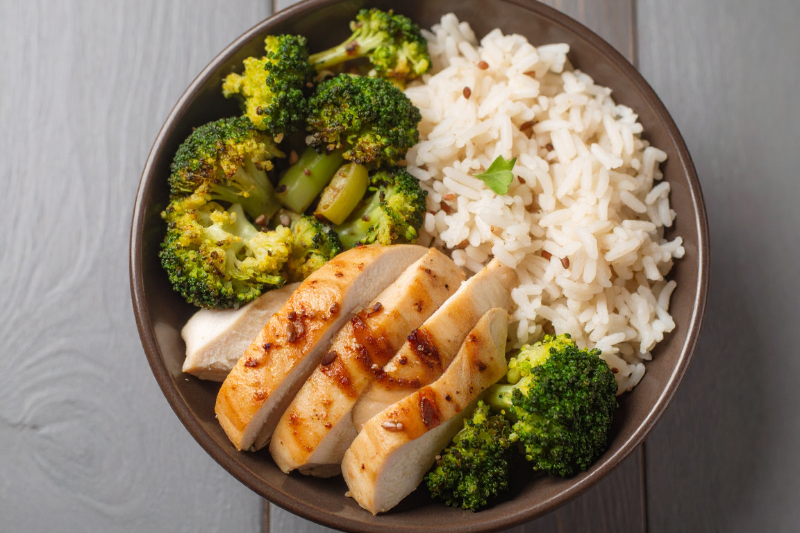
Cooking method is the first place people quietly sabotage an otherwise solid meal. Grilled, baked, poached, or steamed chicken breast comes in at 165 calories per 100 grams. Deep-fried adds 80+ calories to that figure through oil absorption and breading — before you've even touched the rice.
Removing the skin before cooking saves another 30+ calories per 100 grams. Neither adjustment requires any real effort, but together they make a meaningful difference across weeks of consistent eating.
For portions, a simple target works well: 4–6 ounces of cooked chicken, half to one cup of cooked rice, and one to two cups of non-starchy vegetables lands you in the 400–500 calorie range per meal. Three meals built this way puts daily intake at 1,200–1,500 calories — enough of a deficit to produce steady fat loss for most adults without feeling like starvation.
The vegetable component does more than fill the plate. Colorful options like broccoli, bell peppers, and spinach close the micronutrient gaps the chicken and rice leave open — specifically vitamin C, vitamin A, calcium, and fiber — at only 30–50 calories per cup. Add a small healthy fat source to round things out:
- ¼ avocado (~60 calories)
- 1 teaspoon of olive oil (~40 calories)
- A tablespoon of flaxseed for omega-3s
Herbs and spices — garlic, turmeric, cumin, paprika, cilantro — handle flavor without adding meaningful calories, which matters more than it sounds.
The practical reality is that most people don't fail this meal nutritionally — they fail it out of boredom. Batch cooking on weekends (two pounds of chicken, a few cups of dry rice, a tray of roasted vegetables) sets you up for four to five days of ready meals.
Rotating flavor profiles weekly — lemon-herb one week, teriyaki the next, then Mexican-spiced or curry — keeps the format from feeling like a sentence.
The Real Risks You Should Know
The biggest issue with leaning too hard on chicken and rice isn't the calories — it's what the meal consistently leaves out. On its own, it provides near-zero vitamin C, minimal vitamin A and calcium, no vitamin D, and almost no omega-3 fatty acids.
Over weeks, those gaps translate into real consequences: weakened immunity, slower wound healing, bone density loss, and increased cardiovascular risk. This isn't a reason to avoid the meal — it's a reason not to make it your entire diet.
Arsenic in rice is a separate concern worth taking seriously. Brown rice contains 72–98% more inorganic arsenic than white because arsenic concentrates in the bran layer, and a 2025 report found that one in four rice samples exceeded FDA action levels. Three practical steps reduce your exposure significantly:
- Cook rice in 6–10 parts water like pasta, then drain the excess — this cuts arsenic by 40–60%
- Choose lower-arsenic varieties such as basmati from India or Pakistan, jasmine from Thailand, or sushi rice
- Keep intake to 1–3 servings per week if you're eating rice regularly
Then there's the psychological dimension, which doesn't get enough attention. People on strict chicken-and-rice plans typically last somewhere between two and twelve weeks before burnout sets in — often followed by binge eating that wipes out much of the progress they made.
The deprivation-monotony cycle is a real pattern, and it's one of the more common reasons structured eating plans fall apart.
The evidence-based approach is to use chicken and rice as one or two meals per day within a varied diet, not as a complete eating plan.
A few specific groups need extra caution. People with diabetes should watch rice portions carefully and stick to brown varieties.
Those with kidney disease need medical supervision around protein intake levels. Pregnant women face heightened arsenic sensitivity on top of nutritional needs — folate, iron, omega-3s — that this combination simply can't meet.
Conclusion
Rice and chicken earns its reputation as a weight-loss staple — the protein-to-calorie ratio is hard to beat, the thermic and satiety benefits are well-supported by research, and it's one of the more practical meals to portion, prep, and repeat.
The catch is that its effectiveness depends entirely on how you use it: paired with vegetables and healthy fats as part of a varied diet, it's genuinely solid nutrition, but treated as an entire eating plan, it leads to deficiencies and burnout.
Get the cooking method right, cool your rice overnight, fill half your plate with vegetables, and rotate your flavors — done consistently, it's one of the more reliable tools you have for sustainable fat loss.