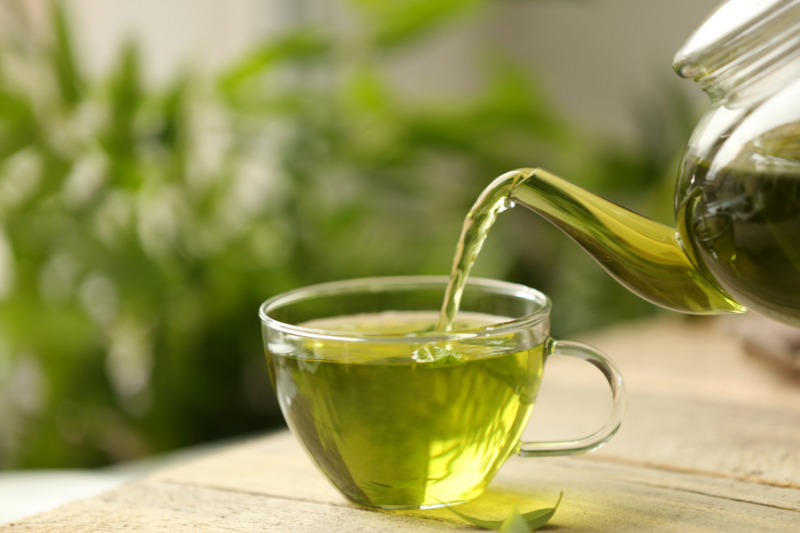
The five best green teas for weight loss are matcha, sencha, gyokuro, hojicha, and genmaicha — ranked roughly in that order based on how much EGCG and caffeine they deliver per cup, which are the two compounds that actually drive the metabolic effect.
Keep reading for a full breakdown of each one, including how much to drink, when to drink it, and which brands are worth your money.
Why Some Green Teas Work Better Than Others for Weight Loss
Not all green teas are equal, and the difference comes down to two compounds working together: EGCG (a catechin) and caffeine. EGCG blocks the enzyme that breaks down norepinephrine, the hormone that tells your body to burn fat. The longer norepinephrine stays active, the longer that fat-burning signal runs.
Caffeine independently raises your sympathetic nervous system activity and amplifies the whole effect — which is why decaffeinated catechin trials consistently failed to move the needle on body weight.
Together, EGCG and caffeine raise 24-hour energy expenditure by roughly 4%. That's modest, but it's real and measurable. Across human trials, people consuming at least 583 mg of catechins per day lost an average of 1.31 kg more than the control group over 12 weeks.
To put that in perspective, you'd need 3–4 solid cups of a high-quality brewed green tea — or 1–2 g of matcha — to get close to that threshold daily.
Two practical implications from this:
- Form matters. Loose-leaf and powdered teas deliver significantly more EGCG per serving than tea bags, which are typically made from lower-grade leaf dust with poor catechin retention.
- Brewed tea beats supplements. Concentrated extract capsules carry real hepatotoxicity risk above 800 mg EGCG per day — a threshold the European Food Safety Authority flagged after observing statistically significant liver enzyme elevations. Brewed tea, consumed the traditional way, has a clean safety record across its entire historical-use range.
The teas that rank highest for weight loss are simply the ones that get the most EGCG and caffeine into your cup, consistently and safely.
Matcha — Most Concentrated, Best Studied
Matcha sits at the top of this list for a straightforward reason: you're consuming the entire leaf, not just an infusion of it. When you whisk matcha into water, every compound in that leaf — EGCG, caffeine, L-theanine — goes into your cup and into your body.
A 2 g serving delivers roughly 130–160 mg of EGCG and 60–70 mg of caffeine, which is more than most brewed green teas can offer in a single cup.
The clinical evidence specific to matcha is also the strongest of the five teas on this list. Taking 1–3 g per day increased exercise-induced fat oxidation by 19–35% during brisk walking in female participants across two separate trials.
That's a meaningful shift in how your body fuels moderate activity, and it came from amounts you can easily hit with one or two servings a day.
How to brew it correctly:
- Sift 1–2 g of matcha into a bowl or cup — sifting prevents clumping
- Add 60–80 mL of water heated to 70–80°C (not boiling — boiling water degrades EGCG and turns the flavor bitter)
- Whisk in an “M” or “W” pattern until frothy
Dose and timing: 1–2 g once or twice daily puts you in the 150–300 mg EGCG range per serving. Drink it 30–45 minutes before breakfast or a workout to align with the fat oxidation window the trials used. One important caveat — a sweetened matcha latte can run close to 240 calories, which easily cancels out any thermogenic benefit. Plain whisked matcha or matcha with unsweetened milk is the smarter call.
Reliable brands worth knowing:
- Ippodo Horai — widely cited as a benchmark ceremonial-grade matcha; smooth and rich with minimal bitterness
- Jade Leaf Ceremonial — strong value, independently rated as a top ceremonial grade pick
- Encha Ceremonial — publishes third-party testing for lead and radioactivity, worth noting if heavy metal transparency matters to you
- Pique Sun Goddess — consistently ranked as a top overall matcha pick in recent roundups
- ITO EN — widely available and reliable for everyday use
Sencha and Gyokuro — Your Everyday Brewed Options
Sencha
If matcha is the high-potency option, sencha is the dependable workhorse. It's also the tea that most clinical weight-loss trials actually used, which matters when you're trying to connect research findings to what's in your cup.
High-quality Japanese sencha measures up to 124 mg of EGCG per 100 mL — the highest of any brewed green tea — and drinking 3–4 cups a day puts you squarely in the 500–600 mg catechin range that produced meaningful results in human trials.
Brewing it right makes a real difference in how much you extract:
- Use 2 g of loose leaf per 150 mL of water — tea bags won't get you there
- Heat water to 70–80°C and steep for 60–90 seconds
- Re-steep the same leaves 2–3 more times at a similar temperature — each pass pulls additional catechins
Drink it between meals rather than with food, since green tea reduces non-heme iron absorption. If you time one cup 30–60 minutes before exercise, you get the added fat oxidation benefit on top of your daily catechin total. Solid mid-range brands include Yamamotoyama, Maeda-en, Ippodo Sayaka, and Den's Tea.
Gyokuro
Gyokuro is often marketed as the premium tier of Japanese green tea, but its compound profile tells a more nuanced story. The shading process used before harvest — roughly 20 days — actually reduces EGCG relative to sencha, bringing it down to around 60–90 mg per cup.
What shading does instead is drive caffeine and L-theanine significantly higher. Caffeine runs approximately 120–140 mg per cup, compared to 30–50 mg in sencha, and L-theanine rises alongside it.
That caffeine load is what keeps gyokuro relevant for weight loss, since caffeine is half of the EGCG-caffeine synergy driving the thermogenic effect.
One or two cups in the morning covers your needs — and given how much caffeine is in each cup, stopping by early afternoon is sensible. There are no gyokuro-specific weight-loss trials; the case for it is extrapolated from broader green tea research.
Brewing requires lower water temperature than any other tea on this list: 50–60°C for 90–120 seconds. It sounds fussy, but the cool temperature is what preserves the L-theanine and keeps the flavor from turning harsh. Ippodo Gyokuro, Maeda-en Premium, and Hibiki-an are the go-to options at the quality end of the market.
Hojicha and Genmaicha — For Evenings and Casual Drinkers
Hojicha
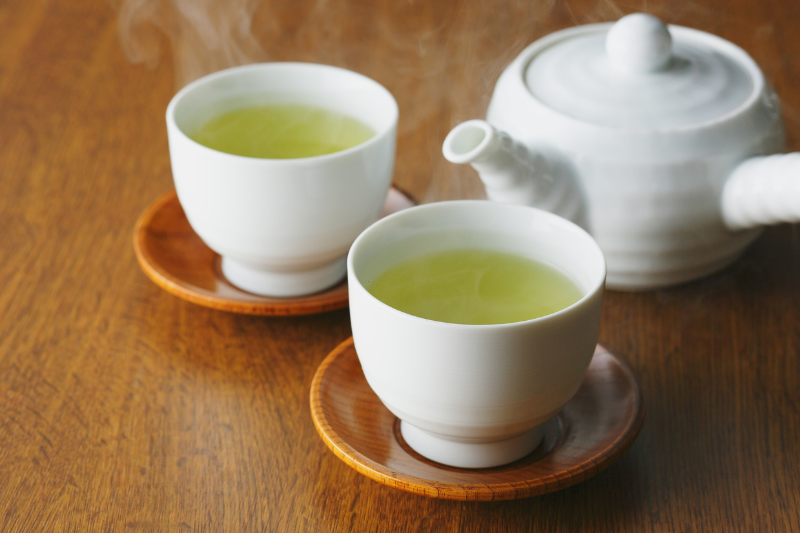
Hojicha is the outlier on this list. Roasting the leaves at over 200°C strips out roughly 80% of the caffeine — leaving just 7–15 mg per cup — and cuts EGCG down to around 18 mg. On paper, that's a weak weight-loss tea. In practice, it earns its place for a different reason entirely.
The biggest real-world source of calorie reduction from any tea isn't thermogenesis — it's what you stop drinking or eating instead. A warm, satisfying, near-zero-calorie cup of hojicha after dinner displaces the snack, the sweet drink, or the glass of wine that would have added 150–300 calories to your day. That behavioral substitution quietly outperforms the modest thermogenic contribution of a stronger tea you only drink twice a day.
Because the caffeine is so low, you can drink 3–5 cups across the afternoon and evening without it affecting sleep. Brewing is simple: use near-boiling water at 95–100°C and steep for just 30 seconds — the high heat actually draws out the roasted aromatics that make it taste good. Ippodo Kuki-Hojicha, Maeda-en, and Senbird are reliable picks.
Genmaicha
Genmaicha blends sencha or bancha leaves with roasted brown rice, which dilutes the leaf content and brings EGCG down to roughly 15–25 mg per cup — about half of what you'd get from straight sencha. If you're optimizing purely for catechin intake, this isn't your tea.
What genmaicha does better than anything else on this list is drinkability. The roasted rice gives it a lightly nutty, savory flavor that works for people who find plain green tea too grassy or earthy.
That matters more than it might seem, because the single biggest determinant of any real-world catechin dose is whether you'll actually drink the tea consistently. A lower-potency tea you drink every day beats a higher-potency one you abandon after a week.
Aim for 3–4 cups daily, brewed at 80–85°C for 60–90 seconds. It pairs naturally with meals, making it one of the easier teas to build into a routine. Yamamotoyama and Den's Tea are solid everyday options; Kettl's Uji Genmaimatcha is worth trying if you want something a step up in quality, noted specifically for its umami depth and freshness.
How to Get the Most Out of Your Green Tea Routine
Two variables determine how much EGCG actually makes it into your system: how you brew the tea and when you drink it. Get both right and you're working with the research. Get them wrong and you're just drinking hot water with a green tint.
Brewing basics that apply across all five teas:
- Keep water temperature at 70–80°C for matcha, sencha, and gyokuro — boiling water degrades EGCG and turns flavor bitter
- Hojicha is the exception; it brews well at 95–100°C
- Re-steep loose-leaf tea 2–3 times rather than discarding after one pass — each steep pulls additional catechins from the same leaves
- Use loose leaf or powdered matcha; tea bags are typically lower-grade material with meaningfully less EGCG
Timing: Drink between meals rather than with food — green tea inhibits non-heme iron absorption, which matters especially if you're vegetarian or anemic. One cup 30–60 minutes before exercise gets you the fat oxidation benefit on top of your daily catechin total.
A Staged Approach That Actually Works
Rather than overhauling your routine overnight, build the habit in two phases:
Weeks 1–2: Add 2 cups of brewed green tea or 1 g of matcha daily, timed between meals. The goal here is adherence, not results — you're building the habit before increasing the dose.
Weeks 3–8: Scale up to 3–4 cups per day or 2 g of matcha. Time at least one serving 30–45 minutes before exercise. Keep a calorie deficit running independently — the tea supports the process, it doesn't create it.
At the eight-week mark, if you've been consistent and combined this with diet and exercise, you can reasonably expect around 1–3 lbs of additional loss attributable to the tea protocol. That's an honest number. Anyone suggesting green tea will do more than that is overstating the evidence.
What to Avoid
- Green tea extract capsules above 300–400 mg EGCG — this is where hepatotoxicity risk becomes real, particularly on an empty stomach
- “Detox” or “slim” tea blends — most rely on laxative compounds, not catechins, and produce no meaningful fat loss
- Sweetened bottled green teas — often higher in sugar than soda, and EGCG content is typically negligible after processing
- Fasting-state supplement dosing — nearly all reported green tea liver injury cases involve concentrated extracts taken without food; brewed tea doesn't carry this risk
Safety Limits and Common Misconceptions
The Supplement Problem
Brewed green tea has a clean safety record across centuries of use. Concentrated extract capsules are a different matter. The European Food Safety Authority identified 800 mg of EGCG per day from supplements as the threshold above which liver enzyme elevations become statistically significant.
Nearly all reported liver injury cases share the same profile: high-dose extract taken on an empty stomach. Fasting bolus dosing is the specific risk pattern — not green tea itself.
If you're taking any extract product, always take it with food. Better yet, stick to brewed tea and matcha, where reaching a dangerous EGCG dose through normal consumption is practically impossible.
Two medication interactions worth knowing:
- Green tea can reduce the effectiveness of certain beta-blockers, including nadolol
- It may interact with blood thinners such as warfarin
If you're on either, check with your doctor before significantly increasing your intake.
On caffeine: the general safe ceiling is around 300 mg per day for most adults. During pregnancy, that drops to 200 mg — worth keeping in mind if you're drawn to gyokuro, which runs 120–140 mg of caffeine per cup.
Marketing Claims to Ignore
The “137 times more antioxidants” figure attached to matcha marketing traces to a single 2003 paper that compared matcha against one low-grade commercial tea bag. That's not a meaningful benchmark. Compared to quality sencha, the realistic EGCG advantage of matcha is closer to 3–4 times — still significant, but nowhere near the number on the tin.
The other claim worth dismissing: green tea targeting belly fat. Catechins enhance whole-body fat oxidation, meaning your body draws on fat stores more efficiently during the process. Where that fat comes from is not something tea — or any food — can direct. Spot reduction is a myth regardless of what you're drinking.
A Note on EGCG Variability
The EGCG numbers cited throughout this article are typical ranges, not guarantees. Actual content varies by a factor of 3–5 depending on leaf grade, water temperature, steep time, and brand. Two teas labeled “sencha” from different suppliers can deliver meaningfully different catechin doses from the same brewing method.
This is another reason loose-leaf from reputable Japanese tea producers consistently outperforms supermarket tea bags — and why brands that publish third-party testing, like Encha and Jade Leaf, are worth the slight premium if you're using matcha as your primary source.
Conclusion
If you're still deciding which tea to start with, here's the short version: matcha for the highest potency per serving, sencha as a reliable daily driver, gyokuro if you want the L-theanine and caffeine combination, hojicha for evenings when you need something low-caffeine and satisfying, and genmaicha if you're new to green tea and want something easy to drink every day.
The best choice isn't necessarily the most potent one — it's the one you'll actually stick with long enough to accumulate a meaningful daily catechin dose.
Whatever you pick, keep the bigger picture in mind. Green tea works as a supporting player alongside a calorie deficit and regular exercise, not as a standalone solution. The research is clear on both points: the effect is real, and it's modest. Use it for what it is — a low-risk, evidence-backed addition to a routine that's already doing the heavy lifting.