No, tanning won’t help you lose weight: the lower number you see on the scale after a session is just sweat that returns once you drink, and the only fat-related UV effects have shown up in mice, where they slowed weight gain rather than burning existing fat.
Keep reading to learn what the research actually found, why the cancer risk isn’t worth it, and what to try instead.
Why You Weigh Less Right After Tanning
Tanning-bed bulbs give off heat, and heat makes you sweat. That sweat is the “loss” you see on the scale after a session.
Sauna studies show how much water heat can pull from your body: usually about 0.5–1 kg per session, nearly all of it fluid that returns once you rehydrate. For example:
- 674 young adults (326 women and 348 men, aged 19–20) lost body mass after two 10-minute dry sauna sessions with a 5-minute break, a drop tied to sweating.
- 45 young, sedentary, overweight men lost 0.65 kg after four 10-minute rounds at 90°C.
Each kilogram lost this way equals roughly a liter of sweat. Tanning beds run milder than saunas, so you’ll likely lose less. No controlled study has measured sweat loss in tanning beds directly, but it’s water either way.
Calories barely move, either. Lying still burns roughly 53 calories an hour, about what you’d burn watching TV, though that’s a rough estimate rather than a scientific figure. No study shows tanning raises your energy use in any meaningful way, and claims that it “makes the thyroid more active” and speeds metabolism come from marketing, not research.
Sweating on purpose to “make weight” in a hot bed also carries the same dehydration risks as sauna weight cutting, with no fat loss in return. Want proof? Weigh yourself the next morning after drinking normally, and the “loss” will be gone.
What Mouse and Lab Studies Actually Found
Most “sunlight burns fat” headlines trace back to a 2014 study in mice on high-fat diets, where repeated non-burning UV slowed weight gain and improved glucose tolerance and fatty-liver markers. Nitric oxide released by the skin drove the effect, not vitamin D: a nitric oxide cream reproduced some results, while vitamin D supplements didn’t.
Follow-up studies have been mixed:
- 2017: Already-overweight mice showed less metabolic dysfunction.
- 2019: Older mice saw no change in body weight, weight gain, or food intake.
- 2024: UV raised norepinephrine, lowered the appetite-curbing hormone leptin, and made female mice eat more, yet still prevented weight gain by “browning” fat under the skin so it burned more energy. Even so, the researchers advised limiting UV and wearing sunscreen; their goal is drugs that mimic the effect.
- 2025: A replication found about 10–12% less weight gain, but it wasn’t statistically significant (p = 0.83 in males, p = 0.47 in females) and took at least 9 weeks to show up.
A 2018 lab-dish study also found that human fat cells released fat droplets under blue visible light. The researchers called it an early observation and said seeking sun isn’t a safe or recommended way to lose weight. Tanning beds mainly emit UVA, not blue light.
These results don’t transfer neatly to people. Mice are nocturnal, covered in fur, and get almost no sunlight, and the studies measured prevented gain in overfed animals, not loss of existing fat. When a headline says sunlight burns fat, check whether it used mice or cells in a dish, and whether it measured weight gain or weight loss.
What Happens in People: No Weight Change, and Men May Get Hungrier
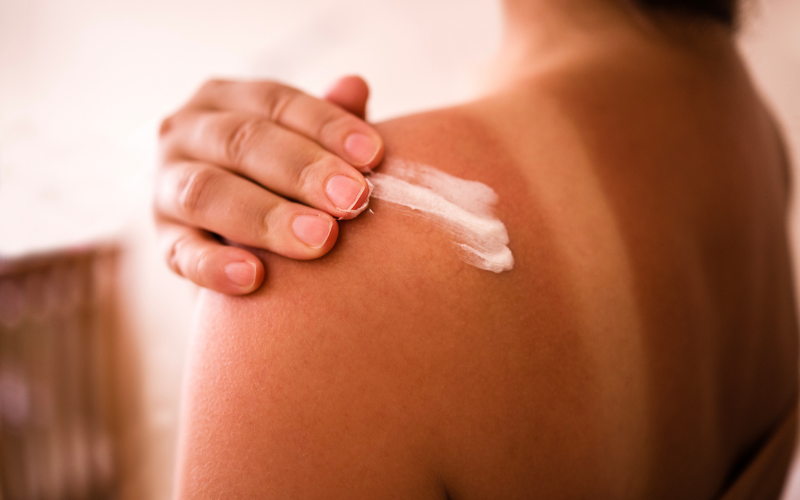
Only one human trial has looked at UV and body composition: a 2025 South Korean pilot in which 24 vitamin D-deficient adults had four 5-minute full-body UV sessions in a phototherapy chamber.
| Measure | Before | After |
|---|---|---|
| Average body weight | 61.8 | 61.8 (p = 0.78) |
| Body fat | 29.3% | 28.3% |
| Basal metabolic rate | 1,295 | 1,307 |
BMI and abdominal fat didn’t change either. The study had no control group, didn’t say how body fat was measured, didn’t correct for testing many outcomes at once, and ran in spring, so seasonal effects can’t be ruled out. A body fat percentage that shifts while weight stays flat fits measurement noise, such as hydration changes on bioimpedance scales.
Appetite research points the other way, at least for men. In male mice, UVB activated the DNA-repair protein p53 in skin fat cells, which switched on the hunger hormone ghrelin and led to more food seeking, eating, and weight gain. Estrogen blocked this in females. The human evidence, all observational or uncontrolled, shows a similar split:
- In an Israeli national survey of 2,991 adults, men ate 2,188 calories a day in summer versus 1,875 in winter, about 313 more. Women’s intake didn’t change.
- Among 27 volunteers given 25–30 minutes of midday sun, men felt hungrier and their ghrelin rose; women’s didn’t.
- Among 32 UVB phototherapy patients, men reported hunger and eating more often, while women noticed no change.
You may also come across a Swedish study of about 29,500 women, followed for 20 years, that linked sun avoidance with higher all-cause mortality. It was observational, adjusted for BMI, and contested for possible bias, and it says nothing about sun causing weight loss.
Does Vitamin D From Tanning Help You Slim Down?
The theory goes like this: UV raises your vitamin D, and vitamin D helps you lose weight. The second half of that chain doesn’t hold up.
Genetic data from 21 cohorts and up to 42,024 people suggests the cause actually runs the other way. Each 1 kg/m² increase in BMI was tied to 1.15% lower vitamin D, so higher weight lowers vitamin D, while any effect of low vitamin D raising BMI is likely small.
Supplement trials tell a similar story:
- A 2014 meta-analysis of trials without calorie restriction (18 eligible, 12 pooled) found no effect on body weight, fat mass, body fat percentage, or lean mass, only a non-significant BMI trend (SMD −0.097, P = 0.092).
- A 2019 meta-analysis of 11 RCTs and 947 people found small drops in BMI (−0.32 kg/m², p = 0.002) and waist size (−1.42 cm, p = 0.005), but no significant change in weight (−0.43 kg, 95% CI −1.05 to +0.19, p = 0.17).
The American Academy of Dermatology says tanning beds shouldn’t be used to get vitamin D. If you’re worried about your levels, get them tested instead.
Tanning Injections, Spray Tans, and Red Light Beds
Melanotan II
Melanotan II, sold as injections and nasal sprays, is a synthetic hormone that acts on melanocortin receptors. It darkens your skin, and since these receptors also work in the brain, it can suppress appetite and lead to weight loss. That’s a drug side effect, though, not a perk of tanning.
It isn’t FDA-approved for any use and is illegal to sell in all 50 U.S. states, the UK, and Australia, where the TGA has warned consumers to avoid it.
Reported harms include nausea, vomiting, flushing, prolonged painful erections, new or darkening moles, possible melanoma risk, rhabdomyolysis (muscle breakdown), and kidney infarction. Because the products are unregulated, you can’t know what or how much you’re actually taking.
Sunless and Spray Tans
Self-tanners and spray tans use dihydroxyacetone (DHA), which reacts with dead cells on your skin’s surface and has no effect on fat, metabolism, or weight. “Contour” spray tans only create a slimmer look through shading.
With no UV involved, they aren’t known to raise skin cancer risk, but DHA is approved only for external use, so protect your eyes, nose, lips, and mucous membranes in spray booths.
Red Light Beds
Red light and low-level laser devices sometimes show up in tanning salons, but they don’t tan your skin, and the evidence behind them is separate:
- In 2010, the FDA cleared a low-level laser for reducing waist, hip, and thigh circumference after a 67-person trial showed a combined 3.64-inch drop versus 0.5 inches with placebo. That measures inches, not weight or fat, and the manufacturer sponsored the trials.
- A 2025 meta-analysis of 11 RCTs and 569 patients found about 3.5 kg of added weight loss (95% CI −5.97 to −1.11), mostly when paired with diet or exercise. Body fat percentage and waist-to-hip ratio didn’t change significantly, and the trials were small and often industry-funded.
Whatever modest effect red light has doesn’t carry over to UV tanning beds, which work differently and carry cancer risk.
The Real Cost of Using Tanning for Weight Loss
In 2009, the WHO’s International Agency for Research on Cancer (IARC) moved UV tanning devices to Group 1, “carcinogenic to humans,” the same category as tobacco.
Pooled data from over 20 studies showed that melanoma risk rises 75% when tanning-device use starts before age 30, with sufficient evidence for ocular melanoma as well. WHO recommends avoiding sunlamps and tanning parlors altogether.
The American Academy of Dermatology (AAD) reports that tanning-bed use before age 20 raises melanoma risk by 47%, and the risk climbs with each use. The group opposes indoor tanning and supports banning the production and sale of tanning equipment for nonmedical purposes.
Since 2014, the FDA has classified tanning beds and sunlamps as Class II (moderate-risk) medical devices that must carry a boxed warning against use by anyone under 18.
In March 2026, it withdrew its 2015 proposal to bar minors, so the label stays, but there’s no federal age ban. AAD President Susan C. Taylor said she was disappointed by the decision.
Tanning for “weight loss” would mean frequent, repeated sessions, and cumulative UV dose is what drives skin cancer and skin aging. A safer approach looks like this:
- Skip tanning beds and sunbathing as weight-loss tools.
- Use a DHA self-tanner if you want the look of a tan.
- Keep your expectations for red-light contouring realistic.
- Get your vitamin D tested instead of tanning for it.
- Avoid melanotan injections and nasal sprays.
Conclusion
Tanning won’t help you lose weight: the drop on the scale is sweat, the fat-related findings come mostly from mice, and the one small human trial showed no change in body weight.
What tanning does reliably deliver is UV exposure, which raises your risk of melanoma and other skin damage with every session.
If you want the look of a tan, a self-tanner gets you there safely, and if you want to lose weight, your time is better spent on the diet and activity habits that actually move the number.