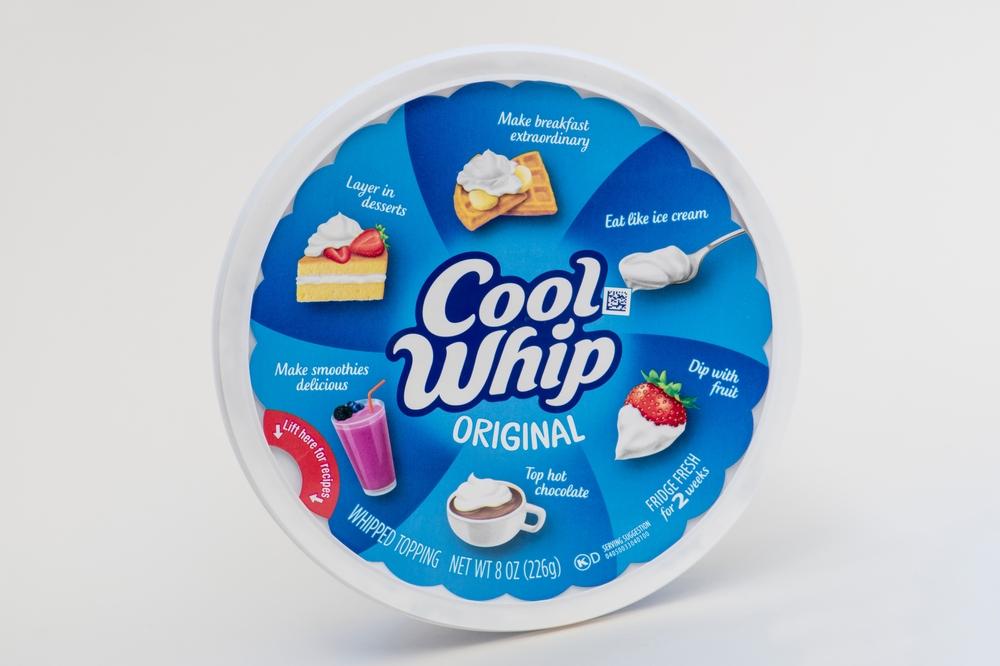
Cool Whip isn't good for weight loss despite its low calorie count—its hydrogenated oils, high fructose corn syrup, and artificial ingredients can actually disrupt your metabolism and make losing weight harder in the long run.
Keep reading to understand why these 25 calories per serving might be working against your weight loss goals and what you should use instead.
What Cool Whip Actually Contains (And Why It Matters)
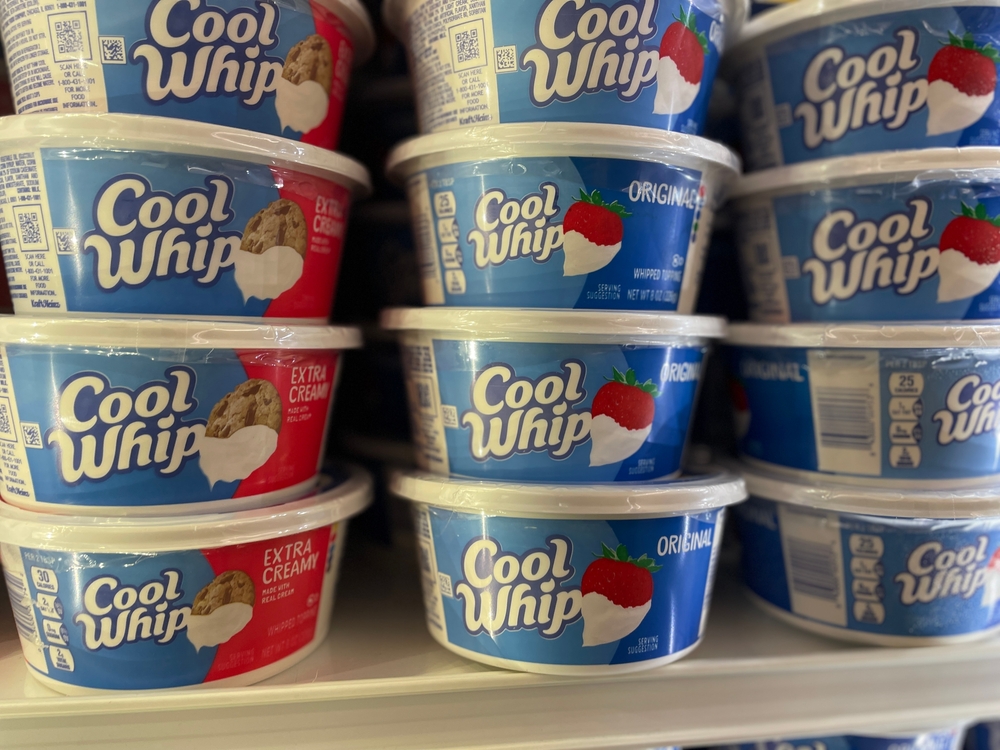
When you grab a tub of Cool Whip from the freezer aisle, you're choosing between several varieties that all promise the same thing: a sweet, creamy topping without the calorie hit of real desserts.
Here's what you're actually getting per 2-tablespoon serving:
Original: 25 calories, 1.5g fat, 2g carbs, 2g sugar
Lite/Reduced Fat: 20 calories, 1g fat, 3g carbs
Fat Free: 15 calories, 0g fat, 3g carbs, 1g sugar
Sugar Free: Similar calorie range with artificial sweeteners replacing sugar
These numbers explain Cool Whip's cult following in diet circles.
Weight Watchers members have long embraced it because a serving costs just one or two points—negligible in a daily budget.
Compare that to a half-cup of premium ice cream at 250+ calories or even a modest slice of cheesecake pushing 400 calories, and you can see why it feels like a smart swap.
But here's where things get complicated.
Calorie count tells you how much energy a food contains, not how your body responds to it.
Cool Whip delivers those low numbers by stripping out everything your body actually needs.
You get zero protein to build muscle or keep you full.
Zero fiber to slow digestion or feed your gut bacteria.
Zero vitamins or minerals to support the thousands of metabolic processes happening in your cells right now.
What you do get is a list of ingredients designed to mimic cream without being cream.
That's the real story here—not what Cool Whip contains in terms of calories, but what it's made from and how those ingredients interact with your metabolism.
Those seemingly innocent 15-25 calories come packaged with compounds that research suggests may actively interfere with your body's ability to lose weight, even as you think you're making a diet-friendly choice.
Why Dieters Love Cool Whip (The Low-Calorie Appeal)
Weight loss boils down to one non-negotiable principle: you need to burn more calories than you consume.
Create that deficit consistently, and your body taps into stored fat for energy.
This is where Cool Whip enters the picture as what seems like a perfect solution.
Dieters have gotten creative with this topping in ways that go far beyond dolloping it on pie.
Freeze it in small containers and you have something resembling ice cream.
Mix it with sugar-free pudding and you've got a mousse that clocks in under 100 calories per serving.
Sandwich it between two graham crackers for a dessert that feels indulgent but stays under 80 calories.
Pile it on fresh strawberries or other fruit to transform healthy food into something that tastes like a treat.
Whip it with flavored gelatin powder to make those viral “fluff” desserts that fill entire bowls for minimal calories.
The math looks compelling.
If you normally eat a 300-calorie bowl of ice cream after dinner and switch to 50 calories of frozen Cool Whip instead, you've just cut 250 calories from your day.
Do that every night for a week and you've eliminated 1,750 calories—roughly half a pound of fat loss.
Keep it up for a month and the scale should move down about two pounds, assuming everything else stays constant.
But the appeal runs deeper than simple arithmetic.
Dieting fails most often not because people don't understand calories, but because they can't sustain the deprivation.
You can white-knuckle your way through cravings for a few weeks, maybe even a few months.
Eventually, though, the mental load of constantly saying “no” to yourself breaks down your willpower.
Cool Whip offers a way to say “yes” without blowing your calorie budget.
That psychological relief matters enormously when you're trying to stick with a diet long enough to see real results.
When you replace a 500-calorie slice of cake with a 25-calorie spoonful of Cool Whip on fruit, you're creating exactly the kind of calorie deficit that should lead to weight loss.
In theory, this approach works perfectly.
The Hidden Ingredient Problems That Undermine Weight Loss
The calorie count on Cool Whip's label doesn't lie, but it doesn't tell the whole truth either.
Those low numbers hide ingredients that can sabotage your metabolism in ways that make losing weight harder, even as you think you're making progress.
Hydrogenated Oils: The Trans Fat Problem
Cool Whip relies on hydrogenated coconut and palm kernel oils to create that creamy texture without using actual cream.
The hydrogenation process transforms these oils into something your body struggles to handle properly—trans fats.
Research shows these fats trigger inflammation throughout your body and interfere with insulin sensitivity, meaning your cells don't respond normally when insulin tries to move sugar from your bloodstream into storage.
This metabolic dysfunction doesn't just affect your blood sugar.
Hydrogenated oils disrupt how your body processes essential fatty acids—the healthy fats you actually need for hormone production, cell membrane health, and fat metabolism itself.
You're essentially gumming up the very machinery that burns fat for fuel.
These oils also elevate cardiovascular disease risk factors, which matters because metabolic health and heart health are deeply intertwined.
High Fructose Corn Syrup: The Hunger Amplifier
Most Cool Whip varieties contain high fructose corn syrup, and this ingredient presents problems that go way beyond its 2 grams of sugar per serving.
When you eat regular sugar (sucrose), your body responds with insulin and leptin—hormones that signal fullness and tell your brain you've had enough.
Fructose doesn't trigger these satiety signals adequately, which means you can eat Cool Whip and still feel hungry shortly after.
Where does that fructose go? Straight to your liver, where it gets processed differently than glucose.
Your liver converts much of it directly into fat through a process called de novo lipogenesis—literally “new fat creation.”
This preferential fat conversion happens even when you're in a calorie deficit.
Studies link HFCS consumption to insulin resistance, elevated triglycerides, and fatty liver disease, all of which make weight loss significantly harder.
Animal research reveals something even more concerning: rats given HFCS gained more weight than rats fed the same number of calories from regular sugar.
The implication is clear—your body doesn't respond to all calories equally.
HFCS appears to impair glucose tolerance even without weight gain, meaning it damages your metabolic health before you see any change on the scale.
Artificial Sweeteners: The Metabolic Wild Card
If you opt for sugar-free Cool Whip to avoid HFCS, you're trading one problem for another.
The artificial sweeteners in these versions may trigger insulin responses despite containing no actual sugar.
Research suggests they can disrupt your gut microbiome—the trillions of bacteria that influence everything from digestion to metabolism to immune function.
The Bottom Line on Ingredients
You're consuming these compounds every time you eat Cool Whip, and they're working directly against your fat-burning mechanisms.
While you're counting calories and feeling virtuous about your 25-calorie dessert, these ingredients are increasing inflammation, promoting fat storage, suppressing satiety signals, and impairing your body's ability to regulate blood sugar.
That's the hidden cost of those low calories.
The Metabolism vs. Calories Paradox (Why Low-Calorie Doesn't Equal Weight Loss)
Here's where we need to challenge a deeply ingrained assumption: that all low-calorie foods move you toward weight loss with equal effectiveness. They don't.
The quality of those calories determines how your body responds, and Cool Whip demonstrates this paradox perfectly.
In the short term, you win. Eat Cool Whip instead of ice cream and you've genuinely reduced your calorie intake. Your food diary looks better.
Your daily totals drop. For the first few weeks or even months, this might translate to weight loss simply because you've created a deficit.
But your body isn't a simple calculator.
It's a complex biological system that responds to what you feed it, and those responses compound over time.
Regular Cool Whip consumption sets off a cascade of metabolic changes that make losing weight progressively harder:
Your cells become less responsive to insulin, so your pancreas pumps out more of it to compensate.
Higher insulin levels signal your body to store fat rather than burn it.
The fructose and hydrogenated oils promote fat creation in your liver even when you're eating fewer total calories.
Your leptin signaling gets disrupted, meaning your brain doesn't receive clear messages about fullness.
Chronic low-grade inflammation spreads through your tissues, interfering with the hormonal signals that regulate appetite and fat storage.
Your glucose regulation deteriorates, leading to energy crashes that trigger cravings.
Each of these changes individually makes weight loss harder.
Together, they can stall your progress completely or even cause weight regain despite your calorie deficit.
Think of it this way: you're consuming fewer calories, but you've simultaneously damaged your body's ability to burn fat efficiently.
It's like trying to drive somewhere with the parking brake engaged.
Sure, you're pressing the gas pedal (creating a deficit), but you've also activated a system that resists forward motion (metabolic dysfunction).
This explains why so many dieters hit plateaus they can't break through.
The scale moves for a while, then stops.
They reduce calories further.
Maybe it budges another pound or two, then stalls again.
They're not losing willpower—they've compromised their metabolism with ultra-processed foods that their bodies can't handle properly.
Food quality matters just as much as quantity because different foods trigger different metabolic responses.
A hundred calories of salmon tells your body to build muscle, stabilize blood sugar, and reduce inflammation.
A hundred calories of Cool Whip tells your body to store fat, ramp up hunger signals, and resist insulin. Same energy content, opposite metabolic outcomes.
There's another problem that doesn't show up in any metabolic panel: Cool Whip doesn't satisfy you.
Without protein or fiber, it provides no lasting fullness.
You might feel psychologically satisfied in the moment because you got to eat something sweet, but an hour later, you're hungry again.
That hunger drives compensatory eating—you consume more calories later to make up for the satiety you didn't get from your “diet-friendly” dessert.
Those extra calories might come from healthier sources, but they still add up and negate the calorie savings you thought you'd banked.
Better Alternatives That Actually Support Weight Loss
The most surprising alternative to Cool Whip is the food it's trying to replace: real whipped cream.
Two tablespoons contain just 15-20 calories, 1.5-2g of fat, and 0.5-1g of sugar.
That's the same or fewer calories than Cool Whip Original, and significantly fewer than many “light” desserts people eat thinking they're being virtuous.
The difference isn't in the calorie count—it's in what those calories are made of.
Real whipped cream contains no hydrogenated oils, no high fructose corn syrup, and no artificial ingredients.
Just cream, sometimes a touch of sugar or vanilla.
Your body recognizes these ingredients and knows how to process them without triggering the metabolic chaos that Cool Whip creates.
The natural dairy fats don't interfere with insulin sensitivity or promote inflammation the way hydrogenated oils do.
Greek Yogurt as a Creamy Topping
If you want something that actually helps with weight loss rather than just avoiding extra calories, Greek yogurt changes the equation entirely.
A 2-tablespoon serving gives you around 20 calories plus 3-4 grams of protein—something Cool Whip can't offer at all.
That protein keeps you full for hours, preventing the compensatory eating that undermines your calorie deficit.
Greek yogurt also delivers probiotics that support gut health, and emerging research shows your gut microbiome influences everything from metabolism to hunger signals to how efficiently you extract calories from food.
You're not just eating fewer calories—you're supporting the biological systems that help you lose weight and keep it off.
Whipped Coconut Cream for Dairy-Free Diets
For those avoiding dairy, whipped coconut cream offers a natural alternative with healthy medium-chain triglycerides that your body uses differently than other fats.
It's made from real coconut, contains no synthetic ingredients, and provides the creamy satisfaction you're after without metabolic downsides.
Making Your Own Whipped Cream
Heavy cream and a mixer give you complete control.
You know exactly what's in it, you can adjust sweetness to gradually reduce your taste preferences for intense sweetness, and it tastes significantly better than anything from a plastic tub.
It takes three minutes.
The pattern here matters more than any single alternative.
These options support your metabolism instead of undermining it.
The healthy fats in real cream and coconut trigger satiety hormones that Cool Whip suppresses.
The protein in Greek yogurt builds muscle tissue that burns calories even at rest.
You're working with your body's natural systems rather than against them, which is how sustainable weight loss actually happens.
When (If Ever) You Should Use Cool Whip for Weight Loss
Let's be pragmatic. There are limited scenarios where Cool Whip might serve a purpose without causing significant harm.
If you're currently eating a pint of ice cream every night—400+ calories of full-sugar, full-fat dessert—switching to measured portions of Cool Whip creates an immediate calorie reduction dramatic enough to potentially outweigh the metabolic downsides in the short term.
The key phrase is “measured portions” and “short term.” You're using it as a bridge, not a destination.
Some people find that having any sweet option available prevents them from completely breaking their diet and binge eating far worse alternatives.
If a tablespoon of Cool Whip on strawberries stops you from driving to get a milkshake, then in that specific moment, it's the better choice.
That's psychological triage, not a weight loss strategy.
Occasional use in genuinely small amounts—we're talking once or twice a week with strict adherence to the 2-tablespoon serving size—probably won't derail your entire metabolism.
Your body can handle occasional exposure to problematic ingredients without lasting damage.
When Cool Whip Becomes a Problem
Daily consumption is where things go wrong.
The metabolic effects of hydrogenated oils, HFCS, and artificial sweeteners compound with repeated exposure.
What seems harmless in isolation becomes harmful when you're dosing yourself every single day.
Most people drastically underestimate serving sizes.
The nutrition label assumes 2 tablespoons, but when you're spooning Cool Whip directly onto dessert or mixing it into recipes, you're probably eating 4-6 tablespoons without realizing it.
You've just tripled or quadrupled your exposure to all those problematic ingredients.
The “free food” mentality destroys any potential benefit.
Because Cool Whip is low-calorie, people treat it as unlimited.
They eat it straight from the container, add it to everything, and never track it.
Those untracked calories and metabolic disruptions add up fast.
Relying on Cool Whip for long-term weight management means you're never building the habits that actually sustain weight loss.
You're not learning to appreciate less-sweet foods, you're not developing a taste for whole foods, and you're not addressing why you need a sweet hit after every meal.
Practical Guidelines If You Choose to Use It
If you decide Cool Whip fits your current situation, follow these rules strictly:
Limit yourself to once or twice weekly at most.
Measure exactly 2 tablespoons every single time—no eyeballing.
Don't center your dessert strategy around it.
Think of it as a short-term tool while you transition toward better options, not as a permanent fixture in your diet.
What Actually Works Long-Term
Sustainable weight loss requires you to focus on nutrient-dense whole foods that naturally provide satiety.
Lean proteins, vegetables, fruits, whole grains, and healthy fats keep you full and support your metabolism instead of undermining it.
Stabilize your blood sugar through balanced meals that combine protein, fiber, and healthy fats.
When your blood sugar stays steady, you don't experience the crashes that trigger desperate cravings for sweet foods.
Most people reach for Cool Whip because they're experiencing blood sugar swings, not because they're genuinely hungry.
Address stress and sleep, which directly affect hunger hormones and cravings.
Poor sleep increases ghrelin (hunger hormone) and decreases leptin (fullness hormone), making you crave high-sugar, high-fat foods regardless of your willpower.
Find non-food ways to meet emotional needs.
If you're eating Cool Whip because you're bored, stressed, or seeking comfort, the problem isn't that you need a better dessert—it's that you're using food to solve non-food problems.
Gradually reduce your preference for intensely sweet flavors.
Your taste buds adapt to what you regularly eat.
Keep consuming very sweet foods (even low-calorie ones) and you'll continue craving that level of sweetness.
Let your palate adjust and you'll find satisfaction in naturally sweet foods like fruit.
Conclusion
Cool Whip might save you calories on paper, but those savings disappear when the hydrogenated oils and high fructose corn syrup disrupt your metabolism and leave you hungrier than before.
Real whipped cream costs the same or fewer calories without any of the metabolic damage, making it the smarter choice if you want a creamy topping.
Sustainable weight loss comes from supporting your body's fat-burning systems with quality ingredients, not from gaming the calorie system with ultra-processed substitutes.