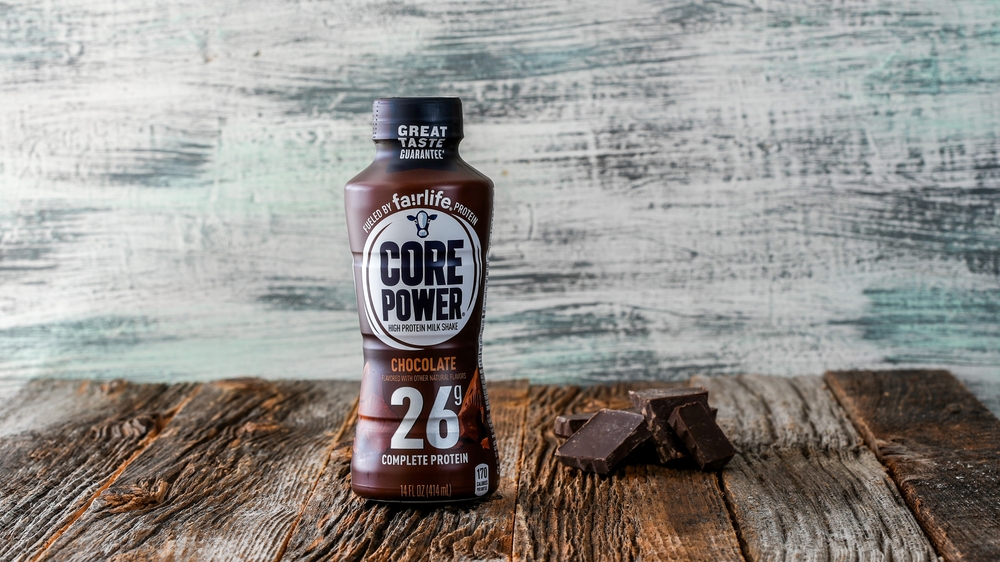
Core Power can support weight loss when used strategically as a high-protein snack or post-workout drink, but the artificial sweeteners it contains may actually work against your goals by disrupting gut health and potentially increasing cravings.
It works best as an occasional supplement within a calorie deficit—not as a meal replacement or daily habit.
Keep reading to understand exactly when Core Power helps with weight loss, when it doesn't, and what you need to know about those artificial sweeteners before making it part of your routine.
What You're Actually Getting in Each Bottle
A standard 14-ounce bottle of Core Power delivers 170 calories and packs in 26 grams of protein.
If you opt for the Elite version, you're looking at 42 grams of protein with around 230 calories per bottle.
Each serving contains 5 grams of sugar and 4.5 grams of fat, which keeps the macros relatively balanced for a protein drink.
The base is ultra-filtered milk, and the product is lactose-free, making it accessible if you struggle with regular dairy.
That's where the straightforward part ends.
What most people miss when they glance at the label: Core Power includes artificial sweeteners—specifically sucralose and acesulfame potassium (often shortened to Ace-K).
These keep the sugar content low while maintaining sweetness, but they come with their own set of considerations for weight loss, which we'll dig into shortly.
You'll also find maltodextrin and carrageenan in the ingredient list.
Maltodextrin acts as a filler and can affect blood sugar, while carrageenan serves as a stabilizer to keep the texture consistent.
The company markets Core Power primarily as a post-workout recovery drink, which tells you something about its intended use.
It's designed for convenience after exercise, not as a comprehensive meal solution or daily protein source.
Keep that distinction in mind as you decide how it fits into your weight loss plan.
How the Protein Content Actually Supports Weight Loss
The 26 grams of protein in each Core Power bottle gives you real, measurable advantages when you're trying to drop weight.
Protein increases satiety more effectively than carbohydrates or fat, which means you feel fuller longer after drinking it.
This isn't subjective—it translates to reduced calorie consumption throughout the rest of your day when you're not consciously thinking about food.
Here's something most people don't realize: your body burns extra calories just digesting protein.
This thermic effect means protein requires more energy to process compared to other macronutrients, so you're essentially getting a small metabolic boost with every bottle.
The muscle preservation angle matters more than you might think.
When you're in a calorie deficit, your body doesn't automatically distinguish between burning fat and burning muscle for energy.
Adequate protein intake signals your body to hold onto that lean muscle mass while preferentially targeting fat stores instead.
Research backs this up—one study found that participants who consumed extra protein through shakes lost significantly more body fat than control groups while better maintaining their muscle.
Why this happens on a hormonal level: Protein reduces ghrelin, the hormone responsible for sending hunger signals to your brain.
Lower ghrelin means fewer appetite pangs and less temptation to overeat.
From a practical standpoint, 170 calories makes Core Power a controlled-calorie snack option between meals.
Instead of reaching for a 300-calorie muffin or a handful of chips when hunger strikes mid-afternoon, you get substantial protein that keeps you satisfied.
The convenience factor helps when whole food options aren't readily available—you can keep a bottle in your bag or car without worrying about refrigeration for a few hours.
This controlled portion approach helps you avoid one of the biggest weight loss pitfalls: underestimating how many calories you're actually consuming from random snacks throughout the day.
The Artificial Sweetener Problem Nobody Talks About
Core Power's nutrition label looks clean at first glance—low sugar, high protein, reasonable calories.
But the ingredient list reveals sucralose and acesulfame potassium (Ace-K), two artificial sweeteners that create complications for weight loss you won't see reflected in the calorie count.
The emerging research on these sweeteners points to a troubling pattern.
They disrupt your gut microbiome composition, which matters because your gut bacteria play a direct role in weight regulation and metabolism.
When that bacterial ecosystem gets thrown off balance, your body's ability to manage weight efficiently gets compromised along with it.
Animal studies on acesulfame potassium specifically showed it altered gut bacteria and increased body weight gain, particularly in male mice.
While we need to be cautious about extrapolating animal research directly to humans, the evidence suggests these calorie-free sweeteners might actually work against your weight loss efforts rather than supporting them.
Three ways artificial sweeteners may undermine your goals:
- They interfere with blood sugar regulation even though they contain zero calories themselves
- Your body can develop tolerance over time, which may increase sugar cravings rather than reducing them
- World Health Organization findings indicate they fail to reduce body fat long-term despite their zero-calorie appeal
Think about that last point for a moment.
If artificial sweeteners were genuinely effective for weight loss, we'd see clear evidence after decades of use.
Instead, the WHO's research shows they don't deliver on their implicit promise.
The other ingredients deserve attention too.
Carrageenan has been linked to digestive issues and inflammation in some research, though this remains debated in scientific circles.
Maltodextrin, used as a filler, can spike your blood sugar levels—ironic for a product marketed to fitness-conscious consumers trying to manage their body composition.
Why Core Power Isn't a Meal Replacement (Even Though It's Tempting)
When you're busy and hungry, the idea of grabbing a Core Power instead of making lunch sounds appealing. Don't do it.
At 170 calories, Core Power falls drastically short of what nutrition experts define as a proper meal replacement.
The baseline recommendation sits at 300-400 calories minimum, and there's solid reasoning behind that threshold.
Your body needs sufficient energy to maintain basic functions—breathing, circulation, brain activity, digestion, and cellular repair all require fuel.
When you consistently provide too little, your metabolism responds by downshifting into conservation mode.
This metabolic slowdown is your body's survival mechanism, not a personal failure.
If you regularly replace meals with 170-calorie drinks, you're creating too severe a calorie deficit for sustainable weight loss.
What happens next runs counter to your goals: potential muscle loss, persistent fatigue, and metabolic problems that make future weight loss even harder.
Here's the paradox people miss: eating too little can make you lose weight more slowly over time.
Your body adapts to restriction, burns fewer calories at rest, and becomes more efficient at storing whatever energy you do provide.
The nutrient density problem is equally critical.
Core Power gives you protein, but it's missing the fiber, vitamins, minerals, and phytonutrients you'd get from an actual meal.
A balanced lunch with chicken, vegetables, quinoa, and olive oil delivers dozens of essential nutrients that work together for optimal health.
Core Power delivers protein and little else.
Fiber alone deserves attention—it slows digestion, stabilizes blood sugar, feeds beneficial gut bacteria, and increases satiety.
You get none of that from a protein shake.
The absence of diverse micronutrients means your body isn't getting the raw materials it needs to function optimally while losing weight, which can lead to cravings as your body literally seeks out what it's missing.
The Reality Check: How Weight Loss Actually Works with Protein Shakes
Weight loss boils down to one non-negotiable principle: you need to consume fewer calories than your body burns.
Everything else—macronutrient ratios, meal timing, supplement choices—is secondary to this fundamental equation.
Core Power doesn't bypass this rule.
Mayo Clinic research states it plainly: protein shakes aren't “magic bullets” for weight loss.
The shake doesn't possess special properties that melt fat regardless of your overall diet.
If you drink Core Power on top of your regular eating habits without adjusting anything else, you're simply adding 170 calories to your daily intake.
Those calories count the same as any others, and adding them without compensation pushes you further from the deficit you need.
This is where people stumble.
They assume the protein content somehow neutralizes the caloric impact or that drinking it instead of eating something worse automatically creates weight loss.
Neither assumption holds up.
Strategic use looks completely different from wishful thinking.
The successful approach treats Core Power as one tool within a comprehensive plan that includes whole foods, vegetables, fruits, lean proteins, and regular physical activity.
You calculate those 170 calories into your daily total and adjust accordingly.
If your target is 1,800 calories and you drink a Core Power, you have 1,630 left to work with for actual meals.
Studies consistently show that people eating varied, nutrient-dense diets have lower obesity rates than those relying heavily on processed products—even processed products marketed for fitness.
Your body responds better to real food than to engineered convenience items, regardless of how the label reads.
Success depends on maintaining a consistent deficit while meeting your nutritional needs.
Core Power can support that goal when used thoughtfully, but it can't replace the foundation of whole foods and intelligent eating patterns.
Smart Ways to Use Core Power for Weight Loss (Or Choose Better Alternatives)
If you decide Core Power fits your plan:
Treat it as a post-workout recovery drink or between-meal snack, nothing more.
The 170 calories need to show up in your daily tracking—log them just like you would a sandwich or a bowl of oatmeal to maintain your deficit.
Drinking it alongside a piece of fruit or some vegetables addresses the fiber gap and adds nutrients while increasing overall fullness from that snack session.
Limit it to occasional use rather than making it a daily staple.
Your body benefits from variety, and relying on any single processed product too heavily means you're missing out on the diverse nutrients found in different whole foods.
When to look for alternatives:
If you're sensitive to artificial sweeteners or dealing with gut health concerns, Core Power probably isn't your best choice.
Plenty of protein shakes skip the sucralose and acesulfame-K entirely, using stevia or monk fruit instead—or no sweeteners at all.
Look for options built around whole food ingredients with minimal processing.
Reading labels becomes a skill worth developing when you're comparing products.
The fundamentals matter more than any supplement:
Prioritize whole protein sources in your actual meals.
Chicken, fish, eggs, legumes, and Greek yogurt should form the backbone of your protein intake.
Include vegetables, whole grains, and healthy fats to build complete, satisfying meals that provide everything your body needs to function optimally during weight loss.
Think of Core Power as a supplemental tool, not your dietary foundation.
Real progress comes from consistent exercise—particularly strength training, which maximizes muscle preservation and fat loss when you're in a calorie deficit.
The combination of adequate protein and resistance training signals your body to hold onto muscle while burning fat.
Calculate your actual needs before adding supplements:
Most adults need 46-56 grams of protein daily, though active individuals may require more—up to 1.6 grams per kilogram of body weight.
Do the math: if you weigh 70 kilograms (154 pounds) and exercise regularly, you might need around 112 grams daily.
Track your total protein intake from all sources for a few days to see where you actually stand.
You might already be hitting your targets through food alone, making supplemental shakes unnecessary regardless of their convenience appeal.
Conclusion
Core Power can support your weight loss efforts when you use it strategically—as an occasional post-workout drink or protein-rich snack within a calorie deficit.
The high protein content offers real benefits, but the artificial sweeteners may undermine your progress through gut health disruption and increased cravings.
Your success ultimately depends on building a sustainable eating pattern around whole foods, where Core Power plays a minor supporting role rather than starring as your go-to nutrition source.