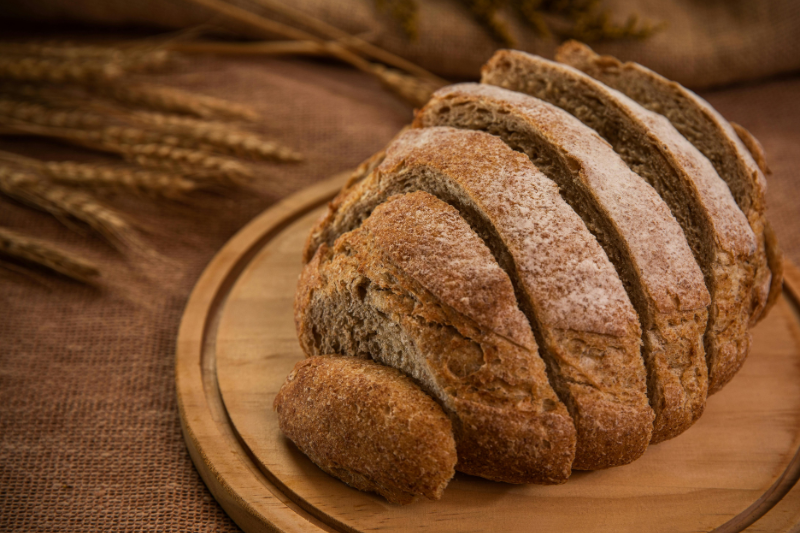
Whole grain bread can support weight loss, but the effect is modest — research shows it helps more with losing body fat, particularly around the abdomen, than with dropping pounds on the scale.
Keep reading to understand what the evidence actually shows, which breads are worth buying, and how to make the swap work in your favor.
What the Research Actually Shows
The honest answer from clinical trials is that whole grain bread doesn't reliably move the scale — but it does seem to shift what's underneath it.
The largest meta-analysis on the subject pooled 26 randomized controlled trials across 2,060 participants and found no significant effect on body weight, yet it did find a small but meaningful reduction in body fat percentage of about 0.48 percentage points.
A 2020 follow-up meta-analysis covering 21 trials landed similarly: null effects across body weight, BMI, fat mass, and waist circumference.
So why do large population studies keep linking whole grain intake to lower BMI? Likely because most trials only run 12 to 16 weeks — too short for small daily differences to add up. Observational data, which tracks people over years, consistently tells a different story.
The bread-specific trials are more telling. In one 12-week double-blind study, participants eating whole-grain wheat bread lost a measurable amount of visceral fat — confirmed by CT scan — while the white bread group showed no change.
A separate rye bread trial found the whole-grain group lost more total weight and a greater percentage of body fat compared to those eating refined wheat.
Another study gave both groups the same calorie-restricted diet but split them between whole-grain and refined-grain foods — total weight loss was similar, but the whole-grain group lost significantly more abdominal fat and saw inflammatory markers drop sharply.
One study worth flagging produced no results at all: a large 16-week trial where participants simply added 60 to 120 grams of whole grains to what they were already eating. No changes in weight, BMI, body fat, or waist circumference.
The reason is straightforward — they added whole grains on top of their usual diet instead of replacing refined grains, which pushed total calorie intake up. That single finding is arguably the most practical takeaway from all the research: the swap matters more than the addition.
Why Fiber, Satiety, and Glycemic Index Matter
A slice of commercial whole-wheat bread has around 2g of fiber. A comparable slice of white bread has under 1g. The calories are nearly identical.
That fiber gap is small on paper, but it drives a meaningful difference in how full you feel — fiber slows digestion, expands in your stomach, and feeds gut bacteria that release satiety signals into your bloodstream.
A satiety index study quantified this directly, scoring white bread at a baseline of 100. Wholemeal bread scored 157 — meaning you get roughly 50% more fullness per calorie.
Rye bread trials pushed this further, with whole-grain rye breakfasts suppressing hunger for up to 8 hours compared to refined wheat. Specialty whole-grain breads with 3 to 6g of fiber per slice amplify this effect even more.
Then there's the metabolic side. Whole-grain diets have been shown to increase resting metabolic rate by around 43 calories per day while also increasing the energy lost through digestion by roughly 76 calories per day.
That's close to 100 extra calories per day either burned or excreted compared to refined grains — a quiet but consistent edge.
Glycemic index tells a more complicated story:
| Bread Type | Approximate GI |
|---|---|
| White bread | 71–75 |
| Commercial whole-wheat | ~71 |
| Intact-kernel whole grain | ~51 |
| Sourdough whole-wheat | 48–54 |
| Pumpernickel | 41–56 |
The number that jumps out is commercial whole-wheat sitting at roughly the same GI as white bread. Modern fine milling breaks down the grain structure so thoroughly that your body processes the starch almost as fast.
The real glycemic benefit only appears with intact-kernel breads, sourdough whole-wheat, or pumpernickel — where the grain's physical structure is still largely intact, slowing digestion and blunting the post-meal insulin spike that often triggers rebound hunger.
Not All Whole Grain Bread Is Equal
This is where most people get tripped up. The front of a bread package is essentially a marketing surface, and the terms printed there are largely unregulated. None of the following actually guarantee whole grain content:
- Multigrain
- Wheat bread
- 12-grain
- Honey wheat
- Stone-ground
- Made with whole grains
A loaf can carry any of these labels and still be made primarily from refined flour. Even the color isn't reliable — many brown breads get their shade from molasses or caramel coloring, not from bran.
The reason this matters nutritionally goes back to the previous section. Fine milling strips away the grain's physical structure, and it's that structure — not just the presence of whole grain ingredients — that produces the slower digestion, lower glycemic response, and greater satiety.
A finely milled commercial whole-wheat loaf and a slice of white bread can behave almost identically in your body.
What to actually look for:
Flip the package over and check the ingredient list. The first ingredient should read “whole wheat flour,” “whole [grain name],” or “100% whole wheat flour.” If it just says “wheat flour” or “enriched wheat flour,” it's refined.
The Whole Grains Council's 100% Stamp is the most reliable shortcut — it requires every grain ingredient to be whole and guarantees at least 16g of whole grain per serving.
Beyond the label, the form of the bread matters more than most people realize. Coarse, intact-kernel breads, sourdough whole-wheat, and true pumpernickel are where the real metabolic and satiety benefits show up.
The more a bread has been processed — even if it technically qualifies as whole grain — the closer it behaves to white bread. Choosing a denser, chewier loaf over a soft sandwich bread isn't just a texture preference; it's a meaningfully different nutritional choice.
How Much to Eat and How to Build Your Plate
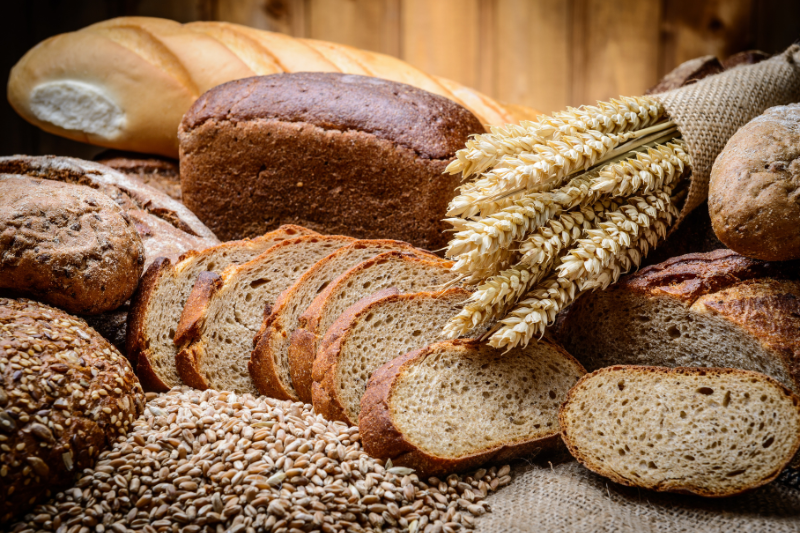
The USDA Dietary Guidelines recommend at least 3 ounce-equivalents of whole grains per day on a standard 2,000-calorie diet, where one slice of bread counts as one ounce-equivalent.
For someone actively trying to lose weight, a practical ceiling is 2 to 3 slices per day — enough to get the fiber and satiety benefit without letting bread crowd out other food groups or push calories too high.
A single slice of whole grain bread runs about 70 calories and counts as one carbohydrate serving. If that reference point helps, it's roughly the size of a deck of cards. At 1 to 2 slices per meal, you're working with a manageable, predictable number that's easy to track.
When choosing a loaf, use these as your minimum benchmarks:
- At least 3g of fiber per slice
- No more than 200mg of sodium per slice
- No added sugars or high-fructose corn syrup in the ingredient list
Meeting all three narrows the field considerably and filters out most of the breads that lean on health-adjacent branding without delivering much nutritionally.
How you build the rest of the meal matters just as much as the bread itself. Pairing whole grain bread with a protein source and a healthy fat — eggs, nut butter, avocado, or lean meat, for example — slows digestion further and extends satiety well beyond what the bread does on its own.
A slice of whole grain toast eaten alone will keep you full for a fraction of the time compared to the same slice alongside protein and fat.
The NHS puts it plainly, recommending wholegrain starchy foods specifically for people trying to lose weight. The logic is straightforward: you get more volume, more fiber, and more staying power per calorie than refined alternatives — as long as portions stay sensible.
The Caveats Worth Knowing
Swapping white bread for whole grain is a sensible move, but it's worth being clear about what it actually does. The calorie difference between the two is typically 0 to 10 calories per slice — close enough to zero that the switch alone won't produce any measurable weight loss.
What changes is fiber content, satiety, and body composition over time, not your daily calorie count in any significant way.
Portion size is where things can quietly unravel. Bread is calorie-dense at roughly 2.5 to 3 calories per gram, and 4 to 6 slices a day adds up to 300 to 500+ calories before you've added anything on top.
A single bagel is the caloric equivalent of 3 to 5 slices of bread — something worth keeping in mind if bagels are a regular part of your routine.
Spreads compound this fast. Butter, mayo, jam, or Nutella can cancel out the fiber and satiety advantages of a good whole-grain loaf in a single generous application.
Sodium is a quieter issue that affects how weight loss reads on the scale. A slice of bread typically contains 100 to 230mg of sodium, and bread has historically been the single largest source of dietary sodium for American adults.
High sodium intake drives water retention, which can mask fat loss and create confusing fluctuations in your daily weight — worth knowing if you're tracking progress closely.
A few other things to keep in mind:
- Individual glycemic responses vary widely. The same whole-wheat bread can spike one person's blood sugar and barely affect another's, largely due to differences in gut microbiome composition. GI values are averages, not guarantees.
- Wheat-based whole grain isn't for everyone. People with celiac disease, non-celiac gluten sensitivity, or fructan-sensitive IBS should avoid it entirely, regardless of weight goals.
- Some of the research has industry ties. Several whole-grain meta-analyses received funding from companies like General Mills, Barilla, and Nestlé. The funding is disclosed, but it's reasonable to apply a modest discount when interpreting the reported effect sizes.
The Bottom Line
Whole grain bread earns its place in a weight loss diet, but it's one piece of a larger picture. The evidence is most consistent for reductions in abdominal and visceral fat — less so for total body weight.
If you're judging progress purely by the scale, the effect will likely be underwhelming. If you're looking at body composition over time, the case is stronger.
The size of the benefit tracks closely with how different your new bread actually is from your old one. Trading white bread for a soft commercial whole-wheat loaf is a marginal upgrade.
Trading it for an intact-kernel rye, a true sourdough whole-wheat, or a dense pumpernickel is a meaningfully different metabolic choice — lower glycemic response, more fiber, better satiety, and a greater effect on the fat your body holds around the midsection.
What the research consistently supports is substitution, not addition. Adding whole grain bread on top of your existing diet just adds calories. Replacing refined bread with a genuine whole-grain option is where the benefit actually lives.
That said, bread type is a smaller lever than total calorie intake and portion control. No loaf, however well-made, overrides a diet that's consistently over calories.
Whole grain bread works best as part of a structured approach — modest portions, paired with protein and fat, and swapped in where refined grains used to be.
Done that way, it's a straightforward, evidence-supported swap. Just don't expect it to carry more weight than the research says it can.