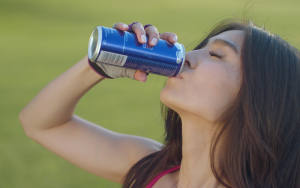
You've probably heard that drinking more water can help you shed pounds, and the short answer is yes, but only in a limited way—it can support weight loss by curbing your appetite and replacing high-calorie drinks, not by melting fat on its own.
Keep reading to see exactly what the research shows, including how water fasting compares and where the real risks lie.
Does Drinking Water Actually Help You Lose Weight?
When people ask if you can lose weight just by drinking water, they're usually talking about one of two very different things.
The first is simple: drinking more water as part of your everyday routine, alongside your normal meals and habits. The second is water fasting, where water is the only thing you consume for a set period, with no food at all.
These two approaches produce completely different results, so lumping them together leads to confusion. Here's the direct answer for each.
Drinking more water day to day can lead to modest, genuine weight loss. It works mainly by helping you eat less and by replacing higher-calorie drinks with something that has zero calories.
It's not a standalone solution, though. On its own, without any other changes to your diet, water won't get you to your goal weight.
Water-only fasting is a different story. It produces faster and larger drops on the scale, but most of that loss comes from water and glycogen, not actual fat. It also comes with health risks that are worth understanding before you consider trying it.
The rest of this article breaks down exactly what the research says about both approaches, including:
- The specific mechanisms behind water's effect on appetite and metabolism
- What controlled studies found when people increased their water intake
- Why water fasting numbers look so dramatic, and why that's misleading
- How much water is actually safe to drink
- Practical steps you can use starting today
How Water May Influence Appetite and Calorie Intake
Your brain isn't always great at telling the difference between thirst and hunger. When you're mildly dehydrated, that signal can get crossed, and you end up reaching for a snack when what your body actually wanted was a glass of water.
This mix-up means a lot of people eat more than they need to, simply because they're not drinking enough throughout the day.
That's why drinking water before a meal tends to work so well. It fills up your stomach a bit, so you naturally eat less once you sit down to eat, without having to white-knuckle your way through portion control.
But the clearest, most dependable way water helps with weight loss has nothing to do with appetite at all. It's substitution:
- Swap a soda for water, and you cut a chunk of sugar and calories out of your day
- Swap lemonade or juice for water, and the same thing happens
- Do this consistently, and your daily calorie intake drops without you having to think about it
This is the one piece of the water-and-weight-loss puzzle that isn't up for debate. There's no ambiguity about the mechanism, no mixed study results to sort through—if you're replacing calorie-containing drinks with water, you're taking in fewer calories, full stop.
Compared to the appetite-suppression effect, which depends on your hydration status and how your body interprets hunger cues, this substitution effect is simple cause and effect, which is exactly why it's considered the most reliable lever in the whole conversation.
The “Water Burns Calories” Claim — What the Studies Show
You've probably seen the claim that drinking water can boost your metabolism. This idea traces back to a small 2003 study, where 14 healthy adults drank 500 ml of water and saw their metabolic rate jump by 30%.
The increase started within 10 minutes, peaked around the 30 to 40 minute mark, and added up to a total thermogenic response of about 100 kJ.
That sounds impressive, but the details matter. About 40% of that effect came from something fairly unremarkable: your body has to spend energy warming the water up from room temperature to your internal body temperature of 37°C.
So a good chunk of the “metabolic boost” is really just your body doing the same thing it does with any cold liquid you swallow.
Follow-up research hasn't been kind to the bigger claim, either:
- One controlled study found that drinking distilled water or saline didn't significantly increase energy expenditure at all
- The same study found cold water, at 3°C, did produce a small increase of about 4.5% over 60 minutes, but that's a far cry from the original 30% figure
- A broader look at the research calls the whole water-induced thermogenesis idea controversial, with some studies showing increases of 10-30% in resting energy expenditure after drinking half a liter or more, and others showing no change whatsoever
So what's a realistic number? One review puts it at roughly 4 to 8 kcal burned per 8-ounce glass of cold water. To put that in perspective, you'd need to drink a lot of water just to burn off the calories in a single cracker.
It's a real effect, but it's small enough that it won't move the needle on its own—if you're hoping water alone will torch calories throughout the day, the math simply doesn't support it as a serious weight-loss strategy.
What Controlled Studies Found When People Increased Water Intake

Small lab studies are one thing, but what happens when real people actually drink more water over time? A 2014 study gives us a useful answer.
Researchers had 50 overweight women drink about 51 extra ounces of water every day, split into roughly 17 ounces before breakfast, lunch, and dinner, and tracked them for eight weeks.
By the end of the study, the results were consistent across the board:
- Body weight decreased
- BMI dropped
- Body fat percentage went down
- Appetite decreased as well
That's a fairly complete picture of improvement, and it lines up with what a larger 2022 review of studies found. That review concluded that “preloading,” meaning drinking water shortly before you eat, can meaningfully support weight loss.
Specifically, drinking about 17 ounces before meals was linked to an extra two to five pounds of weight loss over a three-month period.
A separate smaller study found something similar: people following a low-calorie diet who drank 16 ounces of water before every meal lost about 2 to 4 pounds more than people on the same diet who skipped the water.
So there's real, reproducible evidence here. But there's an important catch to keep in mind.
Even if water genuinely helps your body burn a few extra calories or curbs your appetite slightly, that benefit can vanish the moment you eat more somewhere else in the day.
Weight loss comes down to your total calorie balance, and water can only influence one side of that equation. If drinking more water makes you feel like you've earned a bigger dessert, the advantage disappears.
This is really the throughline across all the research: water is a genuine, evidence-backed piece of the puzzle, but it only works when it's paired with actual attention to what and how much you're eating, not as a substitute for it.
Water-Only Fasting: Faster Results, Different Risks
Now for the other side of the equation. Water-only fasting, where you consume nothing but water for days at a time, produces numbers that look dramatic compared to anything a daily water habit can achieve.
In the early days of a fast, people commonly lose 2% to 6% of their body weight, which works out to roughly 4 to 6 pounds for someone in the 150 to 200 pound range.
Over longer fasts of 5 to 20 days, total weight loss can climb to 2% to 10% of body weight, with fat making up a larger share of that loss the longer the fast continues.
Here's the catch that makes those early numbers misleading: most of what disappears in the first few days isn't fat at all.
Your muscles and liver store around 500 grams of glycogen, and each gram of glycogen holds onto roughly 3 grams of water.
So when you stop eating and your body burns through those glycogen stores, it releases all that bound water at the same time.
That alone can flush out 2 to 3 kilograms, or 4 to 7 pounds, of pure water and glycogen weight that has nothing to do with fat loss.
The actual fat-loss numbers tell a very different story than the scale does:
- Participants in fasting research lost about 0.5 pounds of fat per day, on average
- A 3-day fast, then, yields roughly 1 to 1.5 pounds of real fat loss
- In that same 3-day window, water and glycogen typically account for 70% to 80% of total weight lost
- Actual fat loss represents only about 15% to 25% of what shows up on the scale
Beyond the misleading numbers, water fasting comes with health risks that are well-documented and worth taking seriously:
- Muscle loss becomes a real concern, since the body starts breaking down lean tissue alongside fat
- Dehydration and blood pressure changes are common, and human research on prolonged fasting remains limited overall
- Mood changes, migraines, and disordered eating patterns have all been reported in connection with water fasting
- A 2025 University of Sydney trial found that a 10-day water-only fast actually increased pro-inflammatory proteins in the blood, the opposite of what researchers expected, which could raise risks for people with existing heart or vascular conditions
- Refeeding syndrome is one of the most serious dangers: reintroducing food too quickly after a prolonged fast can trigger severe, potentially fatal shifts in fluid and electrolyte levels
Because of these risks, water fasting isn't considered safe for people with diabetes, low BMI, heart or kidney disease, a history of eating disorders, or for anyone who is pregnant.
Even healthy adults are advised to talk to a health professional before attempting an extended fast.
And research hasn't really answered how quickly the lost weight comes back afterward, or whether any metabolic improvements last, since those benefits typically return to baseline within a few months of normal eating resuming.
If the appeal of fasting is the structure it provides rather than the extreme results, intermittent fasting is worth considering instead. Rather than eliminating food entirely, it focuses on narrowing when you eat.
Several studies link this approach to genuine weight loss along with improvements in blood sugar control and blood fat levels, without the same level of risk that comes with going days on water alone.
How Much Water Is Actually Safe (and Practical Steps to Take)
If you're planning to use water as part of a weight-loss strategy, it's worth knowing where the upper limits actually sit.
The National Academy of Medicine recommends about 15 cups of total daily fluid intake for men and 11 cups for women, and that includes fluid from food as well as drinks, not just what you sip from a glass.
That popular rule about drinking eight 8-ounce glasses a day? There's no scientific research behind it. It's a myth that somehow became conventional wisdom, and actual needs vary quite a bit depending on your body size, activity level, and any underlying health conditions you might have.
There's also a real ceiling on how much water your body can process safely. Your kidneys can only eliminate about one liter of water per hour.
Drink faster than that, and you outpace your kidneys' capacity, which raises the risk of hyponatremia, a dangerous drop in blood sodium levels.
For most healthy adults, around one gallon (3.8 liters) a day is generally considered safe, while two gallons (7.6 liters) is unnecessary and can become unsafe unless you're following medical guidance for a specific reason.
Overhydration doesn't announce itself dramatically at first. Early warning signs include:
- Headaches
- Dark urine (which, notably, is the opposite of what most people expect to watch for)
If it progresses to severe hyponatremia, symptoms escalate to confusion and dizziness, and in extreme cases, it can become life-threatening.
With all that context in mind, here's how to actually put this information to use:
- Drink about 16 ounces of water roughly 30 minutes before meals. This is the single most evidence-backed tactic in this entire article, linked to a few extra pounds of loss over several months when paired with a calorie-controlled diet.
- Replace sugary or high-calorie drinks with water whenever you can. This is the clearest win available, since it lowers your calorie intake directly without relying on any debated metabolic effects.
- Don't count on water “burning calories” as a real weight-loss lever. The effect exists in some studies, but it's small, inconsistent, and nowhere near enough to rely on by itself.
- Skip unsupervised water-only fasting, especially beyond 24 to 48 hours. Remember that most of the initial weight lost this way is water and glycogen, not fat.
- Reintroduce food gradually after any fast, to avoid the serious complications of refeeding syndrome.
- Cap your intake around one liter per hour, and let thirst guide you rather than forcing large volumes on a rigid schedule.
Above all, treat water as a supporting habit rather than a weight-loss method in its own right. The research consistently points to the same conclusion: water works best as one piece of a broader approach that includes real dietary changes and physical activity, not as a replacement for either.
Conclusion
So, can you lose weight just by drinking water? Not on its own—but used strategically, as a stand-in for sugary drinks and a habit before meals, it can genuinely support a few extra pounds of loss over time.
Pair it with a solid diet and some activity, skip the extreme fasting, and you'll get real, sustainable results instead of a number on the scale that bounces right back.