Most people who eat only grapes for three days will see the scale drop by about 1 to 4 pounds (roughly 0.5 to 2 kg), but only around 0.3 to 1 pound of that is likely body fat.
The rest is mostly water and stored carbohydrate that tends to come back within a few days of eating normally, so keep reading for a more detailed explanation of what to expect.
What the 3-Day Grape Diet Involves
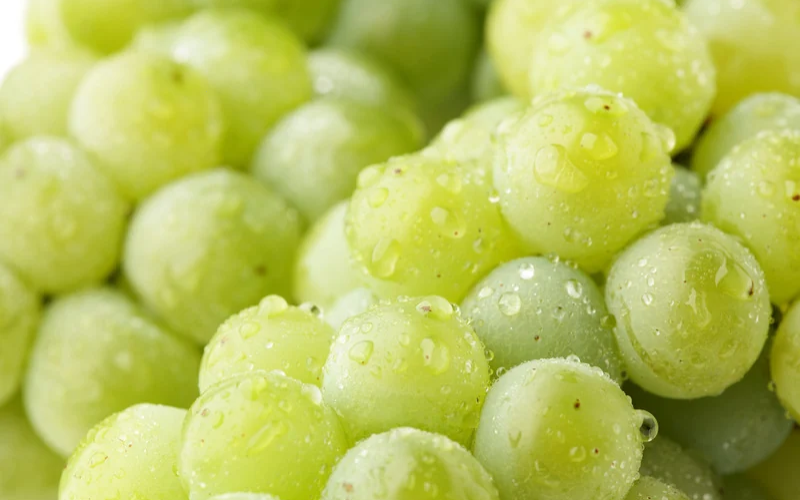
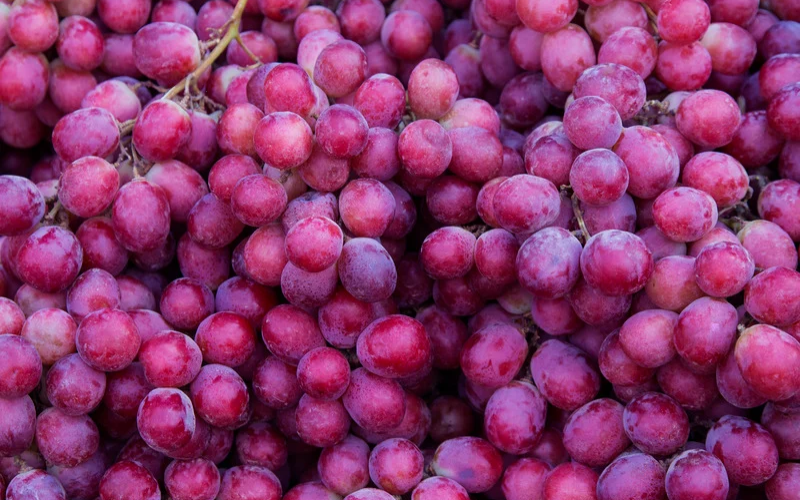
The 3-day grape diet is a mono diet: you eat nothing but grapes for three days. Most versions call for fresh red grapes, often with the skins and seeds left in. Some plans also allow unsweetened grape juice.
For drinks, you can have water, green tea, herbal tea, or rooibos, but coffee, alcohol, and any other food are off the table.
Where It Comes From
The modern version is often called the “grape cleanse,” and Caudalie co-founder Mathilde Thomas helped popularize it. She promotes it for skin, energy, and a flatter-feeling tummy, and she admits you won’t lose tons of weight.
Her plan traces back to Johanna Brandt’s historical “grape cure,” which started with a 2 to 3 day water fast and then moved to small grape meals every two hours for one to two weeks. That’s a much longer routine than the 3-day version, but it inspired the shorter ones.
How the Versions Differ
How much you eat depends on which plan you follow. Daily amounts range from “two to more than five pounds” in some write-ups to 2 to 3 kg in others. Two common versions look like this:
- Thomas’s version: You eat small grape “meals” about every three hours, with a glass of water before each. You start the day with two large glasses of water, and she suggests about a week of clean eating beforehand.
- The “strict” Eastern European version: You eat 500 g on day 1, 1 kg on day 2, and 1.5 kg on day 3, and drink 1.5 to 2 liters of water a day.
Coming Off the Diet
Most plans ask you to return to normal eating slowly, starting with light foods. Some guides suggest taking twice as long to come off the cleanse as it lasted, which would mean about six days of easing back in after a 3-day run.
How Many Calories You Actually Eat (and Why It Changes Everything)
Calories are the biggest factor in how much real fat you lose on this diet, and they vary a lot from person to person. Fresh grapes contain about 69 kcal per 100 g, which works out to roughly 310 to 315 kcal per pound.
Newer analyses of sweeter modern varieties put them higher, at 80 to 86 kcal per 100 g, so your grapes may sit toward the upper end of that range.
What Each Version Adds Up To
Because the plans differ in how many grapes you eat, the calorie totals differ too. For example:
- Strict version: About 345, 690, and 1,035 kcal on days 1 to 3, or roughly 2,070 kcal in total. The site promoting it advertises an average of 650 kcal a day.
- Thomas version at 2 lb a day: About 625 kcal a day.
- Thomas version at 4 to 6 lb a day: About 1,250 to 1,900 kcal a day.
- Eating until full at 3 kg a day: More than 2,000 kcal, while still lacking protein and fat.
What People Actually Eat
Real-life intake tends to land in the middle. One journalist who tried the Thomas version ate 4.4 lb of grapes on day 1, which comes to about 1,400 kcal.
She then settled at roughly 3 lb a day plus juice, or about 1,000 to 1,100 kcal. A blogger, meanwhile, struggled to eat more than about 1,000 kcal of grapes in a single day, since grapes are bulky and filling.
Many people end up somewhere between 700 and 1,400 kcal a day. That’s a large deficit, though not starvation.
Why This Matters for Your Results
How many grams of grapes you eat is the single biggest variable in your outcome. Eating 0.5 kg a day versus 2.5 kg a day is roughly a 1,400 kcal-a-day difference.
Two people can follow the “same” grape diet and end up with very different amounts of fat loss, and at the high end, fat loss may be close to zero.
Realistic Weight Loss: Claims Versus Estimates
What Promoters Claim
Online, you’ll see promises like “up to 3 kg in 3 days” for the strict version, “2 kilos in 4 days” for a mixed grape plan, and “up to 5 pounds in just one week.” None of these point to a study. They’re marketing numbers, not measurements, and no one has weighed people before and after a 3-day grape-only diet.
What the Math Suggests
You can get a more grounded estimate from the calorie numbers. A 3-day deficit of about 1,500 to 5,500 kcal, depending on how many grapes you eat and how large you are, equals roughly 0.4 to 1.6 lb of fat-tissue energy. That uses the common approximation that a pound of body fat holds about 3,436 to 3,752 kcal.
Not all of that deficit comes from fat, though. Some of it is covered by stored carbohydrate (glycogen) and a little protein. Realistic fat loss therefore lands at about 0.3 to 1 lb.
The number on the scale will be higher, since water makes up most of the early drop. Expect about 1 to 4 lb (0.5 to 2 kg) in total. That matches estimates for other short fruit-based plans: 1 to 4 lb for 3-day fruit-only diets, and “typically two to four pounds” for 3-day juice cleanses.
When 3 kg Is Possible
The 3 kg ceiling isn’t impossible. A large person who eats very few grapes and gets diarrhea could see that on the scale. It would be mostly water, though, so don’t treat it as typical or as fat loss.
Why Several Kilograms of Fat Is Unlikely
Longer grape-only regimens of 3 to 6 weeks in personal blogs report about 3 kg lost in total. If weeks of grapes produce that much, a few days can’t plausibly burn several kilograms of fat. Individual experiences vary, too.
One journalist who did the Thomas version for 3 days tracked her grapes, hunger, and mood, but reported no weight change at all.
Where the Weight Comes From
In the first days of a very-low-calorie diet, roughly 70% of the weight you lose is water and stored carbohydrate (glycogen), about 25% is fat, and about 5% is protein. The grape diet follows that same pattern, with a few quirks of its own.
Glycogen and Water
Your body stores carbohydrate as glycogen, and each gram is held with about 3 to 4 g of water. A well-nourished adult carries about 500 g of glycogen alongside about 1,500 g of water, so emptying it completely can show up as about 5 lb on the scale.
Grapes complicate this. They’re about 18% carbohydrate, so eating 1 to 2 kg a day still gives you roughly 180 to 360 g of carbs. Your glycogen stores probably drop only partway, unlike on a water fast or keto diet. That’s one reason realistic totals sit at the lower end of the range.
Sodium and Fluid Loss
Grapes contain almost no sodium (single-digit mg per 100 g) but plenty of potassium, at about 190 to 225 mg per 100 g. Cutting your salt intake suddenly makes your body shed fluid, and grapes are often described as “mildly diuretic,” which adds to the effect.
Gut Contents and Diarrhea
The fructose and sorbitol in grapes can loosen your stools, which temporarily lowers both bowel contents and body water. On the other hand, grapes are bulky, and eating 2 kg or more a day keeps your gut from emptying out. The net effect varies from person to person.
Fat and Lean Tissue
Fat loss is real but small. Grapes also provide under 20 g of protein a day, so expect some protein breakdown from lean tissue as well.
Why Your Number May Differ
Several things change how much you lose:
- Body size and muscle mass: Larger, more muscular people store more glycogen and water, so they lose more scale weight.
- What you ate beforehand: A high-salt, processed baseline produces a bigger water drop. A “clean week” before the diet, as Thomas recommends, shrinks the visible loss.
- Activity level: More movement widens the deficit, but fatigue and lightheadedness are common on this diet.
- Sex, age, and hormonal cycle: These affect calorie needs and baseline water retention.
- Digestive response: Diarrhea increases short-term water loss.
- When you weigh yourself: The morning of day 4, before you eat, gives the lowest number, and also the least lasting one.
What Happens After: Regain and Rebound
The Water Comes Back First
Most of what you lose on this diet is water and glycogen, and both return within days of eating normally. Once your sodium intake and food volume go back to usual, your body refills its glycogen stores and holds water again, and the scale climbs with them.
The Fat Is Harder to Predict
The small fat portion, about 0.3 to 1 lb, stays off only if you don’t overeat afterward. Rebound eating is common after restrictive diets, and a single large meal can erase that much fat loss quickly.
What Longer-Term Research Shows
No one has followed grape dieters over time, so there’s no grape-specific data. Research on similar approaches points the same way, though. In a 2024 review of prolonged water-only fasting, normal-weight adults who lost about 6% of their body weight over 5 days regained all of it within 3 months.
Studies of restrictive diets more broadly find that one-third to two-thirds of lost weight returns within a year, and nearly all of it within five years.
Why Experts Are Skeptical
A mono diet doesn’t teach you anything you can keep doing. You don’t build habits around portions, protein, or meal planning, so there’s nothing to carry forward once the three days end. One dietitian put it bluntly: she can’t think of a good reason to recommend a mono diet to a healthy adult.
The “detox” and “lymphatic cleansing” claims that often come with grape cleanses have no scientific support either. The same goes for the cancer-cure claims tied to the historical “grape cure.” Reviews of those programs found no evidence of benefit for any disease.
A Better Use for Grapes
Grapes themselves aren’t the problem. They’re about 82% water and about 100 kcal per cup, which makes them a reasonable snack within a regular diet. If you like them, eating them alongside protein and vegetables will do more for your weight than a three-day grape-only stretch.
Safety, Who Should Skip It, and Better Options
Who Should Avoid It
This diet isn’t safe for everyone. Skip it if any of these apply to you:
- Diabetes, prediabetes, or insulin resistance: About 2.4 kg of grapes supplies about 190 g of fructose, and that sugar load can destabilize blood glucose.
- Kidney disease, or potassium-raising medications: ACE inhibitors, ARBs, and potassium-sparing diuretics, combined with the potassium in grapes, raise the risk of high blood potassium.
- Digestive conditions: IBS, fructose malabsorption, ulcers, gastritis, or colitis.
- Pregnancy or breastfeeding, as well as children, adolescents, and older adults.
- A current or past eating disorder.
- Medications that require regular meals.
If You Try It Anyway
If you decide to go ahead, a few steps lower the risk:
- Expect about 1 to 4 lb on the scale, with most of it back within about a week.
- Keep it to 3 days or fewer.
- Spread your grapes through the day, every 2 to 3 hours. If you feel dizzy or weak, don’t let your intake fall far below about 1 kg (roughly 700 kcal) a day.
- Drink 1.5 to 2 L or more of water and unsweetened tea.
- Skip strenuous exercise, long drives while lightheaded, and demanding workdays. A quiet weekend works best.
- Stop right away if you get persistent diarrhea, palpitations, fainting, or severe weakness.
- Ease back in with protein and vegetables rather than a large, salty meal, which speeds up the scale rebound.
- Weigh yourself before you start and again 5 to 7 days after, not just on day 4. That shows what actually stuck.
A Better Route to Fat Loss
A moderate deficit of 250 to 500 kcal a day from a varied diet, with grapes as a snack, yields about 0.5 to 1 lb of fat loss a week. It’s slower than the promises you’ll see online, but you’re far more likely to keep it up.
Limits of These Numbers
Every range in this article is an estimate built from calorie data, glycogen physiology, and similar diets, not from a study of grape dieters. Intake ranges from 0.5 kg to over 3 kg of grapes a day (about 350 to more than 2,000 kcal), so at the high end, fat loss may be close to zero. The “3,500 kcal per pound” rule is also rough, and over three days, water shifts swamp any fat-loss signal on a home scale.
Conclusion
The 3-day grape diet will likely drop your scale weight by about 1 to 4 pounds, but only 0.3 to 1 pound of that is fat, and most of the rest returns within days of eating normally.
Treat it as a short-term scale fluctuation rather than a real fat-loss method, and skip it entirely if you have diabetes, kidney disease, a digestive condition, or a history of disordered eating.
If you want results that last, a moderate calorie deficit from a varied diet, with grapes as a snack, will serve you far better.