No, a colon cleanse doesn’t help you lose weight. Any drop on the scale comes from emptying stool and fluid, not burning body fat, and it usually returns within a few days.
Keep reading for a more detailed explanation of what’s really happening and what the risks are.
What Counts as a “Colon Cleanse”?
“Colon cleanse” covers several different practices, and they all work the same way: they force your bowel to empty. Here are the main types you’ll run into.
Colon hydrotherapy (colonics). A practitioner pumps water into your rectum through one tube and drains it out through another, often repeating the process several times. The water is sometimes mixed with herbs, coffee, or other additives. Colonics can use up to 60 liters of fluid, which is far more than an enema.
Enemas, including coffee enemas. An enema uses a much smaller amount of liquid. You hold it briefly in the rectum and lower colon to trigger a bowel movement.
Oral cleanse products. These include laxatives, teas, powders, and capsules. Common ingredients are stimulant laxatives such as senna and cascara, osmotic agents such as magnesium oxide and sodium phosphate, fiber such as psyllium and flaxseed, and herbal blends. “Detox” and “skinny” teas belong in this group. A 2026 analysis found that 91.7% of the 12 diet teas it examined contained senna leaf, which is a laxative.
One thing doesn’t belong on this list: medical bowel prep. Doctors use it before a colonoscopy or colon surgery for a clear diagnostic purpose. It isn’t a weight-loss method, so don’t confuse it with the wellness cleanses above.
What the Research Says About Colon Cleansing and Weight Loss
The short version is that there’s essentially no evidence. A search for human studies that measured weight or body fat after colonics, enemas, or oral cleanse products turned up none that tested a cleanse on its own.
Two major reviews reached the same conclusion:
- A 2009 systematic review found no eligible studies showing any health benefit. It concluded that cleansing can’t be recommended, given the lack of evidence for benefit and significant evidence of harm.
- A 2011 review by Georgetown University physicians searched terms like “colon cleansing,” “herbal colon cleanse,” “colon detoxification,” and “colon irrigation.” It found no scientifically robust studies supporting the practice.
The NIH’s complementary health center takes a similar position. It says there is limited clinical evidence validating colonic irrigation and insufficient evidence for its prescribed uses.
You may come across a Korean obesity-clinic study from about 2001 that reported body-fat changes tied to colon hydrotherapy.
It was uncontrolled and retrospective, and colon hydrotherapy was just one of roughly 12 treatments given together, including a low-calorie diet and exercise coaching. Because of that, you can’t pin any result on the cleanse itself.
Detox diets and teas
Broader “detox” approaches don’t fare better. A 2015 review found no compelling research supporting detox diets for weight management.
A 2017 review found that people may lose weight at first because they eat fewer calories, then gain it back once they return to normal eating. No studies have looked at long-term effects.
Diet and detox teas, many of which are laxative-based, have a thin evidence base too. A 2026 mini-review found only 10 relevant studies.
The one human study that reported weight loss, about 1.5 to 2 kg over two months, had no control group, no randomization, and no blinding. Investigators tied to the manufacturer ran it. Most of the remaining evidence consisted of case reports of harm.
Given all this, it makes sense that the Mayo Clinic, Cleveland Clinic, and NCCIH don’t endorse cleansing for weight loss or “detox.” The American College of Medical Toxicology and the American Academy of Clinical Toxicology take the same stance.
Why the Scale Drops After a Cleanse (and Why It Doesn’t Last)
You can step on the scale after a cleanse and see a lower number. That drop is real, but it isn’t fat. To see why, it helps to know what your colon actually does.
It mainly absorbs water and stores stool. Most calories get absorbed earlier, in the small intestine, so a cleanse never reaches them.
Stool weighs less than you’d think
In a study of 220 healthy UK adults, median stool output was 106 grams a day (104 g for men, 99 g for women). Averages around the world range from 72 to 470 grams a day, depending mostly on how much fiber people eat.
So clearing out a day or two of stool removes well under a pound of waste. The rest of the drop is water, and you replace that as soon as you drink.
Purging barely changes calorie absorption
A 1983 study measured calorie absorption in two bulimic patients who used laxatives and five healthy young women. Even extreme purging that produced 4 to 6 liters of diarrhea cut calorie absorption by only about 12%. The authors called the theory behind using laxatives for weight control unsound.
Seven participants is a small group, and the study is decades old. Still, the conclusion fits how digestion works, and researchers continue to cite it.
What happens next
Once you rehydrate and eat normally, your scale weight goes back to where it started. Nothing about a cleanse reduces body fat.
A very large, fast drop is a warning sign, not a win. In one documented case, a 49-year-old man lost 24 pounds in 10 days after using a colon cleanser.
He ended up hospitalized twice with severe dehydration, potassium of 2.4 mEq/L, creatinine of 4.0 mg/dL, and pancreatitis. His diagnosis was “herbal intoxication.”
Common Marketing Claims vs. What’s True
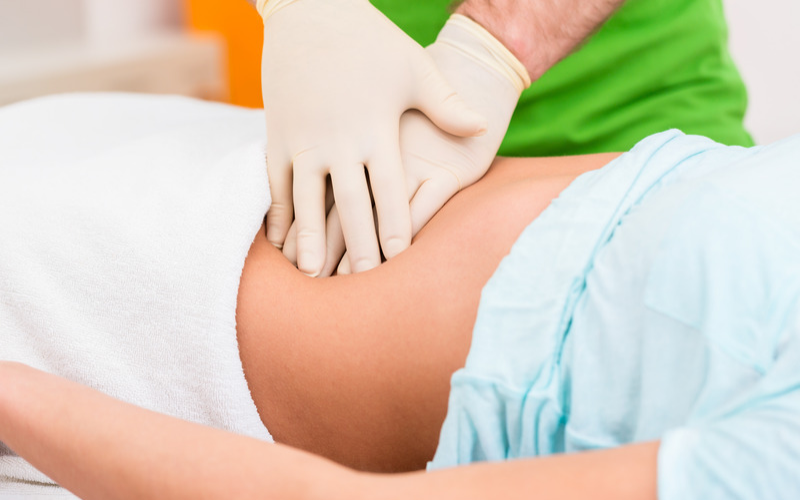
The standard pitch says a cleanse removes “toxins” or hardened waste, and that this leads to weight loss, more energy, and better health. Each part of that pitch runs into trouble once you look at the facts.
“Toxins” and “mucoid plaque”
The idea that stored waste poisons the body, often called autointoxication, goes back centuries. The American Medical Association discounted it in 1919.
“Mucoid plaque,” a supposed hardened coating on the colon wall, was coined by Richard Anderson, a naturopath and entrepreneur who sells products claiming to remove it.
There is no medical evidence it exists. The rope-like material some people see after a cleanse most likely comes from the bulking fibers and laxatives in the products themselves.
“Lose 25 pounds in four weeks”
Claims like this have drawn real enforcement. Here are three examples from the FTC:
- Coleadium (“Ads4Dough”): The FTC charged this affiliate network for using fake news sites to promote acai and colon-cleanser products. It paid $1 million to settle.
- Central Coast Nutraceuticals: In January 2012, the company agreed to pay $1.5 million over deceptive marketing, including its “Colotox” cleanser.
- LeanSpa LLC: In January 2014, under “Operation Failed Resolution,” it surrendered assets totaling an estimated $7.3 million.
Several of these orders bar weight-loss claims unless two well-controlled human clinical studies back them up. These products have never had that kind of evidence.
“Natural” and “safe”
The FDA doesn’t approve supplements for safety or effectiveness before they go on sale. The 2026 review found undeclared drugs in some natural slimming teas, including sibutramine, a weight-loss drug that has been withdrawn from the market.
Device and practitioner claims
Under 21 CFR 876.5220, colonic irrigation systems are Class II devices only when used for cleansing that is medically indicated, such as before radiological or endoscopic exams.
No FDA-approved colonic hydrotherapy systems exist for nonmedical use. On July 7, 2026, the FDA sent a letter to Specialty Health Products CO, LLC, which makes the Hydro-San and Aqua Cleanse systems. It noted the devices were sold “to wellness centers,” a use that falls under Class III.
Credentials are thin as well. Colon hydrotherapists aren’t licensed by a scientifically based medical body. The National Board for Colon Hydrotherapy requires a high school diploma, three semesters of postsecondary education, and CPR certification.
Safety Risks and Who Should Avoid Colon Cleanses
Side effects range from mild to life-threatening, and the root cause is usually the same: forced diarrhea throws off your fluid and electrolyte balance.
Common effects
Many people get cramping, abdominal pain, bloating, nausea, vomiting, diarrhea, and dizziness. Perianal soreness is also common.
Serious effects
- Dehydration and electrolyte imbalances, including low potassium, low sodium, and water intoxication
- Kidney injury, pancreatitis, and heart failure
- Bowel perforation, abscesses, septicemia, and air embolism
- Infection from poorly disinfected equipment, including fatal amebiasis
- Aplastic anemia and liver toxicity, which have been linked to some herbal products
Coffee enemas and laxative teas
Coffee enemas have been linked to colitis, rectal burns, and three deaths: two from electrolyte imbalance and one from sepsis. The Mayo Clinic specifically warns about these deaths.
Laxative teas carry their own risks. A 41-year-old man went into ventricular fibrillation, with potassium near 2 mEq/L, after five days of heavy use of a senna tea. Other users were hospitalized with sodium levels of 111 and 115 mmol/L, and the second of those users had seizures.
Laxative dependence and eating disorders
Repeated use of stimulant laxatives can impair normal bowel function. There’s also a link to eating disorders. In a cohort of 10,058 US women followed from 2001 to 2016, those who used laxatives for weight control had six times the odds of a first eating disorder diagnosis (adjusted odds ratio of 6.0).
In absolute terms, 4.2% of laxative users were later diagnosed, compared with 0.8% of non-users. This is an association, not proof of cause, but it’s a warning sign worth taking seriously.
Who should skip cleanses
Harm is more likely, and cleansing is best avoided, if you have any of the following:
- Gastrointestinal disease, such as Crohn’s disease, ulcerative colitis, diverticulitis, ischemic colitis, bowel obstruction, or colorectal cancer
- Prior colon surgery
- Severe hemorrhoids
- Kidney disease, including if you’re on dialysis
- Heart disease or heart failure
- An eating disorder, or a history of one
If you take medications that affect fluid or electrolyte balance, check with a clinician before trying any cleanse.
What to Do Instead: Practical Next Steps
Skip cleanses for weight loss. The scale rebounds, and you take on risk for no lasting benefit. If you’ve already done one, or you’re thinking about it, these steps will help.
Read the scale correctly
Losing one to several pounds overnight after a cleanse means you lost stool and water. Expect it to come back within a day or two.
Large, fast losses are different. If they come with weakness, dizziness, palpitations, confusion, or reduced urination, get medical care promptly.
Spot the red flags and check the label
Be wary of specific pound counts (“lose 10 lbs in a week”), “toxin” or “mucoid plaque” language, celebrity or fake-news-style endorsements, and “free trial” offers.
Then read the ingredient list. Senna, cascara, aloe latex, bisacodyl, magnesium compounds, and sodium phosphate all mean you’re buying a laxative, whatever the marketing says. Use those only for short-term constipation relief, as directed on the label.
If you still want a colonic
- Talk to your clinician first.
- Choose a practitioner who uses single-use, disposable equipment.
- Ask for a full list of any herbal ingredients and their amounts.
- Never use coffee or other additive enemas.
When to see a doctor
Persistent constipation, bloating, or sluggishness can have medical causes, such as hypothyroidism, and a cleanse would only mask them. A doctor can find the cause and treat it.
Also, if you notice yourself using laxatives or cleanses to “undo” eating, talk to a healthcare provider.
Conclusion
A colon cleanse can lower the number on your scale for a day or two, but it doesn’t remove body fat, and no solid research says otherwise.
The evidence behind this is mostly missing trials, basic digestive science, and laxative calorie studies, though the case against fat loss is strong, and serious harm appears to be rare even if it’s hard to measure.
If you want lasting weight loss, skip the cleanse and talk with a healthcare provider about a plan that fits you.