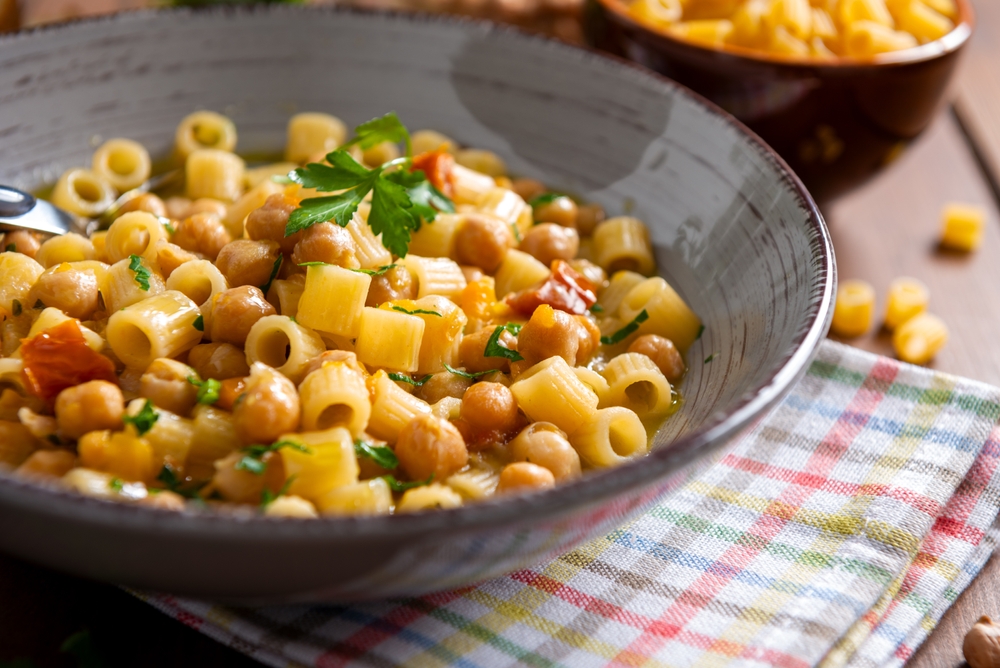
Yes, chickpea pasta can help you lose weight because it keeps you fuller longer with nearly double the protein and up to three times the fiber of regular pasta—which research shows can lead you to eat up to 194 fewer calories at your next meal.
The catch is that it's not actually lower in calories than traditional pasta, so you'll need to understand exactly how to use it strategically to see real results.
Why Chickpea Pasta Works for Weight Loss
The weight loss advantage of chickpea pasta comes down to how it affects your hunger, not just what's on the nutrition label.
A standard 2-ounce dry serving delivers 11-14 grams of protein compared to the 6-8 grams you'd get from wheat pasta—nearly double.
This matters because protein slows down your digestion and influences the hormones that control your appetite, specifically ghrelin and GLP-1.
When you eat meals with higher protein content, research shows you'll naturally consume about 100 fewer calories at your next meal without even trying.
The fiber content creates a similar effect.
Each serving of chickpea pasta provides 5-8 grams of fiber, while regular pasta gives you just 2-3 grams.
This fiber doesn't just add bulk—it actively works to keep you satisfied longer through its influence on appetite-regulating hormones like cholecystokinin and peptide YY.
Studies have found that when people replace refined grains with fiber-rich options, they end up eating less overall throughout the day.
Your blood sugar response tells another part of the story.
Chickpea pasta scores around 28 on the glycemic index scale, significantly lower than traditional pasta.
What this means in practical terms: you get a slower, more controlled rise in blood sugar after eating.
Those sharp spikes and subsequent crashes that leave you reaching for snacks an hour later?
They're much less likely to happen.
This steadier energy pattern helps you avoid the cravings and overeating that derail weight loss efforts.
There's also a lesser-known component called resistant starch.
Chickpeas contain this type of starch that your digestive system can't actually break down, and emerging research suggests it may improve insulin sensitivity while increasing feelings of fullness.
Here's an interesting detail: if you cool and reheat your chickpea pasta, the resistant starch content jumps from 1.83 grams to 3.65 grams per 100 grams—essentially doubling this beneficial compound.
The Calorie Truth You Need to Know
Here's what might surprise you: chickpea pasta contains 190-230 calories per 2-ounce serving, while regular pasta sits at 200-220 calories.
The difference? A minimal 10-30 calories at most.
If you've been treating chickpea pasta as a low-calorie alternative, you need to adjust your expectations right now.
This is still a calorie-dense food.
The weight loss benefits you're after don't come from eating fewer calories—they come from the enhanced satiety and blood sugar control that help you eat less at your next meal.
That's a crucial distinction that changes how you should think about using it.
Let's clear up what chickpea pasta is not:
- It's not comparable to vegetables in calorie content (you're looking at roughly 200 calories versus 20 for the same volume of vegetables)
- It's not a magic weight loss food that somehow bypasses normal calorie rules
- It's not an unlimited “free food” you can eat as much as you want
- It's not interchangeable with salads just because it's made from legumes
What it actually is: a healthier pasta substitute that keeps you fuller longer.
When you use it as part of a calorie-controlled diet, it works because it helps you naturally reduce your intake at subsequent meals.
Think of it as a tool for making pasta fit into your weight loss plan, not as a diet food itself.
The most effective approach? Enjoy it 2-3 times per week rather than making it a daily staple.
This frequency lets you benefit from its satiety advantages without relying on it as your primary strategy for weight loss.
What Research Shows About Appetite Control
Research on chickpeas reveals significant appetite suppression effects that translate into measurable calorie reductions.
In one study, participants who consumed chickpeas experienced a 29-36% reduction in blood glucose concentration—a substantial change that directly impacts hunger signals.
The calorie impact became even more interesting when researchers tracked what happened at subsequent meals.
Participants ate 50 fewer calories at a meal consumed 60 minutes after eating chickpeas.
Two hours out, that number jumped to 194 fewer calories at their next meal. They weren't trying to restrict their eating—they simply felt less hungry and naturally ate less.
Here's where the math gets compelling.
If you experienced this kind of calorie reduction daily, you could lose over a pound of body fat every 20 days.
Extend that pattern across a year, and you're looking at approximately 20 pounds lost without consciously restricting your portions at other meals.
The mechanism behind these results comes down to the combination of protein and fiber working together.
This pairing creates enhanced satiety that lasts well beyond the meal itself.
Better blood sugar control means you're not experiencing the dramatic dips that trigger hunger and drive you to eat more.
Your body simply doesn't send the same urgent signals to seek out food.
This appetite control effect makes chickpea pasta superior to traditional pasta for weight management.
You're not just swapping one carbohydrate source for another—you're changing how your body responds to the meal and how hungry you feel hours later.
That's the real advantage for anyone trying to lose weight.
How Much Should You Actually Eat
The standard serving size for chickpea pasta is 2 ounces (56-57 grams) of dry pasta, which gives you approximately 1 to 1.5 cups once cooked.
Italian dietary guidelines suggest a slightly wider range of 60-100 grams dry per serving, though that upper end pushes into larger portion territory.
If you're actively working on weight loss, some nutrition programs recommend cutting that down to 1 ounce (28 grams) servings to keep calories in check.
Portion control doesn't become less important just because you've switched to a healthier pasta option.
This is where many people stumble—they assume the nutritional benefits mean they can eat more freely.
Each serving still contains 30-37 grams of total carbohydrates, which works out to roughly 27 grams of net carbs after you subtract the fiber.
That's a meaningful carbohydrate load.
If you're following a very low-carb or strict ketogenic diet, chickpea pasta won't fit your plan.
The carb content is simply too high to maintain ketosis, even with the fiber helping to moderate blood sugar impact.
You need to be realistic about whether this aligns with your specific dietary approach.
Understanding proper portions becomes critical for weight loss success because the difference between a helpful tool and a setback often comes down to how much you're actually eating.
Even with better satiety properties, eating double or triple the standard serving means you're consuming 400-600 calories from pasta alone—and that can easily wipe out the appetite control advantages you're trying to leverage.
5 Ways to Maximize Your Results
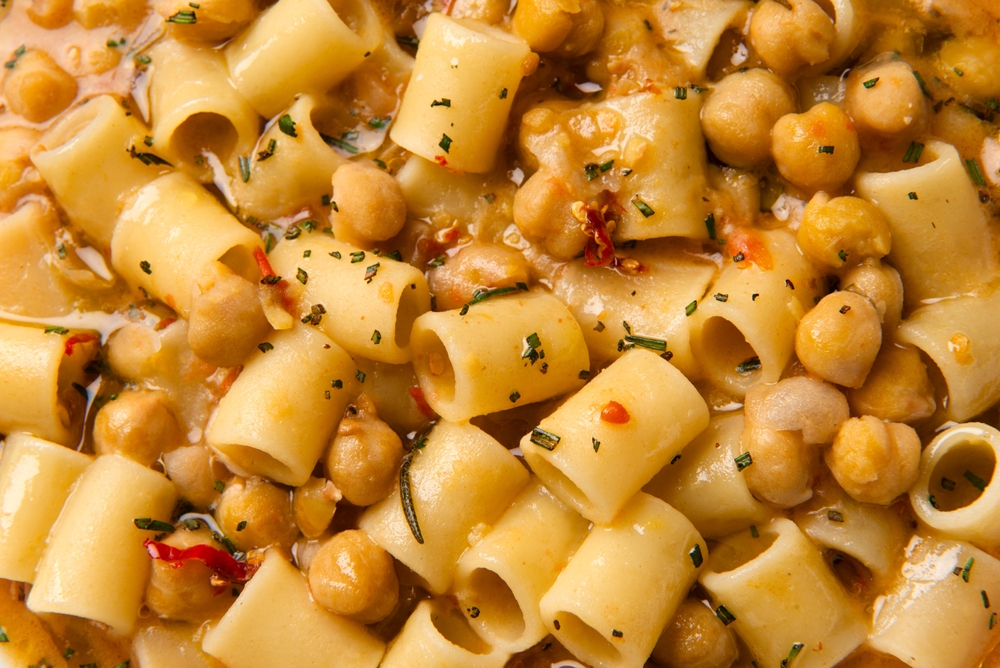
Getting the most weight loss benefit from chickpea pasta requires more than just swapping it in for regular pasta.
How you build the rest of your meal determines whether you're setting yourself up for success or sabotaging the satiety advantages.
1. Load up on vegetables
Fill half your plate with non-starchy vegetables before you add anything else.
This simple strategy increases your meal volume substantially while keeping calories minimal.
You maintain satisfaction from the sheer amount of food on your plate, but you've dramatically reduced the calorie density of what you're eating.
Broccoli, spinach, zucchini, bell peppers—pile them on.
2. Add lean protein
Chickpea pasta contains incomplete protein, meaning it doesn't provide all the essential amino acids your body needs in optimal ratios.
Pair it with chicken, fish, tofu, or additional legumes to create a balanced amino acid profile.
This combination enhances satiety beyond what the pasta alone can provide and helps preserve muscle mass during weight loss.
3. Choose smart sauces
Avoid cream-based or high-sugar sauces that can add 200-300 extra calories without filling you up.
Better options include:
- Tomato-based sauces with minimal added sugar
- Olive oil with herbs and garlic for a lighter approach
- Vegetable-based sauces that add nutrients and fiber
- Light amounts of parmesan cheese for flavor without excess calories
4. Cook it properly
Cook your chickpea pasta al dente, which typically means 6-7 minutes for most brands.
Al dente pasta gets digested more slowly than softer, overcooked pasta.
This slower digestion translates to more sustained energy and better satiety throughout the afternoon or evening.
5. Time it strategically
Consume chickpea pasta earlier in the day or around your workouts when your body can best utilize the carbohydrates for energy rather than storage.
Morning or pre-workout meals align with when your insulin sensitivity is typically higher and your activity level can put those carbs to immediate use.
What to Watch Out For
Digestive issues top the list of potential problems.
The high fiber content (5-8 grams per serving) can cause bloating, gas, and general discomfort, especially if you're not accustomed to eating high-fiber foods regularly.
Start with smaller portions and gradually increase your intake over a few weeks to give your digestive system time to adapt.
Drinking plenty of water throughout the day helps mitigate these effects—fiber needs adequate hydration to move through your system smoothly.
The texture differs noticeably from traditional pasta.
Chickpea pasta has a firmer, slightly grainier feel that some people enjoy and others find off-putting.
It's more prone to becoming gummy if you overcook it, and it doesn't hold up well in baked dishes or as reheated leftovers.
The pasta tends to continue absorbing moisture after cooking, which changes its texture considerably.
Expect to pay more at the grocery store.
Chickpea pasta typically costs several dollars more per box than traditional pasta due to the specialized ingredients and production process involved.
For some budgets, this price difference matters when you're buying it regularly.
Sodium content varies significantly across brands.
Some options contain as little as 0-45mg per serving, while others run considerably higher.
If you're monitoring sodium intake for health reasons, checking labels becomes important rather than assuming all chickpea pastas are the same.
How it stacks up against other alternatives:
- Whole wheat pasta: chickpea delivers nearly double the protein and more fiber
- White pasta: major advantages across protein, fiber, and glycemic impact
- Brown rice pasta: substantially more protein and fiber in chickpea
- Lentil pasta: similar benefits with slightly different texture
Nutritionists consistently rank chickpea pasta as one of the best options for weight loss among all pasta varieties, which gives you confidence that you're making a solid choice if these drawbacks don't deter you.
Conclusion
Chickpea pasta works for weight loss through enhanced satiety and better blood sugar control—not through calorie reduction.
Treat it as a healthier pasta option that lets you enjoy pasta-based meals while supporting your weight loss goals, not as a diet food you can eat without limits.
Success comes down to proper portions, pairing it with vegetables and lean protein, and using it 2-3 times per week as part of your overall calorie-controlled approach.