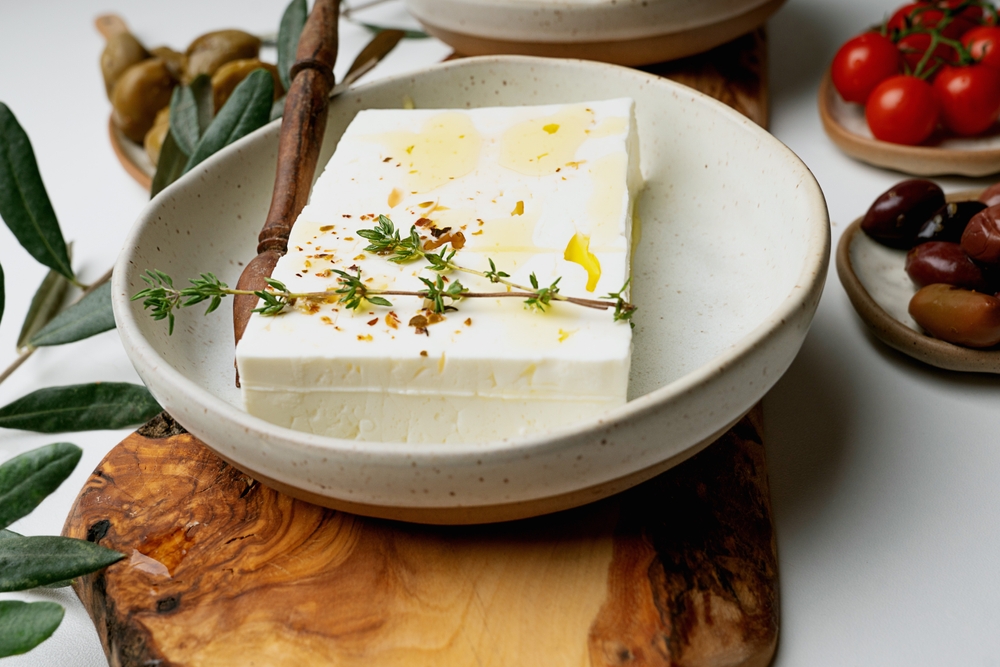
Feta cheese can support your weight loss efforts when you use it in moderation—it has fewer calories than most cheeses, provides protein that helps you feel full, and its strong flavor means you need less to satisfy your taste buds.
However, you need to watch your portions carefully because it's high in sodium and still contains saturated fat.
Keep reading to understand exactly how feta affects weight loss, what the research shows about its fat-burning potential, and the smartest ways to include it in your diet without sabotaging your goals.
Feta's Nutritional Profile: Why It Stands Out Among Cheeses
When you look at the numbers, feta offers a clear advantage over many popular cheeses.
One ounce gives you roughly 74-85 calories and 6 grams of fat.
Compare that to cheddar, which packs about 110 calories and 7 grams of fat in the same serving.
The gap widens even more when you look at 100-gram portions: feta comes in at 265 calories while cheddar hits 410.
This lower calorie density means you can enjoy cheese without using up your entire calorie budget for the day.
The difference between feta and heavier cheeses leaves room for vegetables, lean proteins, and whole grains—foods that fill you up and provide nutrients your body actually needs during weight loss.
The saturated fat factor
Feta contains about 4 grams of saturated fat per ounce, which matters because dietary guidelines recommend keeping saturated fat under 10% of your daily calories.
If you're eating 2,000 calories per day, that's roughly 22 grams maximum.
One ounce of feta takes up nearly a fifth of that limit.
The good news? Feta has less saturated fat than many aged cheeses like parmesan or aged cheddar.
Still, you need to track your portions.
Two or three ounces in a single meal can quickly push you past healthy limits, especially if you're eating other sources of saturated fat that day.
The Protein-Satiety Connection: How Feta Keeps You Fuller
Each ounce of feta delivers roughly 4-6 grams of protein (14.2 grams per 100 grams), and this protein does more than just pad your macros.
It actively increases satiety, which means you stay satisfied longer after eating.
When you feel fuller, you naturally eat less throughout the day.
Research consistently shows that high-protein foods cut down on hunger between meals, which directly translates to lower overall calorie intake without you having to white-knuckle through cravings.
Why muscle matters when you're losing weight
Protein serves another critical function during weight loss: preserving muscle tissue.
When you cut calories, your body doesn't exclusively burn fat—it can also break down muscle for energy.
Adequate protein intake helps prevent this loss, and keeping your muscle mass intact directly supports your metabolic rate.
Here's why this matters: muscle tissue burns more calories at rest than fat tissue does.
When you're in a calorie deficit, maintaining a healthy metabolism becomes even more important.
Lose too much muscle, and your body requires fewer calories just to function, making further weight loss harder and weight regain more likely.
The blood sugar advantage
Feta's protein works together with its calcium content to stabilize your blood sugar levels.
This combination slows down digestion and prevents the sharp spikes that often follow carb-heavy meals.
When your blood sugar stays steady, you avoid the energy crashes that trigger cravings and make you reach for snacks.
This regulation creates a more consistent appetite pattern, making it easier to stick to your calorie targets without feeling deprived.
CLA in Feta: Understanding the Fat-Burning Potential
Feta contains conjugated linoleic acid (CLA), a naturally occurring fatty acid that's attracted attention for its potential to reduce body fat.
If you choose feta made from sheep's milk, you get the highest concentration—up to 1.9% CLA, which accounts for approximately 0.8% of the cheese's total fat content.
Sheep's milk beats both cow's and goat's milk in CLA levels, making it the better choice if you're specifically looking for this compound.
What the research actually shows
A meta-analysis that pooled data from 18 randomized controlled trials found that taking 3.2 grams of CLA daily for 6-12 months led to a body fat reduction of 1.33 kg (about 2.93 pounds) compared to placebo.
Another study demonstrated that CLA supplementation prevented weight gain during the holiday season and cut body fat by 1.0 kg over six months.
These results sound promising until you consider the context.
Scientists describe these effects as modest, and there's ongoing debate about whether they matter clinically.
More importantly, you can't get therapeutic doses of CLA from feta alone—you'd need to eat unrealistic amounts that would far exceed sensible calorie and sodium limits.
Setting realistic expectations
Think of CLA in feta as a minor bonus rather than a game-changer.
When you include feta as part of a balanced diet with controlled portions, its CLA content might contribute slightly to your body composition goals.
The keyword here is “slightly.”
You won't lose weight simply because you added feta to your salad.
The bigger picture—total calorie intake, overall diet quality, and consistent habits—matters far more than any single compound in any single food.
The Flavor Advantage: Using Feta's Intensity to Your Benefit
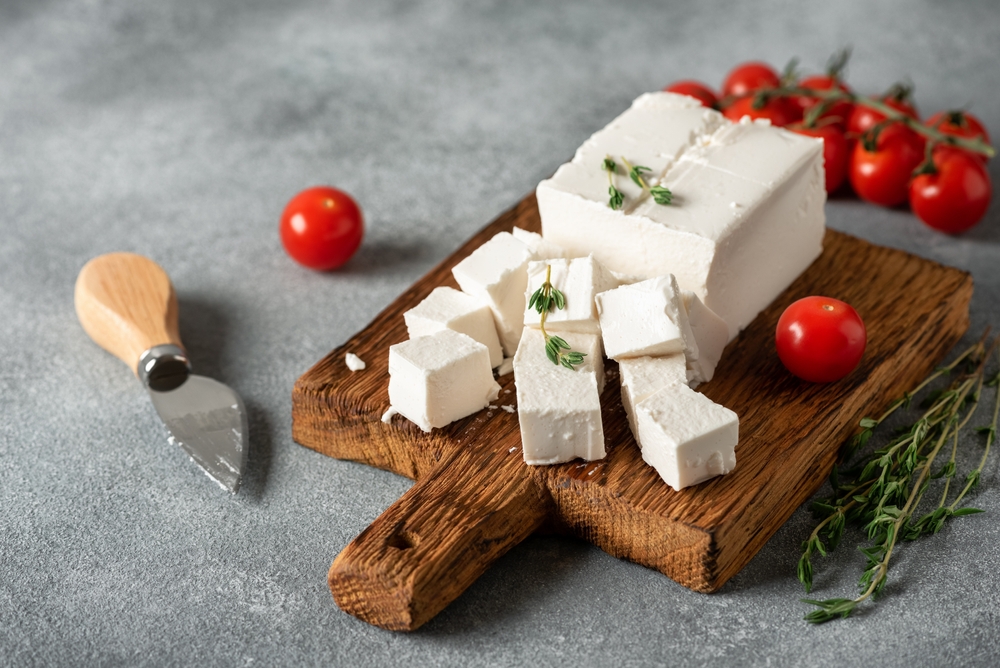
Feta packs a punch that milder cheeses like mozzarella or mild cheddar simply can't match. Its strong, tangy, salty profile means you need far less to make an impact on your meal.
Where you might pile on a quarter cup of shredded cheddar to get noticeable flavor, a tablespoon or two of crumbled feta does the job.
This intensity creates a built-in portion control mechanism.
When you add feta to a salad, grain bowl, or omelet, you're rarely using a full ounce.
Most people instinctively use smaller amounts because the flavor doesn't call for more.
One tablespoon—about 14 grams—gives you only 37-43 calories while still delivering that distinctive taste you're after.
Think condiment, not centerpiece
The smartest approach treats feta like you'd treat hot sauce or mustard: as a flavor enhancer rather than a main ingredient.
You're not building a meal around it; you're using it to elevate everything else on your plate.
This mindset shift keeps calories in check while letting you enjoy cheese without guilt.
The psychological piece matters too.
When you eat something with bold, satisfying flavor, your brain registers pleasure and contentment more quickly.
That tablespoon of feta crumbled over roasted vegetables can scratch the cheese itch just as effectively as a heavier portion of something blander.
You feel satisfied with less, which means you're less likely to overeat or go hunting for less healthy alternatives an hour later.
The intensity works in your favor, giving you taste satisfaction that's disproportionate to the actual quantity you're consuming.
What to Watch Out For: Sodium, Saturated Fat, and Other Concerns
The biggest drawback of feta is its sodium content.
One ounce delivers approximately 312 mg of sodium—that's up to 13% of your recommended daily intake from just a small serving.
If you eat feta multiple times per day or use generous portions, you can easily blow past healthy sodium limits.
Excessive sodium intake raises blood pressure and increases your risk of heart disease and stroke, which obviously undermines any weight loss benefits you might gain.
You can reduce the salt content with a simple trick: rinse your feta under cold water before using it.
This washes away surface brine and cuts down on sodium without completely destroying the flavor.
Who should be extra careful
Feta is unripened, which means it contains more lactose than aged cheeses like parmesan or aged cheddar.
If you're lactose intolerant, you might experience digestive discomfort even from small amounts.
The symptoms—bloating, gas, cramping—can range from annoying to genuinely unpleasant depending on your sensitivity level.
Pregnant women need to avoid unpasteurized feta entirely.
Soft cheeses made from raw milk can harbor Listeria monocytogenes, bacteria that cause serious infections potentially harmful to both mother and baby.
Always check labels and stick to pasteurized versions if you're pregnant.
The bigger picture matters more
Let's be clear: feta isn't a weight loss superfood, and treating it like one will disappoint you.
The benefits we've discussed—protein, CLA, lower calories than some cheeses—are real but modest.
Your success depends far more on your overall dietary patterns, consistent portion control, and total calorie intake than on any single food choice.
Feta works when it's part of a balanced diet, not when you eat it in large quantities hoping for magic results.
The saturated fat content we covered earlier reinforces this point: moderation isn't optional, it's required.
Smart Ways to Add Feta to Your Weight Loss Diet
The golden rule: treat feta as a flavor enhancer, not a primary protein source.
You're getting most of your protein from chicken, fish, legumes, or eggs—feta just makes those foods taste better while adding a modest protein boost.
Practical applications that work
- Crumble small amounts over salads packed with vegetables and lean proteins
- Stir into scrambled eggs or omelets at breakfast for tangy richness without many calories
- Sprinkle over roasted vegetables like zucchini, eggplant, or bell peppers
- Mix into quinoa, bulgur, or brown rice dishes to punch up bland grains
The pattern here is consistent: feta plays a supporting role, never the lead. You're using it the way you'd use a vinaigrette or a squeeze of lemon—to enhance, not dominate.
The Mediterranean advantage
Feta fits naturally into Mediterranean-style eating patterns, which emphasize vegetables, whole grains, lean proteins, and healthy fats.
This approach isn't coincidental—research consistently links Mediterranean diets to better weight management outcomes.
When you pair feta with fiber-rich vegetables and whole grains, you create meals that keep you full while delivering balanced nutrition.
The fiber slows digestion, the protein from both feta and your main protein source increases satiety, and the healthy fats round out the macronutrient profile.
Choosing the right feta
Look for versions made from sheep's or goat's milk.
These give you higher CLA content and may digest more easily than cow's milk varieties.
Some traditional feta contains probiotics, specifically Lactobacillus plantarum, which can support gut health and improve digestion.
Check labels or ask at specialty cheese counters for traditionally made options.
The portion sweet spot
Aim for 1-2 tablespoons of crumbled feta as a flavor accent several times per week.
This amount gives you the nutritional benefits we've discussed—protein, CLA, calcium—without derailing your weight loss efforts through excessive calories, sodium, or saturated fat.
Stick to this guideline, and feta becomes a genuine asset rather than a liability.
Conclusion
Feta cheese can absolutely fit into your weight loss plan, but only if you approach it with realistic expectations and smart portion control.
Use it as a flavor tool rather than a dietary cornerstone—those 1-2 tablespoons a few times per week can add taste and nutrition without sabotaging your calorie goals.
The cheese itself won't make you lose weight, but when combined with a balanced diet and sensible eating habits, it won't stand in your way either.