Wild rice is a genuinely solid choice for weight loss — not because it has any fat-burning properties, but because it packs more protein and fiber into fewer calories than white or brown rice, which helps you stay fuller and eat less overall.
Keep reading to see exactly what the nutrition data, grain comparisons, and current research actually show.
What Wild Rice Actually Is (and Why It's Different)
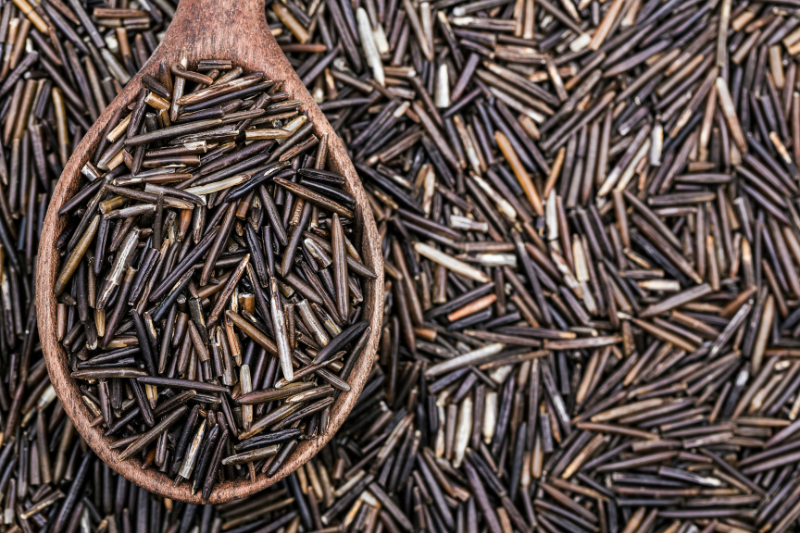
Despite the name, wild rice isn't rice at all. It's the seed of Zizania, a semi-aquatic grass that grows naturally across North America and East Asia — and the FDA officially recognized it as a whole grain back in 2006.
That distinction matters because whole grains retain their bran and germ, where most of the fiber, protein, and micronutrients live.
A single cooked cup delivers 166 calories, 7g of protein, 3g of fiber, 35g of carbs, and less than 1g of fat. It also brings a solid spread of micronutrients:
- Manganese (14% DV), zinc (9%), phosphorus (8%), magnesium (8%)
- Meaningful amounts of vitamin B6, folate, and copper
What really sets it apart from refined grains, though, is its antioxidant profile. Wild rice has roughly 30 times the antioxidant activity of white rice, driven by compounds like flavonoids, ferulic acid, and procyanidins concentrated in its dark bran layer.
These don't directly cause weight loss, but they do signal that this is a metabolically different grain than the polished white variety most people eat regularly.
How It Compares to White Rice, Brown Rice, and Quinoa
The numbers tell the clearest story here.
| Grain (1 cup cooked) | Calories | Protein | Fiber | Glycemic Index |
|---|---|---|---|---|
| Wild rice | 166 | 7g | 3g | 45–57 |
| White rice | ~205 | 4.3g | 0.6g | ~73 |
| Brown rice | ~218–248 | 5.5g | 3g | ~68 |
| Quinoa | 222 | 8.1g | 3.6–5.2g | ~53 |
Wild rice comes in as the lowest-calorie option per cooked cup while matching brown rice on fiber and beating both rices on protein. Quinoa edges it out on protein and fiber, but at the cost of roughly 56 more calories per serving. For weight management, wild rice hits a sweet spot that the others don't quite match.
On protein quality, wild rice is worth a closer look. Its essential amino acids make up 45.1% of its total amino acid profile, compared to just 32.1% in wheat — a meaningful gap.
That said, threonine and lysine are limiting amino acids, so it's more accurate to call it protein-rich rather than a complete protein. It's better than any true rice, but not quite at the level of quinoa or animal-based proteins.
The practical implication is significant. A 2022 meta-analysis found that simply swapping white rice for brown rice produced 1.63 kg of weight loss and a 2.56 cm reduction in waist circumference.
Given that wild rice has fewer calories, more protein, and a lower glycemic index than brown rice, a comparable — or better — result is a reasonable expectation, even though it hasn't been tested directly in humans yet.
Why Protein and Fiber Are the Real Weight Loss Drivers
Wild rice doesn't help with weight loss through anything exotic — it comes down to protein and fiber doing what they always do, just more of it per calorie than most grains offer.
Protein is the more powerful lever of the two. Your body burns 20–30% of protein calories just processing them — compare that to 5–10% for carbohydrates and nearly zero for fat. Beyond the thermic effect, protein directly influences the hormones that control hunger.
It raises GLP-1, PYY, and CCK (the hormones that signal fullness) while suppressing ghrelin, the one that makes you want to eat. Research has shown this hormonal shift can reduce overall caloric intake by up to 20%.
Where wild rice specifically earns its place is in the protein-to-calorie ratio. It delivers roughly 42mg of protein per calorie, compared to about 21mg per calorie in white rice — double the protein efficiency in the same volume of food. That's not a small difference when you're trying to stay full on a calorie deficit.
Fiber adds a separate but complementary effect. The 3g per cup slows gastric emptying, which extends the feeling of fullness after a meal, and feeds the gut bacteria that produce short-chain fatty acids linked to better metabolic health.
Wild rice also contains resistant starch, which behaves more like fiber than a digestible carbohydrate — and its concentration increases when you cool the cooked grain before eating, lowering the glycemic response further.
Put it together and you get a grain that keeps you fuller longer, burns slightly more calories during digestion, and supports steadier blood sugar — all without adding dramatically more calories to your plate.
Blood Sugar, Insulin, and the Glycemic Advantage
Wild rice has a glycemic index between 45 and 57, with the most controlled human measurement coming in at 53.72. That puts it well below white rice (GI ~73) and meaningfully below brown rice (GI ~68), both of which are considered moderate-to-high on the scale. In practical terms, a serving of wild rice produces a noticeably smaller blood sugar spike than either alternative.
This matters for weight loss because of what repeated insulin spikes actually do. When blood sugar rises sharply, your body releases a correspondingly large insulin response — and chronically elevated insulin promotes fat storage, accelerates hunger between meals, and over time can contribute to insulin resistance.
Keeping those spikes smaller and more consistent is one of the more reliable ways to make a calorie deficit easier to maintain day to day.
One number worth keeping in mind: the glycemic load for a full cooked cup is around 18, which lands in the medium range. The GI may be low, but portion size still matters — the carbohydrates add up, and two cups can push the glycemic load into territory that starts to offset the advantage.
Animal studies go a step further than the GI data suggests. Compared to a white rice control, wild rice reduced fasting glucose, fasting insulin, HOMA-IR scores, and body weight in rodent models.
It also raised serum adiponectin — a hormone associated with improved insulin sensitivity — and suppressed key fat-synthesis genes including SREBP-1c, FAS, and ACC, meaning the grain appeared to actively reduce the body's production of new fat.
These findings are promising, but it's worth noting they come from animal research and haven't yet been replicated in human trials.
What the Research Says — and Where the Gaps Are
The most detailed weight-loss evidence for wild rice comes from rodent studies, and the results are genuinely interesting.
In one 11-week trial, mice on a high-fat diet that included wild rice showed significantly reduced body weight gain, lower triglycerides and LDL cholesterol, less liver fat accumulation, and a healthier gut microbiome — specifically a more favorable Firmicutes-to-Bacteroidetes ratio, which is associated with leaner metabolic profiles. These aren't trivial findings, but they are animal findings, and that distinction is important.
Human research is still catching up. Two trials are particularly worth watching:
- University of Manitoba: An ongoing trial giving 48 adults 30g of wild rice daily for 28 days, tracking changes in lipids, inflammation markers, and gut microbiota
- Crossover RCT: A completed trial directly comparing glycemic response and appetite after eating white, brown, and wild rice — results are pending publication
The honest summary is straightforward: no published human randomized controlled trial has yet shown that wild rice consumption alone produces weight loss in people.
The metabolic mechanisms are well-supported by nutritional data and animal research, and the human trials currently underway may eventually close that gap — but right now, that confirmation doesn't exist.
What that means practically is that the case for wild rice rests on solid nutritional logic rather than direct clinical proof.
Fewer calories, more protein, more fiber, and a lower glycemic index than white rice are all independently supported drivers of weight management. The grain checks every box dietitians look for — the human trials just haven't caught up to what the numbers already suggest.
How to Use Wild Rice for Weight Loss (Practical Guide)
Serving size depends on how closely you're watching carbohydrates. A ⅓ to ½ cup cooked keeps you in the 55–85 calorie range and works well if you're managing carb intake carefully.
A full cup is still reasonable within a balanced meal — just account for the 35g of carbs it brings. Two cups, on the other hand, pushes past 70g of carbohydrates and 330 calories, which is the most common way wild rice quietly works against a calorie deficit rather than for it.
To cook it, use a 3:1 water-to-rice ratio and expect 40–60 minutes on the stovetop, or about 15 minutes in a pressure cooker.
Soaking overnight cuts the cook time roughly in half and, importantly, helps leach out heavy metals — lead, cadmium, and arsenic have been detected in 26 U.S. brands, so a 12–24 hour soak before cooking is a reasonable habit.
Wild rice's inorganic arsenic content is about half that of brown rice, but soaking reduces it further. Phytic acid in the bran can also slightly reduce mineral absorption; soaking addresses that too.
One more step worth adding: let the cooked rice cool before eating. This raises its resistant starch content and lowers the glycemic response — a simple adjustment with a measurable payoff.
For meal building, pair it with lean protein and vegetables. Chicken, shrimp, or tofu alongside snap peas, bell peppers, and carrots is a straightforward combination that covers protein, fiber, and volume without overloading calories.
A few additional things to keep in mind:
- Wild rice fits naturally into the standard recommendation of 2–3 whole grain servings daily — rotate it with other grains rather than relying on it exclusively
- Discard any grains with pink or purplish spots, which can indicate ergot fungus contamination
- If you follow a keto or very-low-carb diet, wild rice isn't a practical fit — the carbohydrate content is too high to work within those limits
Conclusion
Wild rice stands out among grains for weight loss for straightforward reasons — fewer calories, more protein, more fiber, and a lower glycemic index than white rice all work together to make eating less a little easier.
The animal research points to deeper metabolic benefits, and human trials are underway, but even without that confirmation, the nutritional case alone is strong enough to make it a smart regular swap.
It won't do the work of a calorie deficit on its own, but as part of a balanced diet, it's one of the better grain choices you can make.